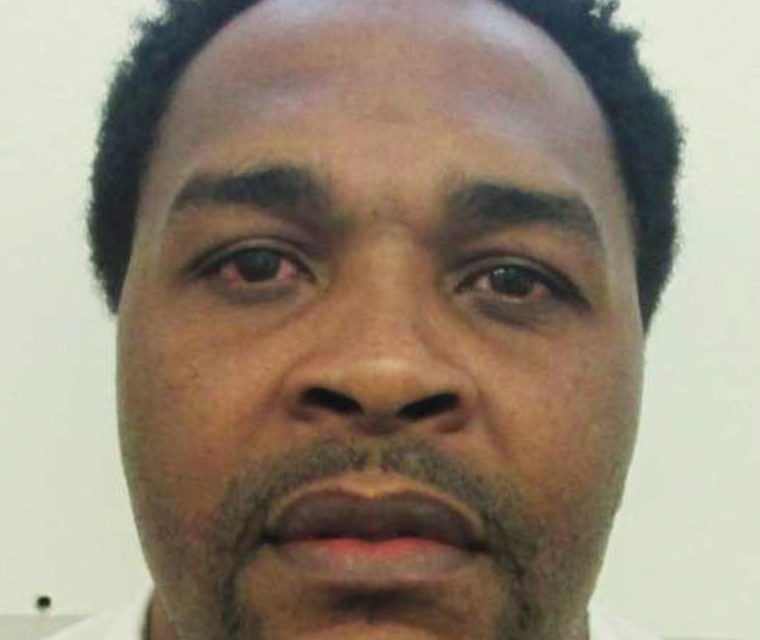
The Supreme Court has denied Alabama’s request to execute Jeffery Lee, 49, using nitrogen gas. This decision follows two lower court rulings stating the method violates the constitutional ban on cruel and unusual punishment.
Alabama sought an emergency order from the Supreme Court just hours before Lee’s scheduled execution. Justices Clarence Thomas, Samuel Alito, and Neil Gorsuch dissented, supporting the state’s request to proceed.
Lee, convicted for a double murder during a 1998 pawnshop robbery, will not face execution by nitrogen gas, though the state may explore other methods. The timeline for any alternative execution approach remains uncertain.
The legal debate intensified this week, considering whether nitrogen hypoxia is a viable method. Initially, a federal district judge deemed it constitutional, but after an appeal, the 11th U.S. Circuit Court of Appeals reversed the decision.
The Circuit Court argued that nitrogen executions likely breach the Eighth Amendment. It ordered further examination of the feasibility of a firing squad execution. Following these rulings, Alabama appealed to the Supreme Court, which has previously upheld other execution methods, yet nitrogen gas remains under significant legal scrutiny.
Nitrogen hypoxia involves a prisoner inhaling nitrogen through an industrial-grade mask, depriving them of oxygen. Alabama claimed the method is humane and painless, describing it in their Supreme Court filing as “effective and reliable.” However, critics, including the American Thoracic Society, argue that the method inflicts severe suffering.
Reports and witness accounts from past executions have described the condemned violently reacting, struggling, and gasping during the process. A notable case was Anthony Boyd’s execution, which reportedly lasted 30 minutes, prompting a dissent by Justice Sonia Sotomayor.
Sotomayor emphasized that nitrogen hypoxia falls short of humane promises. She argued for alternative methods, such as the firing squad, which can end an inmate’s life more swiftly. Her dissent aligns with the Eighth Amendment’s stance against cruel punishment.
Alabama has executed individuals using nitrogen, yet lethal injection remains its primary method, though drug procurement issues persist. Lee has expressed a preference for a firing squad, but Alabama law currently forbids this method.
Lee, guilty of murdering Jimmy Ellis and Elaine Thompson, with an attempt on Helen King, during a 1998 robbery, has shown remorse during his time on death row. He cites personal redemption and faith in Jesus Christ.
State Attorney General Steve Marshall insists on carrying out Lee’s death sentence, opposing anything less than justice for the victims.
Lee’s defense team has petitioned Alabama Governor Kay Ivey for sentence commutation, given a jury did not originally recommend the death penalty. Despite the judicial override practice being banned in 2017, past cases were not revisited. Ivey’s office indicated readiness to proceed with the sentence.
 Tennessee Faces Scrutiny After Failed Execution of Christa Pike
  Demonstrators Sue Media Personality for Defamation
  State’s Repeated Failures in Conducting Lethal Injections
  Judge Declares Police Use of Flock Cameras Unconstitutional
  Police Release Arrest Video of Luigi Mangione in Pennsylvania
  Murdaugh Attorneys Accuse Prosecutors of Withholding Key Evidence in Retrial