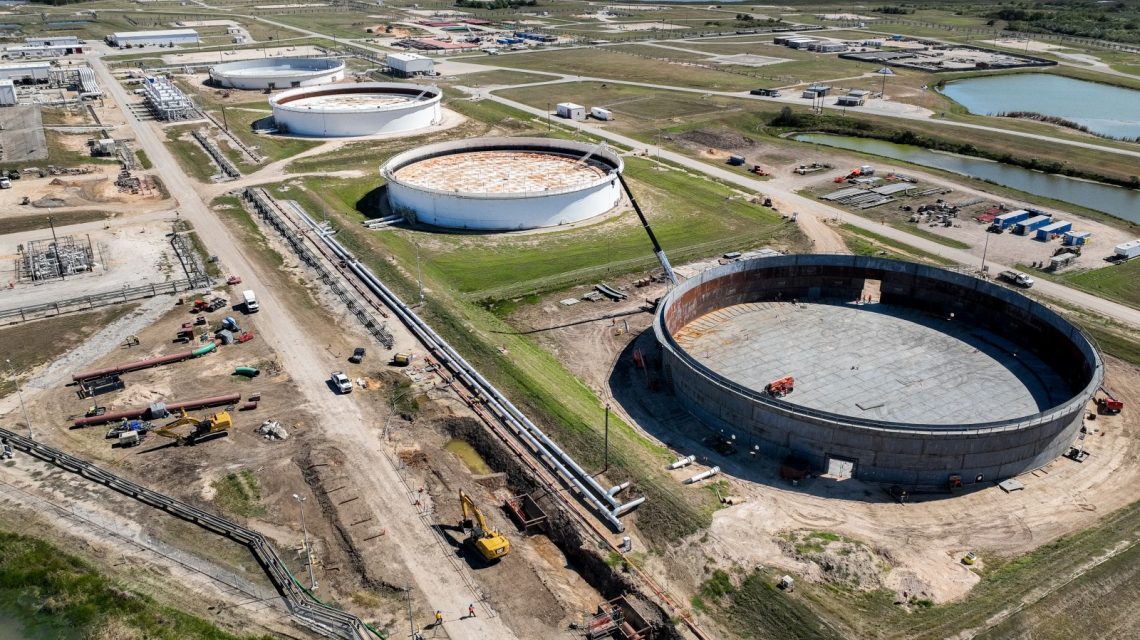
The Strategic Petroleum Reserve (SPR) in the United States has dwindled to 340.3 million barrels, reaching its lowest point since 1983, according to the Department of Energy. This decline highlights a tightening supply as the U.S. and Iran approach a deal to resolve ongoing conflicts.
In the past week, the reserve saw a reduction of 8.9 million barrels, a significant move in a strategy to release 172 million barrels to tackle soaring fuel costs. U.S. crude inventories have fallen sharply due to strong refining demand and increased exports, which aim to counteract supply disruptions from the Iran conflict. Storage at the Cushing, Oklahoma hub is approaching operational limits, raising concerns about supply constraints.
Current administration signals indicate that companies using oil from the SPR will replenish it with added premiums. Officials assert this approach can stabilize markets without burdening taxpayers long-term.
Efforts to Reduce Gas Prices
Gasoline prices show signs of easing after U.S.-Iran deal announcements raised hopes of oil flow resumption through the Strait of Hormuz. As of Monday, the national average for regular gasoline was approximately $4.06 per gallon, dropping from over $4.50 in May.
Analysts note that sustained price reductions depend on the global supply’s recovery speed. Prices could drop further if the strait resumes full operations, though pre-war costs may not return immediately.
Progress on the U.S.-Iran Agreement
The U.S. and Iran have reached a tentative deal to end their nearly four-month-long conflict, with a formal signing anticipated on Friday in Switzerland after technical discussions. While this memorandum marks de-escalation progress, unresolved issues include enforcement and broader sanctions.
Status of the Strait of Hormuz
The Strait of Hormuz remains partly operational despite reopening plans under the pending agreement. Shipping has resumed in limited areas, but full operation and market confidence may take weeks due to mine clearance challenges.
Details about the Strategic Petroleum Reserve
Authorized in 1975, the SPR was established as an emergency response following the 1973 Oil Crisis. It consists of underground facilities in Texas and Louisiana. The Department of Energy uses the SPR to bolster crude supplies during major disruptions.
Notable releases occurred during Operation Desert Storm in 1991, post-Hurricane Katrina in 2005, amidst the Libyan civil war, and following Russia’s Ukraine invasion in 2022. The latter involved a release of around 180 million barrels, the largest drawdown in the reserve’s 50-year history. This action sparked political disputes, especially among Republican leaders.
Critics argue that recent actions have substantially depleted the SPR, with replenishment requiring time and congressional approval. Energy experts emphasize that the reserve needs careful and strategic restocking to maintain its integrity and ensure market stability.
Factors Contributing to Reduced Emergency Stockpile
In response to global and domestic price rises, the U.S. has tapped into the SPR. This action aligns with a broader effort by International Energy Agency members, who collectively pledged to release 400 million barrels from their reserves. Despite rapid depletion, the SPR’s decline has been ongoing for several years.
Energy consultant Bob McNally notes that full refilling will take considerable time. When volumes are returned, this could pressure prices upward. However, a slow, steady refilling process may alleviate some impact. Analysts like Thomas Kloza believe this drawdown strategy was crucial in keeping crude oil prices from escalating further, preventing feared peaks of $150 per barrel.
Oil market analysts caution that as the SPR inventory approaches its minimum operational level, this could affect the reserve’s efficiency and necessitate careful management.