Contractors managing Immigration and Customs Enforcement (ICE) facilities can now utilize artificial intelligence (AI) tools to communicate with detainees. These changes allow the continued practice of paying detainees $1 per day for voluntary work, aligning with recently relaxed detention standards. ICE announced the revised standards on Monday, indicating they were developed with input from partners to reduce operational burdens.
Impact on Detainee Conditions
Experts have voiced concerns about the revisions. They argue that these changes may enhance contractor flexibility while lowering legal liability and costs, but bring little improvement to detainee conditions. Michelle Brane, a former Department of Homeland Security ombudsman, criticized the changes. She stated, “It’s going to result in deterioration of already problematic conditions of detention.” She also expressed that ICE’s actions align with a pattern of minimizing accountability and oversight, neglecting detainees’ basic rights and safety.
Current Facility Conditions
ICE detention facilities are under scrutiny for reports of unprecedented numbers of deaths and accusations of medical neglect and inadequate food. Despite this, ICE remains well-funded, receiving over half of the $70 billion immigration enforcement budget signed by former President Donald Trump.
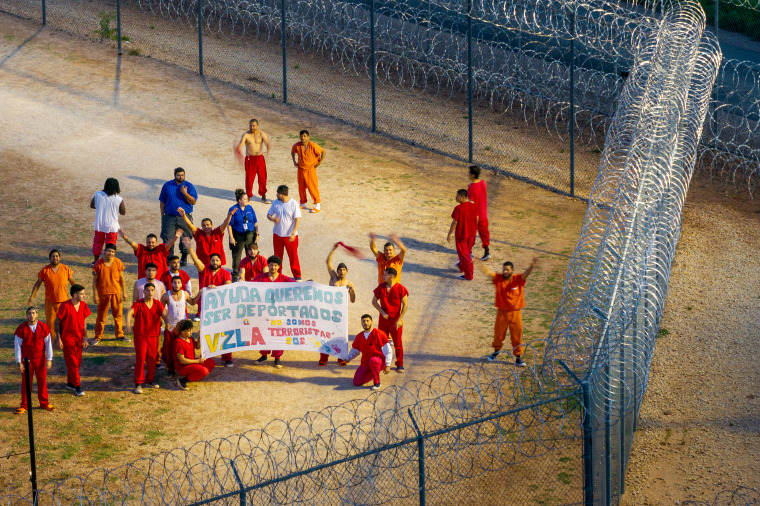
Detainees at Texas’s Bluebonnet Detention Center recently protested their conditions with a banner reading: “Help we want to be deported we are not terrorists, S.O.S.”
Voluntary Work Program Adjustments
The updated standards clarify that detainees participating in voluntary work are not employees, leaving them ineligible for wages and benefits. Dora Schriro, former director of ICE’s Office of Detention Policy and Planning, remarked this change “is a favor” to for-profit contractors. These revisions challenge ongoing lawsuits claiming the programs amount to forced labor, which seek millions in unpaid wages from contractors like GeoGroup and CoreCivic.
AI in Communication
Facilities now have the option to employ AI tools for noncritical communication or informal interactions with detainees. This could include exchanges during intake, in housing units, or when addressing grievances. Dr. Sanjay Basu, a researcher focused on ICE custody deaths, noted some positive changes in suicide prevention and mental health care. Yet, he expressed concern that the new direction weakens overall standards for a growing detained population.
Concerns About Language Assistance
Dr. Homer Venters raised alarms regarding relaxed standards for language assistance. The elimination of mandates for in-person and telephone interpretation raises questions about AI use in health assessments. Venters emphasized the risk, as grievances may contain urgent information about denied lifesaving care. ICE maintains that the revised standards ensure interpretation and translation services remain free for detainees.
Operational Changes
Experts also pointed to changes affecting facility admissions. Facilities can no longer refuse detainees sent by ICE, even if they cannot immediately accommodate severely ill or disabled individuals. This change might reduce legal responsibility for subsequent deaths but complicates immediate referrals to hospitals. The rules now require facilities to request transfers for detainees they cannot serve, potentially delaying care by several days.
Claire Trickler-McNulty, a former DHS and ICE official, criticized the reduced focus on detainee care and facility standards. She argued that ICE could prioritize improvements with its increased budget, referencing past efforts to enhance recreation and visitation facilities.