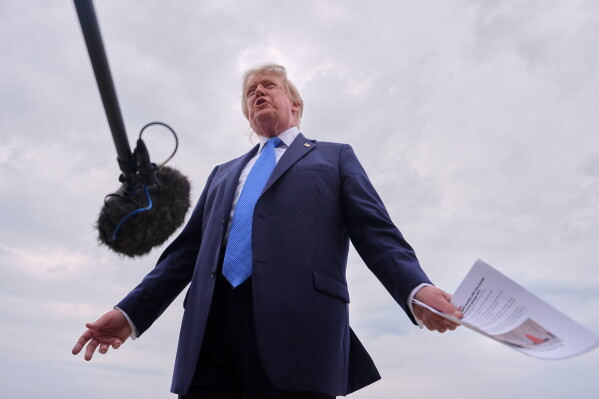
The US military’s involvement in Iran under President Donald Trump is impacting the deployment of US aircraft carriers. This shift is leaving the western Pacific temporarily without one of these key American warships while China grows more assertive. The USS George Washington is set to replace the USS Abraham Lincoln in the Middle East, which is causing concern over crew mental health and supply issues. The Lincoln’s deployment has been extended to address ongoing operations against Iran.
Although the absence of a US carrier in the Pacific might be brief, it highlights the strain on American sailors due to prolonged missions. Analysts suggest the Trump administration’s focus on the Middle East is diverting attention from the Asia-Pacific, unsettling regional allies. Greg Poling of the Center for Strategic and International Studies notes this contradicts the administration’s stated goal of prioritizing the Pacific after the Western Hemisphere. China is reportedly capitalizing on US distraction, which may affect relations with allies such as Japan and the Philippines.
Beijing sees the US military presence in the region as a barrier to its ambitions, particularly concerning Taiwan.
China views the US presence as a threat to its rise and its goal of controlling Taiwan. While Beijing might not invade due to the carrier’s absence, it uses this situation to highlight China’s growing power. China recently conducted naval exercises with Indonesia and showed aggression towards Japan and the Philippines over territorial disputes. These actions include military drills near the Scarborough Shoal and live-fire exercises off Japan.
Adm. Frank Bradley, head of the US Special Operations Command, is working to reassure Pacific allies of US support. He recently engaged with Filipino representatives and plans to visit Japan. According to Evan Sankey of the Cato Institute, aircraft carriers provide American allies with psychological assurance. Without them, there’s a perception of US distraction due to Middle Eastern engagements.
President Trump has heavily relied on aircraft carriers for military operations. The USS Gerald R. Ford recently completed an 11-month deployment, the longest since the Vietnam War, dealing with technical issues that impacted crew living conditions. The USS Abraham Lincoln has been out at sea for a record 240 days, prompting calls from Democratic lawmakers for investigations into conditions aboard.
Robert Farley, a national security lecturer, stresses the importance of rest and recovery for sailors. He warns of declining crew efficiency from extended deployments. Bryan Clark of the Hudson Institute criticizes poor planning for Iran conflict engagements, which strains the fleet. Although the Navy could deploy more carriers, maintenance needs may create bottlenecks at shipyards.
Some experts question the continued need for carriers with advances in modern warfare. Michael Swaine of the Quincy Institute highlights vulnerabilities to drones and missiles, advocating for smaller vessels instead. Navy leadership is considering shifting focus from traditional carriers to newer, versatile assets.
 The Threat of Melting Glaciers: A Call to Action
 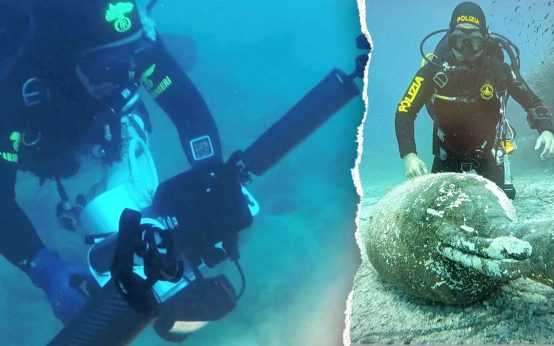 Police Discover Ancient Roman Artifacts Off Sardinian Coast
  Urgent Need for Action in East Africa’s Food Crisis
  Suspected Plague Death in Siberia Sparks Health Measures
 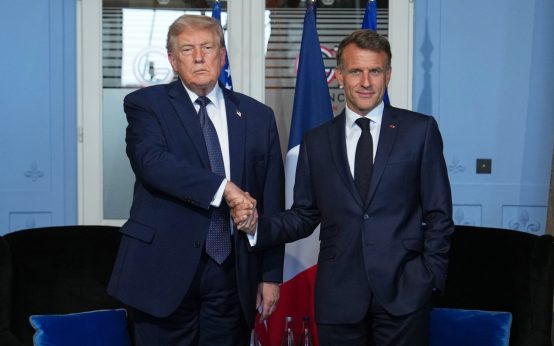 G7 Nations Agree to Release 100 Million Barrels of Oil Amid Fuel Price Surge
  Co-Pilot Attempts Hijack on Flight to Tel Aviv