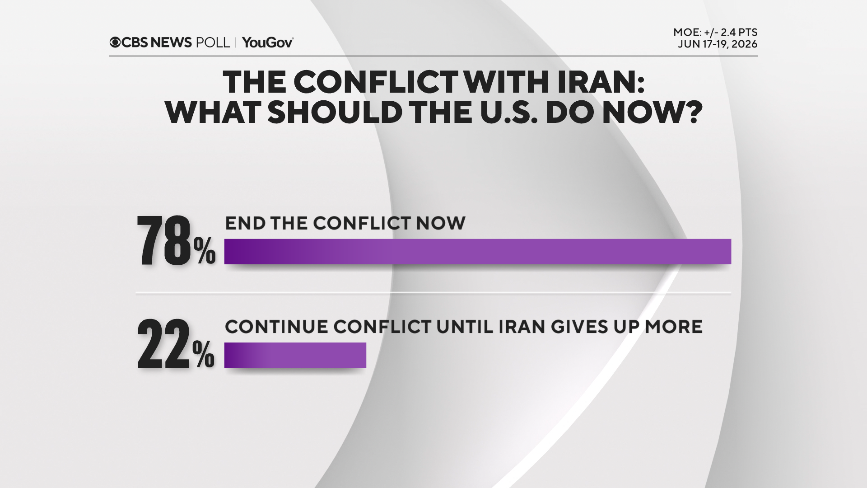
Americans express a strong desire for an end to the Iran war, particularly among those affected by rising gas prices. Many hope for relief in gas costs, but opinions persist that the U.S. has not achieved its strategic or economic goals. A substantial portion doubt that Iran’s nuclear ambitions are halted or that threats against neighboring countries will cease.
There is skepticism toward the Trump administration’s satisfaction with its objectives, as the belief grows that the focus is on exiting the conflict, not accomplishing goals. Few Americans feel the new agreement favors the U.S., with limited confidence in making Iran safer or changing its leadership to one pro-U.S.
Assessing Iran’s Situation
Many Americans foresee future threats from Iran against regional neighbors, and deem the conflict not worth the costs incurred. Opinions split on whether U.S. strategic and economic interests have advanced.
Divisions Within Republican Party
The president’s GOP base shows internal divisions. Around 40% favor conflict continuation until Iran concedes more. They predominantly view the current regime as unacceptable and are divided on whether the U.S. has effectively curbed Iran’s nuclear program and regional threats.
Agreement Timing and Impact
The administration’s timing did not seem to anticipate potential global economic reactions. There is public doubt about perceived goal achievement, with priority seemingly placed on ending the conflict now. Perceptions of potential lower gas prices have improved the president’s approval ratings slightly, particularly among non-college white Americans financially impacted by rising costs.
Expectations and Concerns
The desire for the war to end is partially driven by an expectation of reduced gas prices, though many believe threats such as blocking the Strait of Hormuz may persist. Uncertainty surrounds Iran’s strength post-conflict; about one-third consider Iran weaker, while others see no change.
Gas prices are not the sole concern; Iran’s nuclear program is equally important. A significant group finds it unacceptable to end the war without leadership change in Iran, linking this to a belief in continued regional threats. Overall, sentiments lean towards the conflict having created more challenges than resolved.
The CBS News/YouGov survey gathered responses from 2,519 U.S. adults between June 17-19, 2026, adjusted to reflect nationwide demographics and previous voting patterns. It carries a margin of error of ±2.4 points.
 Sen. Cotton Opposes Permanent Daylight Saving Time
  Steve Hilton’s Latino Outreach and Gubernatorial Ambitions
  The Need for Reform in Presidential Nominations
  Controversy Surrounds Performances at Gillette Stadium
  Celebrity Controversies Over Political Activism and Speech
  Trump Pushes for Permanent Daylight Saving Time, Sharing Senator’s Contact Information