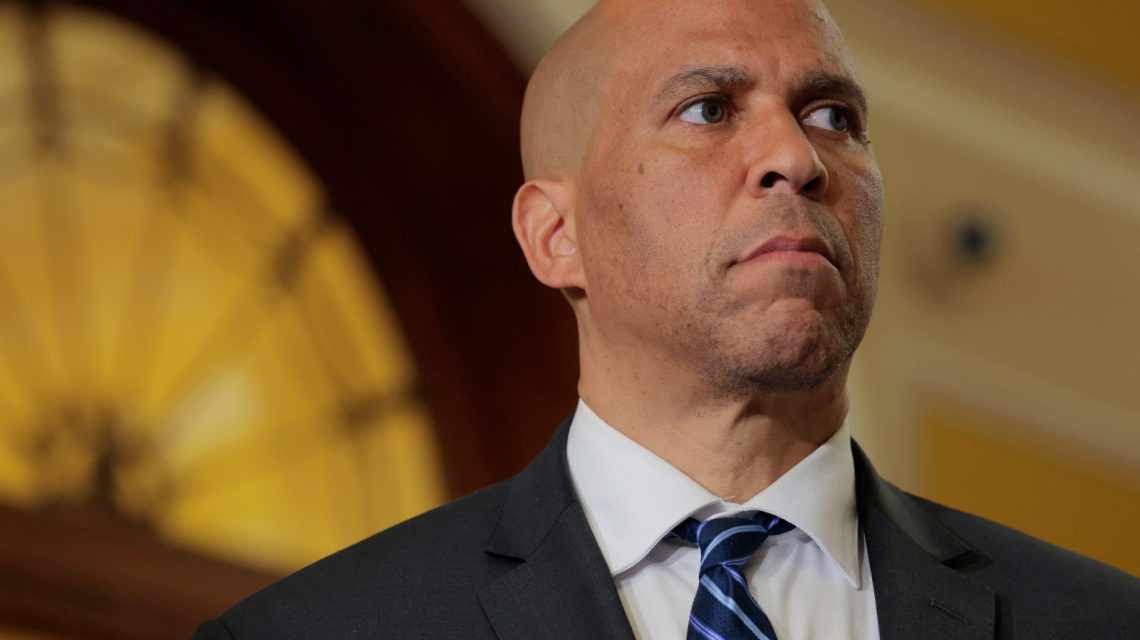
Senator Cory Booker expressed opposition to the Trump administration’s interim agreement with Iran, arguing that it offers Tehran substantial economic relief without securing lasting concessions. While he supports ending the U.S. conflict with Iran, Booker believes the current approach weakens American leverage.
Conflicting Views on Ending the War
Speaking on NBC News’ Meet the Press, Booker distinguished between concluding the war, which he has supported consistently, and the manner of U.S. withdrawal, cautioning that the approach diminishes U.S. power. This stance places Booker at odds with the administration and certain Democrats, while aligning him with conservative critics who assert the deal favors Iran excessively.
Clash With Carville Over ‘Credit’
Booker’s position contrasts with veteran Democratic strategist James Carville, who suggested President Trump merits credit for ending the conflict, despite initial missteps. Carville described the agreement as akin to surrender but advocated for the merit in exiting a failing war.
Booker firmly rejected Carville’s view, arguing against praising Trump for retracting a crisis he initiated. He equated granting Trump credit to acknowledging an arsonist for fleeing a fire he started, criticizing the administration’s handling of the situation.
Agreement Critique
Booker highlighted his disapproval of the interim deal, labeling it as a one-sided arrangement benefiting Iran significantly, providing billions in economic relief. He criticized Trump’s strategy on Iran, including his withdrawal from the Obama-era nuclear deal in 2015.
The interim agreement, formed as a memorandum of understanding (MOU), aims to halt hostilities while negotiations persist.
- Iran’s commitment not to develop nuclear weapons
- Reopening the Strait of Hormuz for global oil transit
- Rollback of U.S. naval blockade measures
- Potential sanctions relief granting Iran access to financial resources
- Cease of major military actions on various fronts
Critics argue that the framework offers Iran initial benefits without firm assurances, while supporters view it as a method to test compliance and prevent escalation.
The Trump administration defends the agreement as a pragmatic choice following lengthy conflict. White House spokeswoman Olivia Wales emphasized the deal’s merits, asserting that it fortifies American interests by ending fighting and reopening the Strait of Hormuz.
Conservative Opposition
Conservative figures, including Republican legislators, have expressed skepticism about the agreement’s structure.
Republican Senator Bill Cassidy argued that the deal fails to restrict Iran’s nuclear aspirations, allowing Iran to leverage the Strait of Hormuz. He cited the loss of American lives, economic burdens, and lifted sanctions as major missteps.
Former Vice President Mike Pence labeled the agreement as “appeasement,” criticizing its lack of firm commitments on Iran’s nuclear program, missile development, and regional support.
Media outlets controlled by Rupert Murdoch, including Fox News, the Wall Street Journal, and the New York Post, have also published critiques of the interim agreement.
Booker commented on the widespread criticism from both Democrats and Republicans, stating, “When you have Democrats and Republicans, conservatives and progressives, all coming out talking about capitulation, surrender, catastrophe, you know how bad this deal is.”
 The Trump Team’s Challenge to the Military Leadership
  Maryland First State to Restrict Electronic Pricing in Grocery Stores
  Activists Push for Nationwide Ban on Child Marriage in the U.S.
  Democratic Hopes and Historical Warnings in 2026 Senate Race
  Republicans Face Challenges Amidst Cost of Living Concerns
  A Different Kind of Fall for Congress This Year