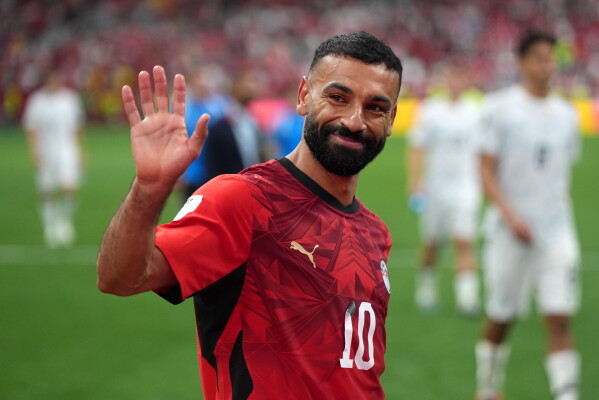
The Iranian national soccer team’s progress in the World Cup faced overshadowing controversies unrelated to field performance. Post-match, an individual wearing a shirt featuring a pre-revolutionary flag was detained for attempting to invade the pitch. Despite quieter demonstrations compared to previous days, an altercation resulted in a fan being transported to the hospital.
Prior to the match, U.S. Homeland Security Markwayne Mullin claimed Iran attempted to send an individual tied to the Revolutionary Guard to the U.S. In response, the Iranian soccer federation strongly denied any official representation’s denied entry, labeling Mullin’s statement as unfounded. Mullin alleged that Iran’s travel group of 53 to the U.S., unlike typical delegations of 120, included individuals connected to the IRGC.
The federation asserted these claims lack evidence, viewing them as an attempt to disguise discriminatory practices. Throughout the tournament, Iran criticized the infusion of politics into soccer, even as new discussions to end the ongoing conflict opened in Switzerland. Vice President JD Vance voiced hopes for a fresh start in these talks.
Iran’s team faced logistical challenges, notably their commute to training facilities in Mexico, not Arizona, and restrictions on bringing certain officials. The federation plans to file a complaint with FIFA. Player Alireza Jahanbakhsh emphasized the team’s focus on recovery and upcoming travel to Seattle. “We seek equal treatment as the other teams,” said Jahanbakhsh, aiming for smooth adaptation for their next match against Egypt.
Fan opinions varied on the Mexican training location near Los Angeles. While some felt the team faced undue hardship, others appreciated the accessibility. Shamira Ghaemmaghami of Orange County supported the players from her heritage, expressing the view that sports should bridge divisions, not amplify them.
A few hundred demonstrated against the Iranian regime outside the stadium, with incidents of minor conflicts but less intensity than initial games. Inside, spectators waved flags dating back to before the 1979 revolution alongside Iran’s official flags. Belgium fans joined the colorful crowd, along with supporters in various national jerseys, reflecting global interest in the event.
Gerald Martinez from Tucson, who wore an Iranian scarf, empathized with the team’s perceived disadvantage due to the venue switch. Stefan Arts from Belgium noted a welcoming attitude from Iranians rooting for his nation’s team. However, Arman Sharif, demonstrating outside, felt the players aligned with Tehran’s government.
This report draws contributions from Associated Press reporters across various locations, deepening the insights into the ongoing World Cup developments and their broader implications.
 Saquon Barkley Advocates for Natural Grass in the NFL
 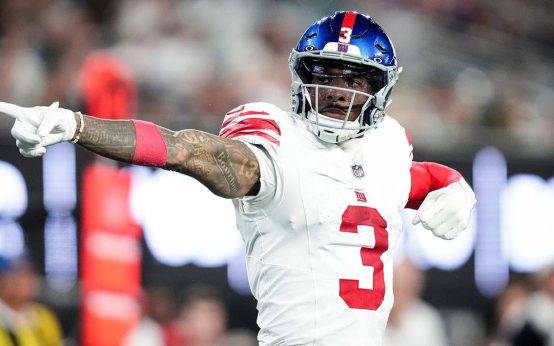 Odell Beckham’s Strained Return to the Giants
 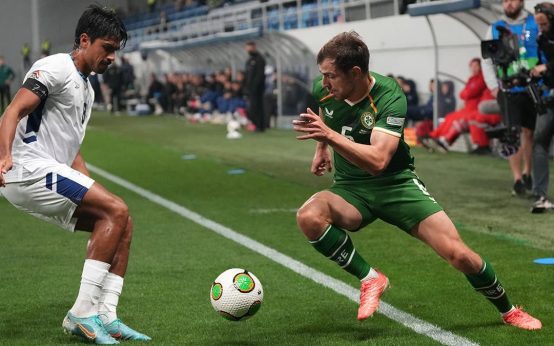 Israel and Ireland Soccer Teams Display Tension in Nations League Match
 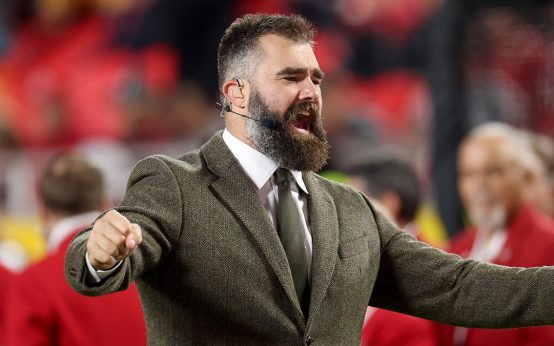 Jason Kelce’s Broadcasting Blunder Highlights Washington’s Name Change Controversy
 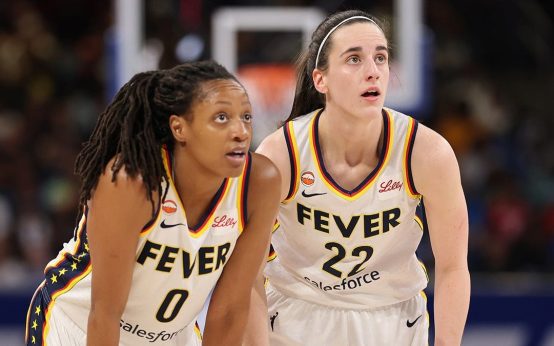 Kelsey Mitchell Discusses the Challenges and Opportunities in the WNBA
 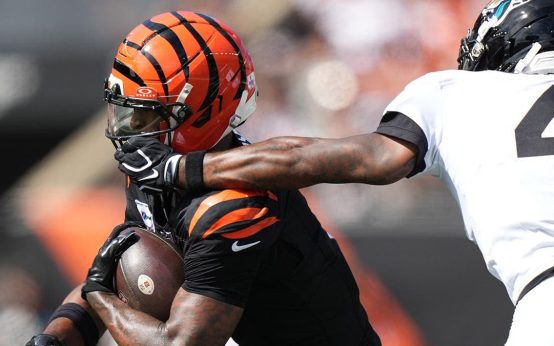 Joe Burrow’s Word Association and Bengals’ Challenges