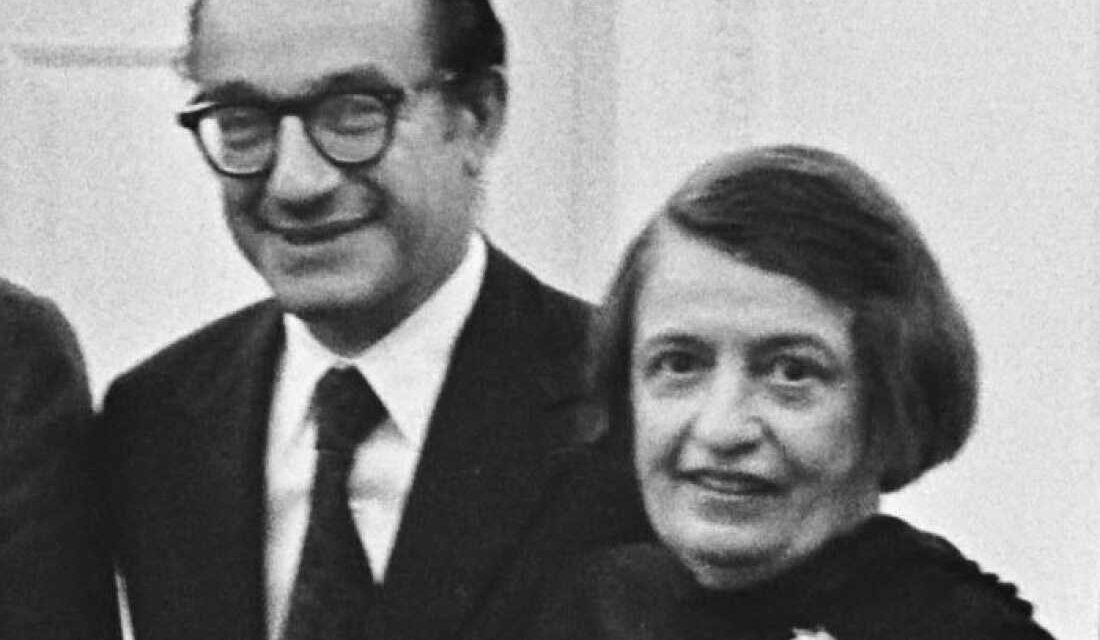
Alan Greenspan, a prominent former central banker who passed away recently, had a significant intellectual relationship with author Ayn Rand. Rand’s 1957 novel, Atlas Shrugged, is widely appreciated by conservatives. The Library of Congress has recognized it as a book that shaped America.
The duo’s first meeting occurred while Greenspan was in his mid-twenties and Rand was already well-known for her 1943 bestseller, The Fountainhead. Their introduction happened through Greenspan’s then-wife, Canadian art historian Joan Mitchell. Mitchell had connections with Nathaniel Branden, Rand’s protégé and longtime partner.
Greenspan and Mitchell married in 1952 but divorced shortly after. Despite this, Greenspan’s relationship with Rand endured. They remained friends until Rand’s death in 1982. Branden’s connection led Greenspan to be part of Rand’s “Collective.” This small group of intellectuals met regularly at Rand’s Manhattan apartment to discuss various topics. Greenspan became a regular attendee.
In Greenspan’s 2007 memoir, The Age of Turbulence: Adventures in a New World, he mentions that Rand nicknamed him “the undertaker” due to his preference for dark suits and a serious demeanor. Despite a somber reputation, Greenspan had artistic talents. He was a skilled musician. Before deciding on economics at New York University, he enrolled at Juilliard, studying clarinet. As a teenager, he played in a swing band with jazz legend-to-be, Stan Getz. His musical tastes reflected his conservative views; he criticized most post-big band music as “on the edge of noise” in his memoir.
Greenspan contributed writings to Rand’s magazine, The Objectivist, notably with an influential essay on the gold standard in 1966, later reprinted in Rand’s book, Capitalism: The Unknown Ideal. During his swearing-in ceremony as chairman of the Council of Economic Advisers under the Ford administration, Rand stood beside him along with her husband, Frank O’Connor, and Greenspan’s mother, Rose Goldsmith.
“Ayn Rand became a stabilizing force in my life,” Greenspan stated in his memoir. “She was an original thinker, sharply analytical, strong-willed, highly principled, and stressed rationality as the highest value. Our values aligned; we both emphasized the significance of mathematics and intellectual rigor.”
 Trump’s 2024 Reelection and Evolving Voter Dynamics
  Defense Secretary Emerges as Key Player in the Trump Administration
  Hegseth’s Vision for the Military: Balancing Tradition and Innovation
  Significant Funding Boosts Ken Paxton’s Texas Senate Campaign Amid Tight Race
  U.S. States Extend Gas Tax Waivers Amid Rising Fuel Costs Due to Iran Conflict
  USCIS Raises Immigration Fees