
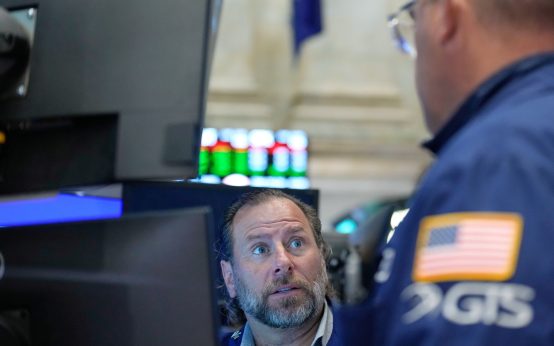
On Tuesday, Wall Street experienced a downturn led by a sell-off in big technology stocks. This decline spread from Asia to the U.S., fueled by concerns about potential interest rate hikes before the end of the year.
The S&P 500 index fell 0.9%. It has recently seen gains in 11 of the last 12 weeks, largely due to technology stocks. The Dow Jones Industrial Average, which is less reliant on technology stocks, experienced a slight decrease, dropping 8 points, or less than 0.1% as of 10:42 a.m. Eastern. Meanwhile, the Nasdaq composite fell by 1.4%.
Stock markets across Asia also faced declines, including a 10% drop in South Korea’s Kospi index. European markets followed suit with decreases. Technology stocks significantly impacted the market, especially companies with high valuations due to the recent surge in artificial intelligence enthusiasm. Although more stocks within the S&P 500 gained than fell, the overwhelming weight of tech stocks led the market decline.
Micron Technology saw a slump of 9.7%, and Nvidia fell by 2.6%. In South Korea, Samsung Electronics dropped 12.3%. Despite early fluctuations, SpaceX shares rose by 1.8%. The company, notable for its market debut, plans a bond offering partly for AI development funding, reflecting broader industry spending trends.
The possible increase in interest rates is impacting AI-related stocks. Investors worry that such hikes could slow economic growth. The tech sector within the S&P 500 surged 27% over three months and 18% for the year. South Korea’s Kospi nearly doubled this year.
The Federal Reserve might raise interest rates yet again this year, with Wall Street estimates putting this probability at 85%, up from 60% a week before. The yield on the 10-year Treasury dropped to 4.49%, while the 2-year Treasury yield decreased to 4.20%. Bond yields remain high due to inflation concerns.
Throughout the year, inflation has climbed, causing an increase in energy prices largely due to conflicts between the U.S. and Iran. These higher costs affect shipping and, subsequently, businesses and households. In June, consumer prices were reported to have risen 4.2% in May from a year earlier—marking the highest increase in three years.
A forthcoming report expected on Thursday could show further inflation growth. Oil prices have slightly decreased amid U.S.-Iran negotiations to end their conflict. The price of U.S. crude oil fell to $72.60 per barrel, and Brent crude to $76.54. These figures remain higher than pre-conflict prices.
 U.S. Stocks Recover Amid Oil Price Cooldown
  Navigating Interest Rate Hikes: Where Savers Should Stash Their Cash
  Kevin Warsh’s Approach to Inflation Control
  Nike Stock Plunges as Company is Dropped from S&P 100
  Nike Faces Criticism from Investor Over Activist Stance
  Maximizing Returns: The Benefits of a 3-Year $100,000 CD Account