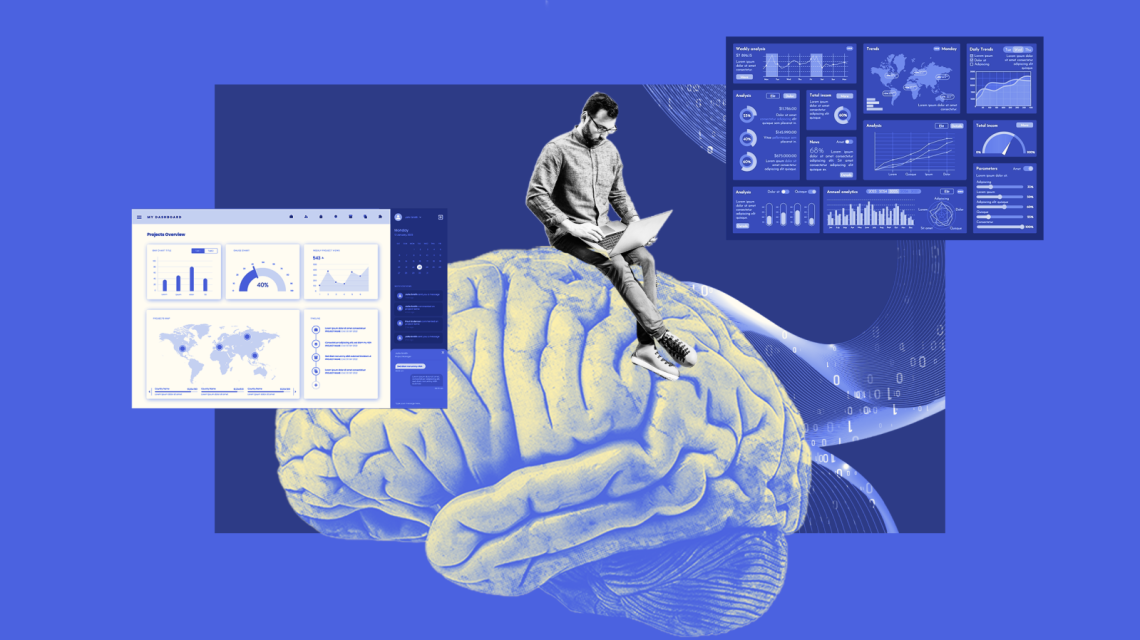
Visualize a Wall Street banker leveraging AI, and you might see them speeding up pitch decks and models. But Kevin Buehler perceives a more profound shift on the horizon. As specialized AI tools permeate financial workflows, they could redefine roles, how senior employees engage with these tools, and the placement of human judgment in processes.
During the “AI Impact Forum” by Newsweek, Kevin Buehler, chief innovation officer at Rogo and senior partner emeritus at McKinsey & Company, discussed AI’s growing impact in finance. It’s moving beyond enhancing personal productivity.
Dr. Ranjit Tinaikar hosted the session, highlighting Rogo as an AI company serving financial institutions. This category covers AI-native firms merging software and services. Felix, an AI-driven workflow agent for financial services, illustrates potential changes for bankers and investors. Felix can address tasks that consumed junior bankers’ time, such as creating pitch materials and analyzing company scenarios.
“I think this elevates the work that folks can do,” Buehler observed.
Firms might leverage productivity gains for reducing late nights, or they might redirect employees to client-related tasks and coaching. This could transform organizations traditionally structured around layers of junior labor.
Buehler noted, “Right now most firms look like pyramids. We envision a shift toward skyscrapers.” In this model, senior directors remain at the top, supported by AI-knowledgeable professionals who manage complex workflows. At the base are specialized agents handling domain tasks.
This structural change prompts questions about employment. While AI might eliminate some manual tasks, Buehler refrains from framing this as direct replacement. Firms could decide to utilize the time saved for cost reduction or expand client services and new work types.
DBS Bank in Singapore exemplifies this shift. They upgraded their AI capabilities and retrained personnel, boosting mid-market commercial banking, which resulted in revenue growth rather than sheer cost-cutting.
Buehler believes the transition phase could be uneven. “I am on balance optimistic,” he said. “The one thing I am cautious about is the transition.”
Not all financial firms will adopt AI uniformly. Tinaikar noted a tech rollout pattern: senior executives discuss tools, but junior employees use them first. Buehler acknowledged this, recognizing junior employees lead initial AI adoption. Rogo’s approach aims to influence senior adoption by integrating AI naturally into existing workflows.
As adoption broadens, Buehler identifies challenges. Beyond initial users, organizations must alter entire workflows to fully benefit from AI, such as refining an M&A process with AI support. This involves balancing security, compliance, and accountability while connecting workflow stages.
In finance, AI cannot act independently without oversight. Rogo ensures its documentation includes citation, allowing traceability back to source material. Bankers must assess the logic behind AI-produced conclusions.
Governance goes beyond individual document checks. Buehler, experienced in risk and cybersecurity at McKinsey, stated that AI demands elevated security measures. Rogo uses strict data policies and frequent testing, with banks assessing new models themselves.
Rogo combines the Felix platform with specialized personnel to assist financial clients within customized workflows. This approach may challenge traditional software and service models.
The critical lesson: focus on specialization. Companies in regulated domains must understand markets thoroughly. “Get extraordinarily deep and understand your clients as well as they understand themselves,” Buehler advised.
AI can expedite tasks like creating decks or analyzing data. The real test for financial firms is redesigning workflows while ensuring human oversight, maintaining that a human remains accountable.
Buehler emphasized, “Banks demand that you have a human who’s ultimately responsible.”
 Trump’s 2024 Campaign Targets Young Men Through Cryptocurrency
  How Modern Windows Improve Home Insulation
  State Department Simplifies Passport Process with Online Applications
  Senate Democrats Block Data Center Bill Over Efficiency Concerns
  Future Cities: Ambitious Projects Aiming for Innovation and Sustainability
  High-Profile Hearing and AI Developments: Key Political Moves