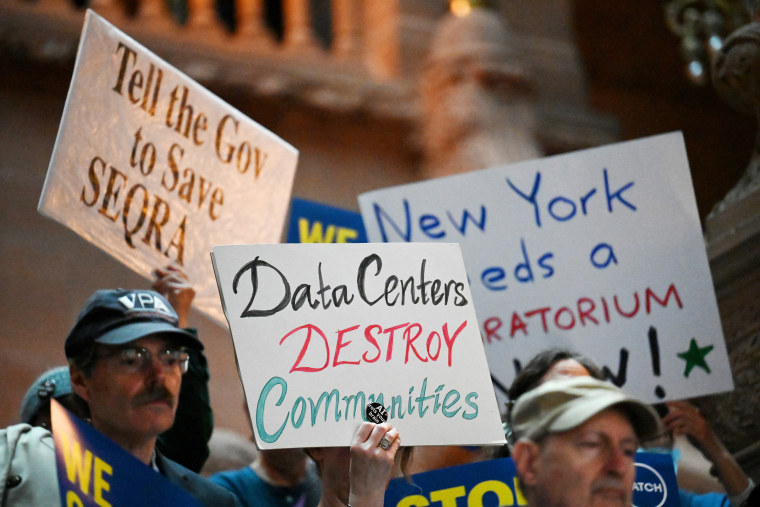
Rep. Ro Khanna from California has urged for a ‘Data Center Bill of Rights’. During an interview on NBC’s ‘Meet the Press’, he insisted that data centers should be regulated. Khanna believes local communities should have more influence on where these centers are built.
Earlier this month, Khanna introduced a resolution outlining guidelines for data centers. This issue has gained attention in elections across the nation. Host Kristen Welker questioned if opposing data center infrastructure would hinder the U.S. from leading in artificial intelligence. In response, Khanna stated, “You can’t impose a data center on a community without their input.”
“You can’t be jacking up electricity prices,” he emphasized. “Even technology leaders agree there needs to be a pause to address these concerns.”
Khanna clarified that he is not against data centers but believes in their regulation. “I introduced a Data Center Bill of Rights,” he mentioned. “Such centers should not be in residential or farmland areas. Communities should decide their placement.”
Khanna’s proposed resolution would allow communities to ban data centers in residential zones. It also addresses concerns about increased electric bills and demands the use of clean energy. These centers have sparked debates due to water and energy use, noise, and pollution issues.
The rise of artificial intelligence has led to an increase in data centers nationwide. However, this has caused controversy in many communities. Local residents express concerns over their environmental impact. This issue has become significant in elections. A Gallup survey from March indicated that 71% of Americans somewhat or strongly oppose the construction of AI data centers nearby.
 Democratic Hopes and Historical Warnings in 2026 Senate Race
  Republicans Face Challenges Amidst Cost of Living Concerns
  A Different Kind of Fall for Congress This Year
  Cornel West and Sean Hannity Discuss Differences on Podcast
  Trump Unveils AI-Powered America.gov Platform
  Upcoming Congressional Elections: Key Districts to Watch