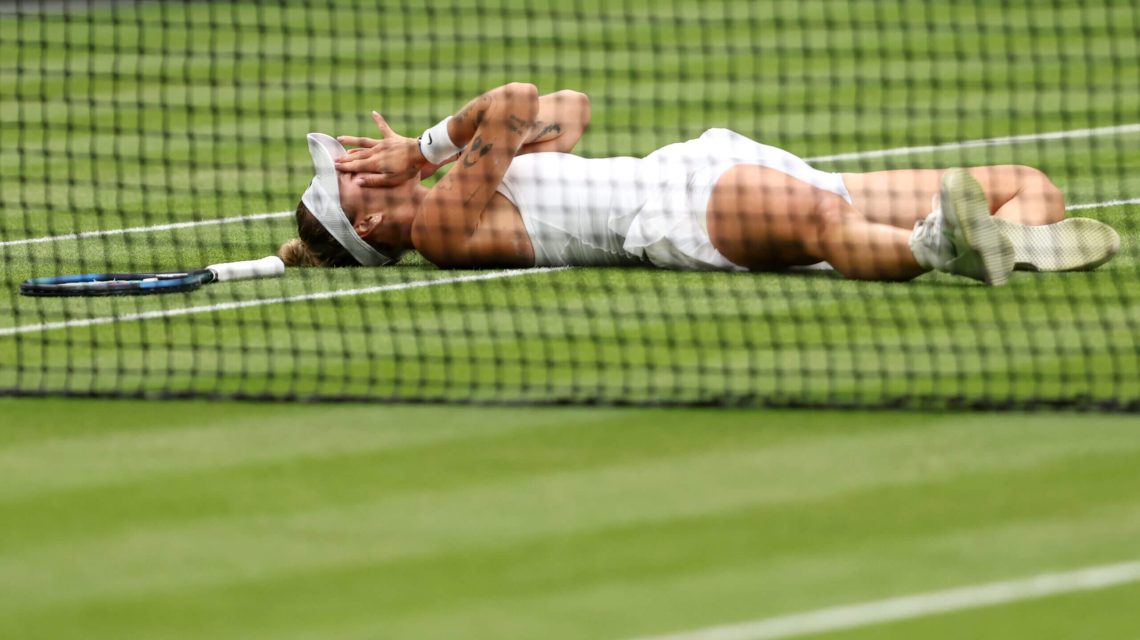
Markéta Vondroušová, the 2023 Wimbledon champion, received a four-year suspension from professional tennis. The ban followed her refusal to undergo a doping test in December 2025. Her appeal during a hearing in June 2026 cited stress and mental health concerns as factors in her decision-making.
The Offense and Penalty
Vondroušová failed to provide a sample when a Doping Control Officer visited her home for an out-of-competition test on December 3, 2025. The International Tennis Integrity Agency (ITIA) charged her with refusing a test. An independent tribunal supported the ITIA’s recommendation for a maximum four-year ban, as her evidence offered no strong justification for refusal.
Vondroušová’s Defense
In April, Vondroušová shared her account on Instagram, explaining how stress and anxiety disorders impacted her response to a surprise doping test request outside her scheduled testing hour. She referenced a prior incident involving fellow Czech player Petra Kvitová, indicating heightened concerns for personal safety.
During the tribunal, Vondroušová presented medical evidence of an acute stress reaction. However, her argument about the test being outside her scheduled hour did not play a significant role in her defense.
Understanding Anti-Doping Rules
According to tennis’ anti-doping regulations, players must be available for testing at specified times but can also face random checks. The ITIA emphasizes surprise tests as essential for a clean sport. The ITIA’s Karen Moorhouse and Nicole Sapstead made clear that players refusing tests face significant consequences.
Misunderstandings about testing protocols seem common among players, as highlighted by comments from athletes like Andy Roddick and Alexander Zverev. These instances underscore the need for better education on the rules.
Severity of the Punishment
The ITIA states that refusing a test carries a penalty equivalent to testing positive for doping. This approach serves as a deterrent against avoiding tests to conceal doping. A lack of compelling reasons for refusal leads to severe bans, which aim to uphold the integrity of sport.
Vondroušová’s Reaction
Vondroušová expressed profound distress over the ban, asserting her innocence and a clean anti-doping record. She recounted the emotional toll and the exhaustive efforts made to clear her name.
Support from Fellow Players
Her social media posts received support from other tennis players, including notable figures like Coco Gauff and Ons Jabeur. The Professional Tennis Players Association (PTPA) raised concerns about the ban’s severity, especially given Vondroušová’s clean record.
Future Steps
The ITIA plans to release a detailed decision soon. Vondroušová, the ITIA, and others involved can appeal the decision to the Court of Arbitration for Sport (CAS) within 21 days of the written decision. Vondroušová is considering her next steps with her legal team.
During her suspension, Vondroušová is barred from participating in any events under the ITF, WTA, ATP, the Grand Slams, or any national association.
 Nick Saban’s Comments on ESPN Spark Debate Over College Sports Regulations
  Freddy’s American Adventure: From Soccer to College Football
  Brock Purdy’s Impressive Start in the 2026 NFL Season
  The Value of Retaining Miles McBride for the Knicks
  Penguins Make History with Dominant Season Opener
  Sonny Gray Expresses Frustration After Game Against Yankees