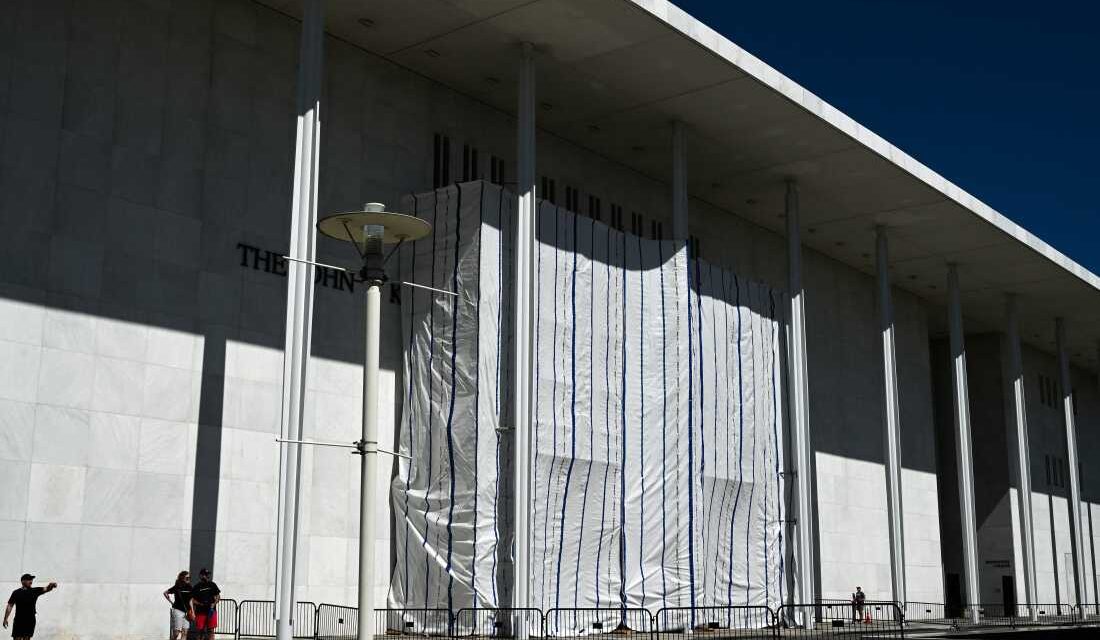
The John F. Kennedy Memorial Center for the Performing Arts in Washington, D.C., is currently shrouded in mystery due to a tarp covering its front facade. On June 13, a federal judge raised concerns about the purpose of this tarp and the scaffolding surrounding the center. Judge Christopher R. Cooper has demanded the arts complex’s leadership provide clarity on its operational and programming status.
On Wednesday, the Kennedy Center received orders to provide a status report detailing upcoming plans within weeks. Cooper highlighted the need for explanation regarding the purpose and condition of the tarp and scaffolding. This construction obscures the signage that displayed the names of President Trump and President John F. Kennedy, which has been removed as part of ongoing legal proceedings.
Judge Cooper’s directive requested a quick response from Kennedy Center administrators on construction and programming plans. President Trump, currently serving as chairman, had announced a July 5 closure for renovations. However, lawyers for the center filed for an extension on the due date for updates, citing management’s intention to present the board with various renovation options.
Options include a full closure for renovations, partial closure maintaining limited programming, or phased closures addressing critical infrastructure while preserving full programming.
Despite these plans, Cooper denied the extension request and required the center to file a report shortly after its July board meeting or by July 31, whichever comes first. It must outline specifics about the tarp and scaffolding erected on June 13. The Kennedy Center’s administration previously delayed removing President Trump’s name from the facade, leading to the current setup and the legal challenge.
Rep. Joyce Beatty, who filed a lawsuit against President Trump and the center’s board, is at the heart of these legal proceedings. Earlier decisions stipulated Beatty’s participation in board meetings after previously being excluded. NPR sought comments on Beatty’s voting intentions at the upcoming meeting but received no response.
The center faces challenges in rebuilding a dynamic programming schedule. Prominent artists have distanced themselves due to political controversy, while key programming staff have either resigned or been laid off. Unlike other arts venues, Matt Floca, now leading the center, lacks experience in artistic direction and fundraising. His background is in construction management.
Traditionally, the Kennedy Center announced its season lineup well in advance, but current offerings are scant, featuring mainly outdoor movies and children’s workshops. The center used to host over 2,000 events yearly.
An additional legal battle arose when the Washington National Opera sued the Kennedy Center on June 12, claiming withheld funds meant for the Opera’s programs. The lawsuit demands $17 million and represents another hurdle for the arts complex.
 Historical Events in Chicago on October 3
  Martina Navratilova’s Enduring Influence in Tennis and Beyond
  World Porridge Making Championship: A Unique Scottish Tradition
  Readers React to Miss Manners Column
  Troy Swanson: Award-Winning Librarian Transforming Academic Libraries
  Lisdoonvarna Matchmaking Festival: A Unique Tradition