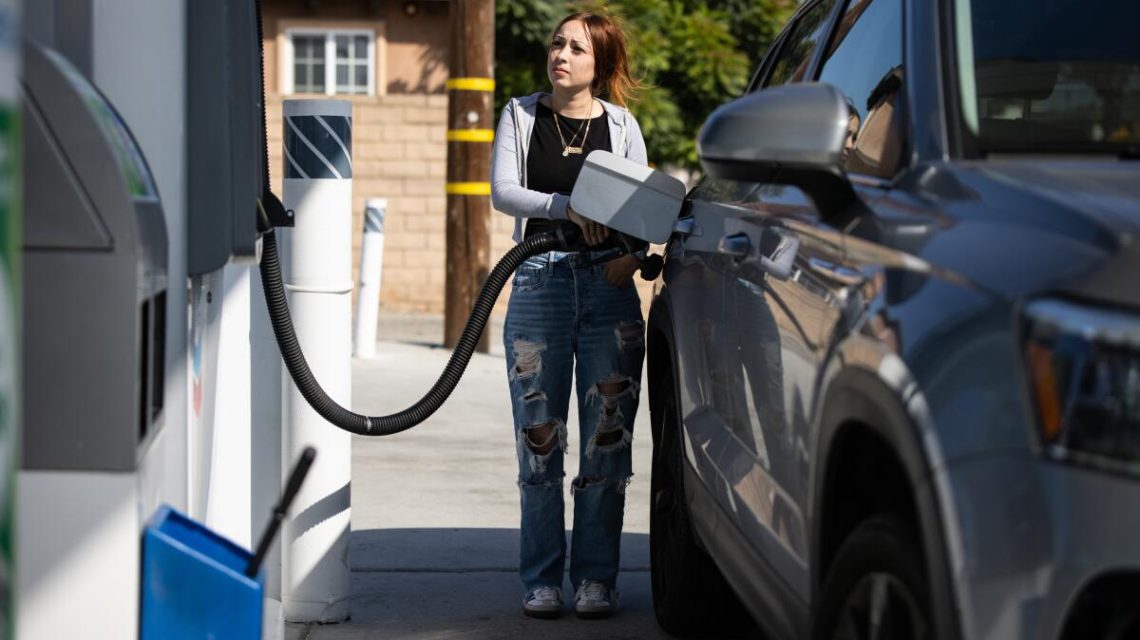
The President has confidently assured Americans of an impending economic turnaround, partly due to a recent agreement aimed at ending hostilities with Iran. At a public speech, he predicted future gas prices to decrease to $2.50 per gallon, citing a potentially historic economic boom.
Nevertheless, many economists express skepticism. They argue that inflation factors will likely persist for some time, posing continual difficulties for American families and impacting the political landscape as elections approach.
“Very soon you’ll be at $2.50 a gallon for gasoline,” said the President.
Despite an agreement to end conflict with Iran and reopen the Strait of Hormuz, high energy prices will not subside instantly. Damage to infrastructure in the Middle East will require considerable time to repair. Experts highlight that inflation will likely remain high for the foreseeable future.
Patrick Harker from the Wharton School highlighted ongoing infrastructure challenges.
Oil prices saw a reduction last week, with average gas prices decreasing marginally. However, restoring oil transport through the Strait of Hormuz and reducing gas prices will be a gradual process.
“I would expect there to be a continued inching downward,” noted Michael Negron, emphasizing the slow pace of price recovery.
This gradual process affects many sectors, with affordability remaining a major concern. Households continue feeling strained, potentially impacting election outcomes as Democrats try to capitalize on public discontent.
The Iran conflict has significantly burdened American budgets. Recent statistics reveal that average households have borne costs ranging from $775 to $1,300 due to fuel expenses and taxes. As of Friday, the national average gas price was at $3.90, reflecting high costs that permeate various sectors, including agriculture.
The administration maintains a positive economic outlook, downplaying concerns about expenses. However, opposition and demand for tangible improvements remain strong, leaving the President’s approval on economic issues waning.
An NPR/PBS News/Marist Poll reflected a drop in the President’s economic approval to a new low. Many citizens express that rising gas prices impose a significant strain, with 34% calling it severe.
Despite political assertions of progress in U.S.-Iran negotiations, tensions linger. The unpredictability of future discussions keeps markets wary. Undoubtedly, the situation contributes a level of risk and uncertainty concerning oil prices and insurance.
 The Trump Team’s Challenge to the Military Leadership
  Maryland First State to Restrict Electronic Pricing in Grocery Stores
  Activists Push for Nationwide Ban on Child Marriage in the U.S.
  Democratic Hopes and Historical Warnings in 2026 Senate Race
  Republicans Face Challenges Amidst Cost of Living Concerns
  A Different Kind of Fall for Congress This Year