Trump’s Instructions on Military Drills
President Donald Trump has instructed Defense Secretary Pete Hegseth to significantly reduce upcoming military exercises between the U.S. and South Korea. He argues that these drills send a “hostile” message to North Korea despite his relationship with North Korean leader Kim Jong Un.
In a Truth Social post, Trump expressed dissatisfaction with the U.S. agreeing to joint exercises, deeming them costly and unnecessary. Trump emphasized his strong relationship with Kim Jong Un. He noted his displeasure with the U.S.’s longstanding participation in these exercises.
Although Trump wants a reduction, he acknowledged it is too late to cancel them altogether. Newsweek sought comments from the Pentagon and the White House.
Strategic Concerns
Trump’s comments touch on sensitive security issues in Northeast Asia. The annual U.S.-South Korea exercises aim to enhance readiness and deter North Korean aggression. Pyongyang often condemns the drills as invasion rehearsals, sometimes reacting with threats or military actions.
With North Korea strengthening ties with Russia and China, U.S. officials increasingly view this as a regional security challenge. Any reduction in exercises could draw scrutiny from defense experts who value them for deterrence.
Trump’s Perspective
Trump’s stance centers on his diplomacy with Kim Jong Un, whom he met three times during his first term. He claims North Korea acted “unthreatening and respectful” under his presidency, arguing that the exercises send an inappropriate signal.
Trump also recalled a conversation with South Korean President Lee Jae Myung. He stated Lee declined participation in efforts regarding Iran’s denuclearization. It remains uncertain if the Pentagon will adjust the Ulchi Freedom Shield exercises due to these remarks.
Opposition from North Korea
North Korea criticized the upcoming exercises, warning it was ready to defend with “the most powerful force”. It accused the U.S. of seeking military dominance in the region. North Korea voiced objections to scenarios involving drones and cyberattacks.
Reports highlight North Korea viewing U.S., South Korea, and Japan military collaboration as a growing threat.
Rising Tensions
Tensions have intensified on the Korean Peninsula. Recently, South Korea fired warning shots at North Korean troops crossing the military demarcation line, prompting their return. South Korean officials maintain readiness and are monitoring developments closely.
Simultaneously, North Korea’s ties with Russia deepen as they exchange messages, reaffirming their partnership following North Korean support for Russia’s efforts in Ukraine.
Historical Context
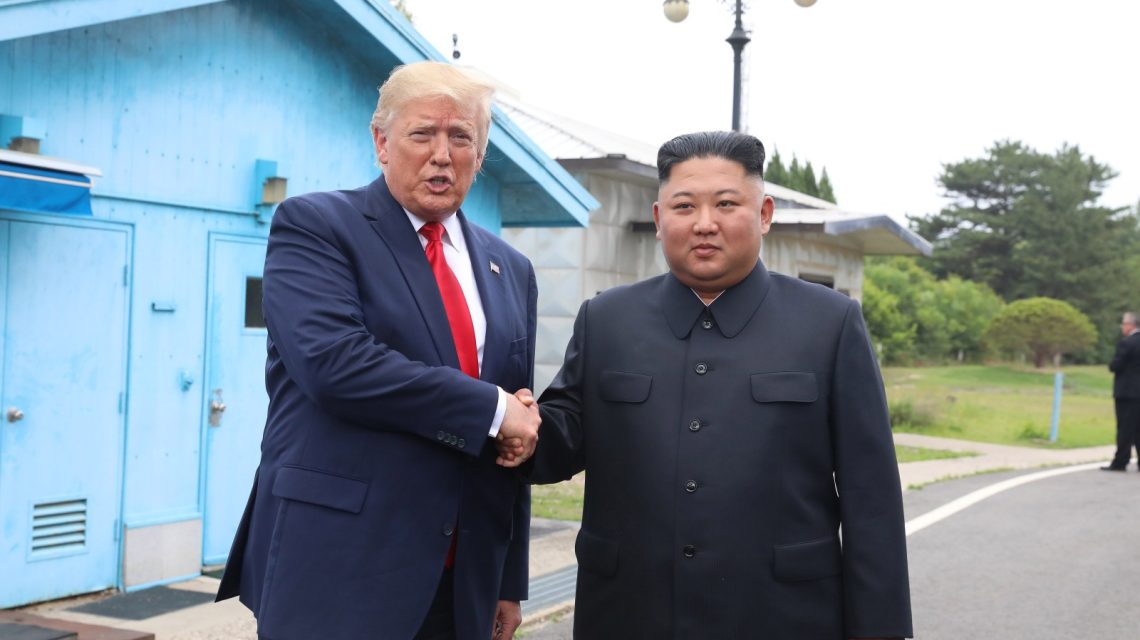
Trump often shares his open stance on renewed diplomacy with North Korea, highlighting his meetings with Kim as proof of their rapport. Trump appeared with Kim in Singapore in 2018, Hanoi in 2019, and the Korean Demilitarized Zone.
Despite stalled progress on North Korea’s nuclear program, Trump views his relationship with Kim favorably. Recently, he posted a photograph with Kim, reiterating their good relations as North Korea criticized the exercises.
Looking Ahead
Whether Trump’s directive alters the Ulchi Freedom Shield or future military plans remains uncertain. Any changes could face defense scrutiny, especially given North Korea’s ongoing military advancements.
Trump’s comments highlight his approach to North Korea, heavily influenced by personal diplomacy that characterized his first presidency.
 The Trump Team’s Challenge to the Military Leadership
  Maryland First State to Restrict Electronic Pricing in Grocery Stores
  Activists Push for Nationwide Ban on Child Marriage in the U.S.
  Democratic Hopes and Historical Warnings in 2026 Senate Race
  Republicans Face Challenges Amidst Cost of Living Concerns
  A Different Kind of Fall for Congress This Year