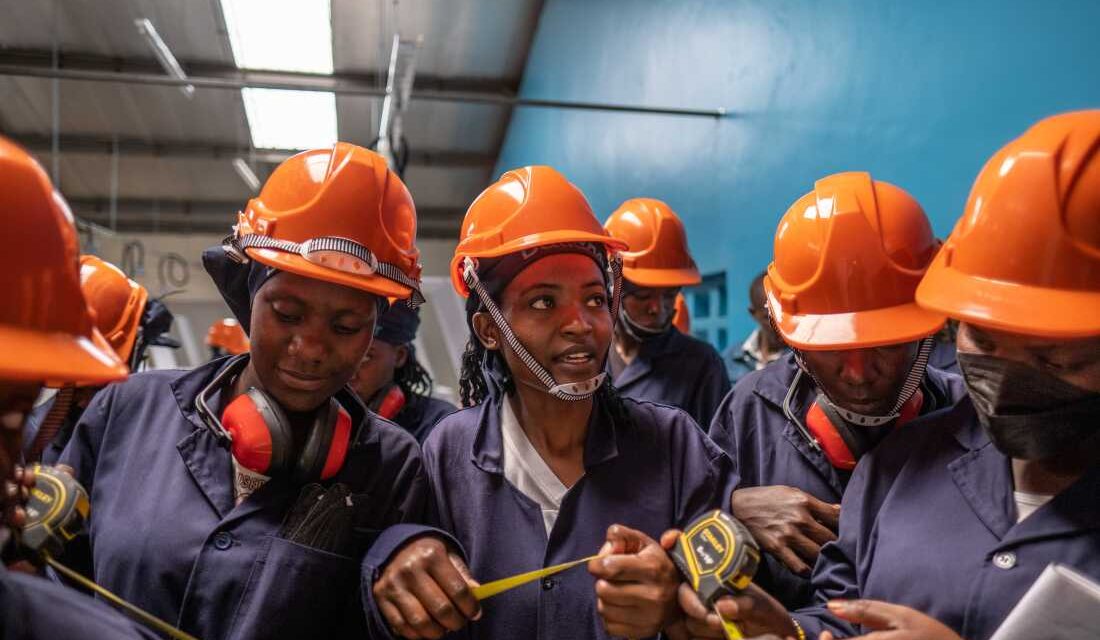
In Nairobi, Kenya, at the Buildher training facility, women participate in a tiling class. Amidst the noise of machines at Furniture International, Diana Ojiambo, a 24-year-old machine operator, shares her journey. Initially shy, she now confidently operates a PVC edger, surrounded by her male colleagues. Jane Mwangi, a 23-year-old supervisor, coordinates the efforts of women assembling cabinetry. Just a year ago, none of these women worked in this field. Ojiambo had never worked with men before.
Despite a construction boom in Nairobi, women remain underrepresented in Kenya’s building trades. The National Construction Authority reports that women make up only 3% of the country’s accredited construction artisans. Many women in the sector face lower wages and often take informal roles. Social expectations also burden women with unpaid caregiving and household responsibilities.
Buildher, a nonprofit in Nairobi, seeks to transform this narrative. It conducts year-long training and internship programs in carpentry, tiling, painting, and other trades, aiming to provide women with better-paid roles. Since 2019, Buildher has trained over 1,000 women. Graduates have seen a significant increase in earnings, from $1.50 to $11-$12 per day. A 2024 Dalberg study noted that 65% of Buildher graduates continued in construction a year after training.
“I wanted to help women see their potential,” says Tatu Gatere, Buildher’s cofounder. Encouraging success stories have spread through graduates sharing experiences.
For many, these programs are life-changing. Diana Ojiambo, a single mother, learned about Buildher from a friend in Kibera. Previously unemployed, she faced financial difficulties. Now, she supports her family and aims to start a carpentry business. Despite some skepticism from coworkers, Ojiambo believes in proving her capability.
At Buildher’s Spectrum Business Park training center, new trainees gather. Courses now include solar installation alongside established trades. Trainer Robert Ndungu emphasizes the transformation from novice to skilled professional. Yet, many women face pressures beyond technical training. From financial instability to resistance at home, the challenges are multifaceted.
Gatere recalls the hostility encountered on-site, even as women assumed leadership roles. Buildher addresses these issues with comprehensive training, combining technical skills with emotional resilience and physical readiness. The training includes wellness programs with yoga and nutrition support.
Research by Dalberg supports the impact of Buildher’s approach, noting increased incomes, decision-making involvement, and community support among graduates.
Ruth Kiarie, 27, enjoys Buildher’s courses. A single mother, she developed an interest in painting while volunteering in Kibera. She hopes to explore color psychology, helping others understand how colors influence mood.
Tatu City, a large development in Nairobi, serves as a proving ground for Buildher. Here, trainees gain hands-on experience, demonstrating quality work. Employers praise their professionalism, attributing success to Buildher’s training.
Buildher partners with firms to influence broader industry change, aiming for 10% female participation in skilled jobs by 2030. Addressing workplace conditions and pay equity is part of this goal.
Gatere envisions a future where women are empowered in construction without constant advocacy. She imagines women leading businesses and bidding for contracts independently.
Margaret Klamaitha, 22, fits tiles at Tatu City, reflecting on her progress. She plans to advance into quality control and eventually start her own venture. Her message is clear: determination can overcome societal barriers.
Christopher Clark reports on social change from France. Photojournalist Tommy Trenchard contributes from Cape Town, highlighting stories of resilience and transformation.