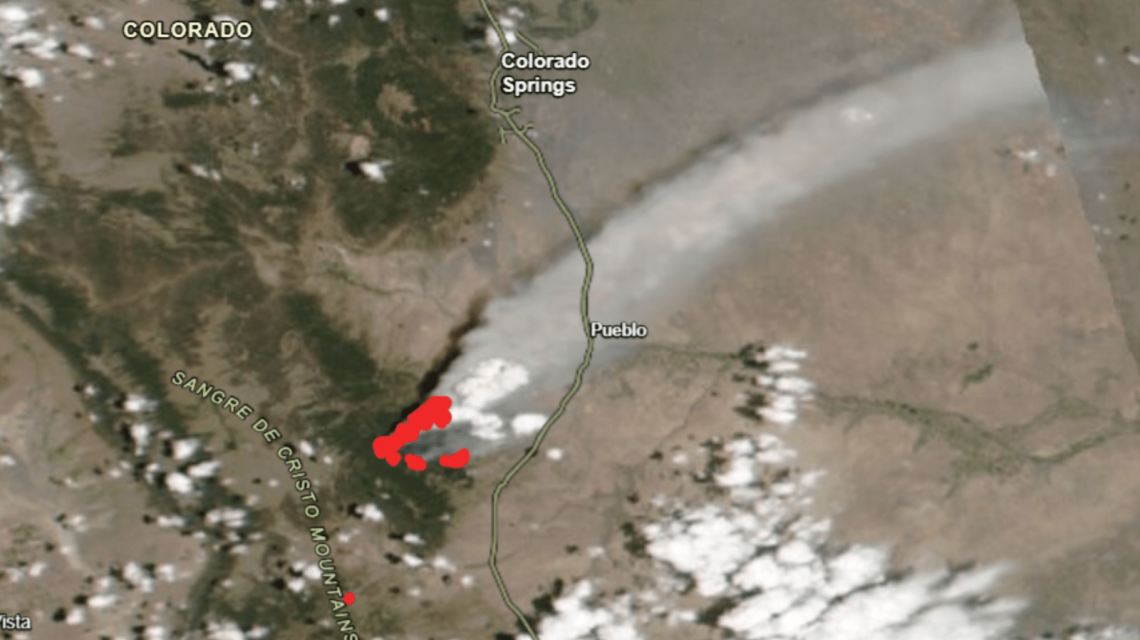
The Aspen Acres Fire in southern Colorado has expanded to over 89,000 acres, marking it as the seventh-largest wildfire in the state’s history. Firefighters are facing challenges due to changing weather conditions and increasing evacuation zones. Initially reported on June 29 in Pueblo and Custer counties, the fire covered 89,055 acres with 14 percent containment by Sunday evening. This information came from Facebook posts by Aspen Acres Fire 2026 and the Alaska Complex Incident Management Team, overseeing the response.
Colorado fire officials indicated that the wildfire resulted from human activity, but the investigation is still ongoing. The fire’s rapid growth led to its inclusion in Colorado’s list of the ten largest wildfires. It has since moved up to seventh place, surpassing several notable historic fires, according to a Sunday report by The Denver Post.
New Evacuation Orders Issued
The Fremont County Sheriff’s Office issued new mandatory evacuation orders on Sunday as the fire intensified. All regions under pre-evacuation status in Fremont County transitioned to mandatory evacuation. Evacuation orders affect the towns of Williamsburg, Coal Creek, and Rockvale, alongside roads, subdivisions, and rural areas. Authorities upgraded a pre-evacuation zone along Highway 67 to mandatory evacuation. Law enforcement and firefighters conducted door-to-door notifications for residents.
These orders expand existing evacuation zones impacting communities in Pueblo and Custer counties. Denver7 reported that Beulah, Rye, San Isabel, Wetmore, and Colorado City are among the areas under mandatory evacuation. The Colorado Sun indicated that over 3,800 addresses are affected by evacuation orders, impacting approximately 11,000 residents.
Hundreds of Structures Destroyed
The wildfire ranks as one of the most destructive in recent Colorado history. Over 180 structures, including homes, have been destroyed, with damage assessments ongoing due to active fire conditions and access limitations. The fire’s rapid spread has been fueled by strong winds, dry vegetation, and low humidity, crossing roads and threatening communities, necessitating overnight evacuations. More than 1,000 personnel are assigned to the fire, utilizing helicopters, air tankers, bulldozers, and hand crews to strengthen containment lines and protect homes.
What’s the Outlook?
On Sunday, fire managers noted that milder weather conditions helped progress along sections of the perimeter and increased containment. Crews successfully built and reinforced handlines and bulldozer lines in several sectors. Despite these efforts, officials warn that weather remains a key concern.
Active fire behavior is expected to persist over the next few days due to ongoing dry conditions across southern Colorado. Weather forecasts indicate low humidity, dry fuels, warm temperatures, and gusty winds, with little rain anticipated. Officials have cautioned that red-flag fire weather conditions and wind gusts could support ongoing fire growth and complicate containment in active areas. While containment has progressed, the combination of low humidity and strong winds could sustain fire activity into the coming days.
 Minnesota Family Files Civil Rights Lawsuit Over ICE Agent Shooting
  California Bans Child Marriage, Protecting Minors
  U.S. States Extend Gas Tax Waivers Amid Rising Fuel Costs Due to Iran Conflict
  Historical Events in Chicago on October 1st
  Patrick McEnroe Advocates for Collegiate Athletic Reform
  Push for Reparations Faces Challenges and Calls for Strict Eligibility