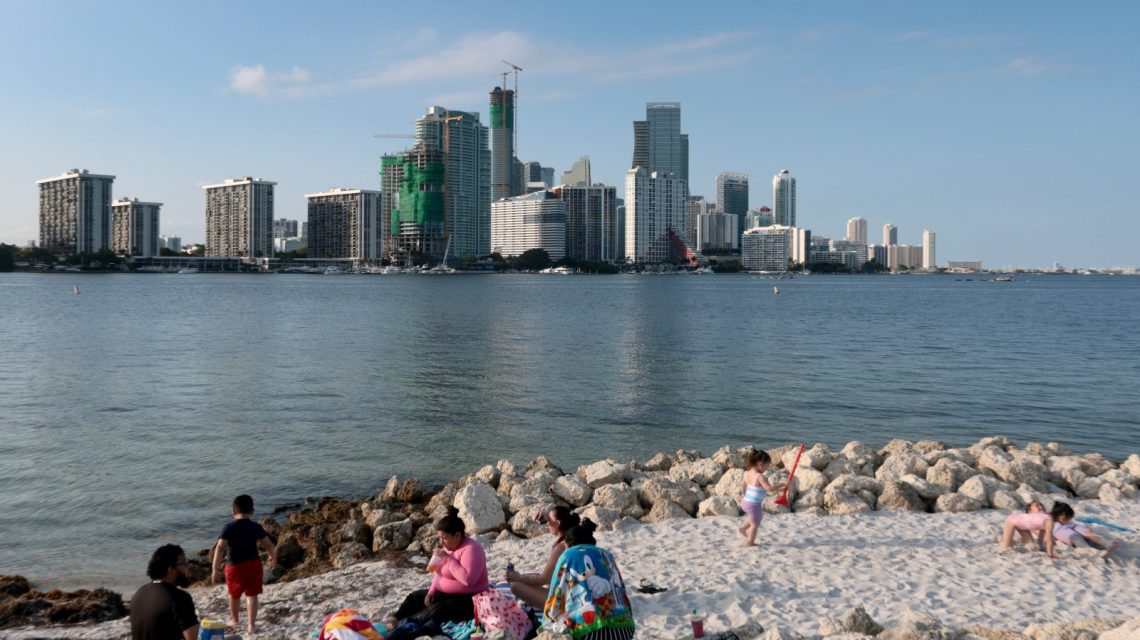
U.S. home prices continue to rise, reaching an unprecedented high in June, which has led to a downturn in sales. However, certain areas of the country are seeing a shift where buyers hold more negotiating power. Miami, Florida, stands out as a prime example, exhibiting more sellers than buyers, as highlighted by real estate brokerage Redfin’s latest data.
Redfin’s analysis shows that in Miami, there were approximately 140 percent more home sellers than buyers in June, marking the region as the leading buyer’s market nationwide. The supply of homes greatly surpasses demand, enabling buyers to negotiate more favorable deals.
Nationally, the housing market reflects a similar trend but not as pronounced as Miami’s. Redfin found about 48.5 percent more sellers than buyers across the U.S., indicating a buyer’s market. Experts define a buyer’s market as a scenario where sellers outnumber buyers by over 10 percent.
High borrowing costs, around a 6.5 percent average on a 30-year fixed-rate mortgage, and escalating home prices hinder American homebuyers from feeling the benefits of a buyer’s market. Only those financially equipped to purchase homes are finding this advantageous.
Southern markets demonstrate a unique scenario where buyers can set their terms due to significant discrepancies between seller and buyer numbers. Redfin’s data indicates that out of 47 analyzed metropolitan areas, 33 are currently buyer’s markets, with many metros having seller numbers double those of buyers.
The top ten buyer’s markets in June were:
- Miami, FL: 139.7 percent
- Nashville, TN: 128.8 percent
- Houston, TX: 123.8 percent
- San Antonio, TX: 117.4 percent
- Austin, TX: 101.3 percent
- Orlando, FL: 98.3 percent
- Dallas, TX: 95.8 percent
- Phoenix, AZ: 94.2 percent
- Las Vegas, NV: 92.8 percent
- West Palm Beach, FL: 86.3 percent
Previously, many of these cities saw a demand surge during the pandemic due to low mortgage rates and increased remote work. Such factors fueled a buying frenzy, especially in the Sunbelt and Southeast regions.
Florida and Texas experienced massive domestic migration during the pandemic. As demand surged, both states increased residential construction to accommodate incoming residents. However, as mortgage rates rose to 6 to 7 percent and employers started recalling remote workers, the initial demand waned. Consequently, high inventory led to price corrections not seen in other parts of the country.
Despite seemingly favorable conditions, buyers aren’t closing more deals in these markets. Miami’s scenario illustrates why buyers might hesitate. Despite available negotiations, home prices remain steep, with a median sale price of $652,110 in May. Additional expenses such as insurance premiums, averaging $14,520 annually, and HOA fees further complicate matters.
This situation isn’t mirrored in other southern metros. Places like Nashville, Houston, San Antonio, and Austin mainly grapple with a surplus of new construction and reduced demand, resulting in high prices.
The U.S. median sales price for existing homes hit $440,600 in June as per the National Association of Realtors, with sales dropping to a seasonally adjusted rate of 4.09 million properties, down 2.4 percent from May.
Asad Khan, a senior economist with Redfin, notes affordability remains the primary barrier for prospective buyers. Those capable of purchasing amidst record-high home prices and persistent mortgage rates have more power. Across the country, there are more homes available, fewer bidding wars, and increased scope for negotiation.
Buyers are encouraged to explore options, negotiate assertively, and seek concessions. Sellers are increasingly willing to compromise as the buyer’s market persists, bringing expectations more in line with reality.
 Navigating Los Angeles Real Estate on a Budget
  Mortgage Rates Return Above 7% After Twenty Months
  Inland Empire Grapples with Growing Housing Affordability Concerns
  Challenges in Los Angeles’ Multifamily Housing Market
  Jevon Carter Sells Chicago Town Home
  Charming River Forest Home With Custom Features