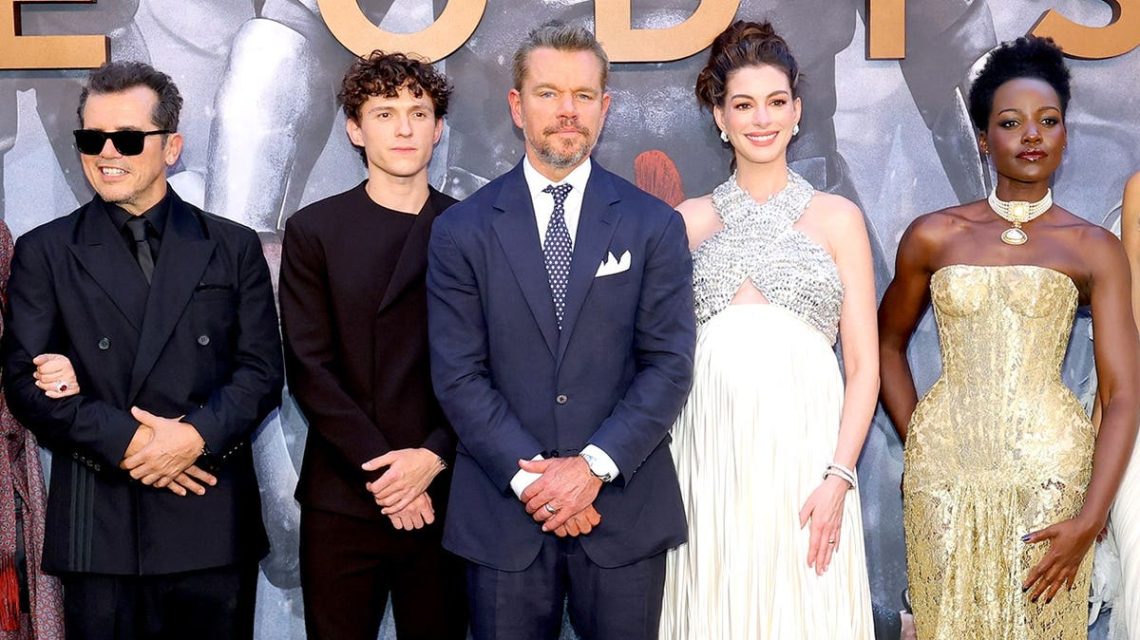
Christopher Nolan’s movie adaptation, ‘The Odyssey,’ captivates audiences with its visual grandeur, taking them on Odysseus’ legendary journey. It features an array of mythological beings summoned from Homer’s epic.
A Scholar’s Insight
Joel P. Christensen, a classics professor, highlights the film’s stunning visuals. He assures viewers that Nolan’s adaptation does not require prior reading of ‘The Odyssey.’ The movie provides adequate context for understanding Odysseus’ saga.
The Mythological Journeys
Nolan’s film showcases various creatures, each presenting its own threat to Odysseus:
Polyphemus
Recognized as the most famous Cyclops, Polyphemus confines Odysseus and his crew in his cave. The enormous Cyclops is eventually outwitted by Odysseus, who blinds him to escape. Bill Irwin portrays this menacing creature in Nolan’s version.
Laestrygonians
These giant cannibals ravage nearly all of Odysseus’ fleet. Only Odysseus’ ship remains intact as they flee from the harbor of Telepylus. This encounter is showcased in Book 10 of the original epic.
Circe
Circe, a powerful sorceress, initially transforms Odysseus’ men into pigs. Over time, she aids him, guiding him through the upcoming challenges. Samantha Morton brings Circe to life in the film.
Sirens
Notorious for their hypnotic song, the Sirens lured sailors to their demise. Forewarned by Circe, Odysseus plugs his crew’s ears with beeswax and ties himself to the mast to safely pass these dangerous creatures.
Scylla and Charybdis
These sea monsters present one of Odysseus’ gravest challenges. He navigates these perils by following Circe’s advice, forfeiting six of his crew members to Scylla to sail past them.
Calypso
Calypso detains Odysseus on the island of Ogygia, pursuing a romantic bond with him. She eventually relents upon Zeus’ command, assisting Odysseus’ departure. Charlize Theron plays Calypso in Nolan’s rendition.
Nolan’s Creative Choices
The adaptation alters some character portrayals. Christensen critiques the film for simplifying Polyphemus’ character and modifying Circe’s narrative. Despite these changes, the film preserves the essence of the original epic.
Adapting to Film
Nolan had to condense the lengthy epic for cinematic feasibility. This adaptation prioritizes visual storytelling over the repetitive elements found in Homer’s original text.
The adaptation, ultimately, reimagines Homer’s tale for contemporary audiences, ensuring that the epic’s mythical figures remain integral.
 Controversy Surrounds Performances at Gillette Stadium
  Celebrity Controversies Over Political Activism and Speech
  Controversy Surrounds Gillette Stadium Performances
  Sharon Stone Discusses Abortion and Women’s Health on Podcast
  Pop Culture Quiz: Test Your Knowledge of Recent Headlines
  Legal Troubles of Real Housewives’ Children