Trump’s Expectations from NATO Allies
Donald Trump has made clear demands to European NATO allies. He expects them to contribute fairly to the alliance and take responsibility for their own defense. Following February’s involvement in another Middle Eastern conflict, Trump seeks help with the war on Iran.
Despite pledges to increase defense spending, European leaders have been hesitant to meet Trump’s demands, expressing dissatisfaction over his requests. On the other hand, Ukraine has embraced this challenge.
Ukraine’s Active Role in Middle Eastern Conflict
This past weekend, Ukraine executed a strike on an Iranian vessel. Additionally, Ukrainian President Volodymyr Zelensky offered to share intelligence about Russia’s alleged surveillance collaboration with Iran regarding U.S. military bases in the Gulf. These actions underscore Ukraine’s value to Washington.
Ukraine’s Armed Forces have been occupied with a full-scale invasion defense for over four years. Despite this, Kyiv has aided the U.S. and its partners in the ongoing war in Iran. On Saturday, Ukraine targeted vessels linked to Iran, destroying a ship and killing a sailor.
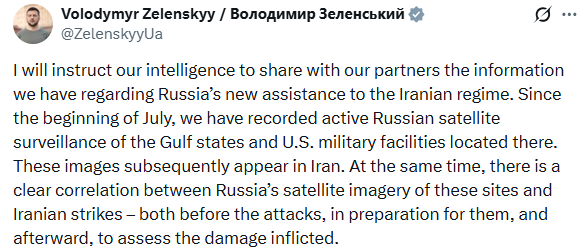
Further, Zelensky announced intentions to instruct intelligence sharing about Russia’s alleged assistance to Iran. He detailed Russian satellites’ surveillance of U.S. military sites and the use of that data for attacks.
Tehran responded with anger. Iranian Foreign Minister Abbas Araghchi stated that Kyiv’s actions “CANNOT GO UNANSWERED,” despite claims of Iranian neutrality in the Russia-Ukraine conflict.
Ukraine’s Enhanced Relationship with the U.S.
Kyiv’s actions contrast sharply with European NATO partners, who have repeatedly refused to send military assets to the Middle East or engage in strikes against Iranian assets despite U.S. requests.
By adopting a transactional approach, Kyiv aims to demonstrate its strategic value to the White House, potentially forging stronger partnerships.
Defense Industrial Relationship
Facing its own security challenges, Europe is revitalizing its defense systems, yet continues to purchase U.S. equipment to address shortfalls. Conversely, Ukraine challenges its perceived burden on Washington’s finances.
Ukraine and the U.S. have signed a statement of intent, potentially forming a key defense-industrial partnership. It pairs Ukraine’s combat data and innovation with the U.S. industrial base.
The partnership enables Ukrainian drones to be tested and evaluated in the U.S., fitting into the Pentagon’s procurement program, which seeks potential joint manufacturing opportunities.
While Ukraine consults with Gulf Arab states to enhance air defense systems, it still requires U.S. Patriot systems for capacity support.
Ukraine is not merely requesting American missiles; it offers reciprocity by exporting adapted drones and sharing technological expertise.
Potential for Conflict Escalation with Iran
Ukraine’s strike on the Iranian-linked vessel could exacerbate tensions, risking wider conflict involvement, which complicates Middle Eastern challenges for the U.S.
Despite the threat of an expanded war, Ukraine remains focused on national survival against Russia. Engaging Tehran might leverage additional U.S. support.
Kyiv argues that Iran is part of a larger adversarial network, with Russia being the other half. Supporting a country with direct experience in confronting this network could benefit the U.S.
If Trump desires allies that self-defend, innovate, share intelligence, and jointly oppose adversaries, Ukraine fits the bill.
 Realtor Arrested for Alleged Work as Unregistered Chinese Agent
  U.S. Military Strikes Vessel in Caribbean, Alleging Drug Trafficking
  Support for White Nationalism Among Young White Males in the U.S.
  Exhaustion Among Americans in Trump’s Second Term
  The Inhumanity, Cost, and Bias of the Death Penalty
  Trump’s Promise of $5,000 for Every American Adult