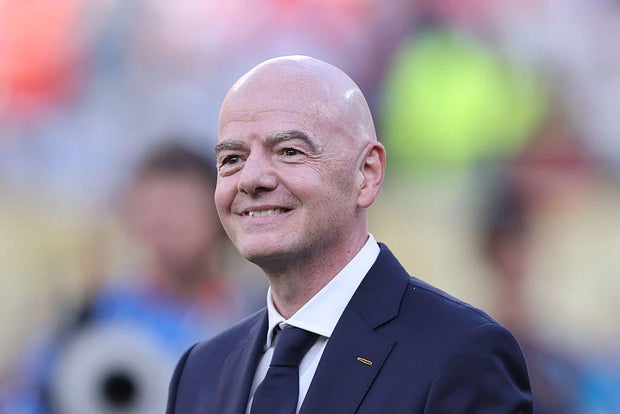
The battle over FIFA’s future intensified after President Gianni Infantino’s controversial plan to sell World Cup profits to private investors was thwarted. This marked the beginning of a broader conflict within global soccer politics.
Infantino proposed forming a $20 billion company to manage the World Cup with private investors. The plan faced mounting criticism from soccer organizations globally since its announcement.
European soccer body UEFA, led by President Aleksander Čeferin, emerged as a key opponent of Infantino’s initiative. UEFA expressed its dissatisfaction with FIFA’s leadership in a strong statement, calling for an end to secretive plans that lacked transparency and threatened the integrity of the sport.
“No option should be off the table,” UEFA declared in response to FIFA’s private equity plan.
The backlash reached a turning point when Infantino was forced to abandon the plan after his senior adviser, Carlos Cordeiro, resigned and urged others to voice their concerns. Cordeiro, a former Goldman Sachs banker, emphasized the need for honesty and accountability within FIFA.
UEFA’s nations agreed to boycott the World Cup and other FIFA competitions, putting significant pressure on Infantino. Soccer bodies in North America and Asia also opposed the plan, creating a united front against FIFA’s leadership.
FIFA’s Chief Operating Officer Kevin Lamour criticized the lack of transparency surrounding the plan. He stressed that decisive action was needed to ensure future dealings in FIFA would be open and accountable.
Infantino’s proposal involved spinning off FIFA’s commercial activities, including major tournaments, into a subsidiary partly owned by private investors. Joshua Kushner, linked to the investment firm backing this move, was a target of scrutiny due to familial ties to political figures.
This episode follows previous contentious proposals by Infantino, including a rejected $25 billion offer in 2018 from Japan’s SoftBank and the controversial suggestion to hold biennial World Cups in 2021. Both faced resistance and were ultimately abandoned.
Despite past controversies, Infantino retained support and was re-elected unopposed in 2019 and 2023. However, with elections looming, the dynamics might shift. Europe, Asia, and North America’s stance could signal significant changes in FIFA’s leadership.
 The Trump Team’s Challenge to the Military Leadership
  Maryland First State to Restrict Electronic Pricing in Grocery Stores
  Nick Saban’s Comments on ESPN Spark Debate Over College Sports Regulations
  Activists Push for Nationwide Ban on Child Marriage in the U.S.
  Freddy’s American Adventure: From Soccer to College Football
  Democratic Hopes and Historical Warnings in 2026 Senate Race