In modern American culture, Arab individuals often appeared as threats rather than people. On screen, they typically carried weapons, took hostages, or threatened national security. When Hollywood needed an adversary post-Cold War, it found one between Baghdad and Beirut. This portrayal soon intertwined with politics. The first Gulf War painted Saddam Hussein as the villain on American televisions. The September 11 attacks linked terrorism and Muslim identity, impacting airport security and television punchlines. Professional wrestling exaggerated these stereotypes, with characters like the Iron Sheik and Muhammad Hassan symbolizing these anxieties. Hassan’s character vanished after a controversial storyline coincided with real-world terrorism.
Today, Michigan voters may elect Abdul El-Sayed, an Egyptian American Muslim, to the U.S. Senate. El-Sayed’s win in Michigan’s Democratic Senate primary sets up a face-off against Republican Mike Rogers. A win would make El-Sayed the first Muslim Senator in a state Trump carried in 2016 and 2020. The distance from caricatured villain to major-party candidate may seem like a swift national transformation, yet it’s more likely a political evolution. Arab and Muslim Americans are no longer seen as foreign when they also appear as neighbors, professionals, and legislators.
The Evolution of Arab Representation
Even before the Gulf War, Americans viewed Arabs as either exotic or threatening. Conflicts in the 1980s and 1990s intensified this stereotype. Cultural products presented recognizable enemies in Arab or Muslim forms. Films like True Lies and The Siege depicted terrorism crossing American borders. Wrestling mirrored these fears theatrically. WWE paired the Iranian-born Iron Sheik with Nikolai Volkoff in an “anti-American pairing.” Decades later, WWE introduced Muhammad Hassan, reflecting post-9/11 fears. Yet, these depictions persisted due to a lack of alternative images for Americans unfamiliar with Arabs or Muslims.
The Shift Toward Familiarity
The transformation following 9/11 involved not merely immigration but the maturation of communities already rooted in U.S. soil. Children and grandchildren of immigrants entered schools, professions, and public life. They engaged in American politics, distancing themselves from the conflicts associated with their parents’ homelands. Arab Americans became visible figures in societal fabric, altering public perceptions.
Michigan exemplifies this shift. By 2023, 54.5% of Dearborn’s population identified as Middle Eastern or North African, predominantly Arab. The city evolved from an ethnic enclave to a hub of political activity, highlighting the role of Arab Americans in national discussions. Though prejudice persists, research suggests sustained social contact can mitigate hostility, despite political polarization and negative news events.
In daily life, Muslims became visible as classmates, doctors, and community members before they appeared in campaign slogans. Post-9/11 children encountered a contradiction: media presented Muslims as threats while reality introduced them as friends.
From Representation to Influence
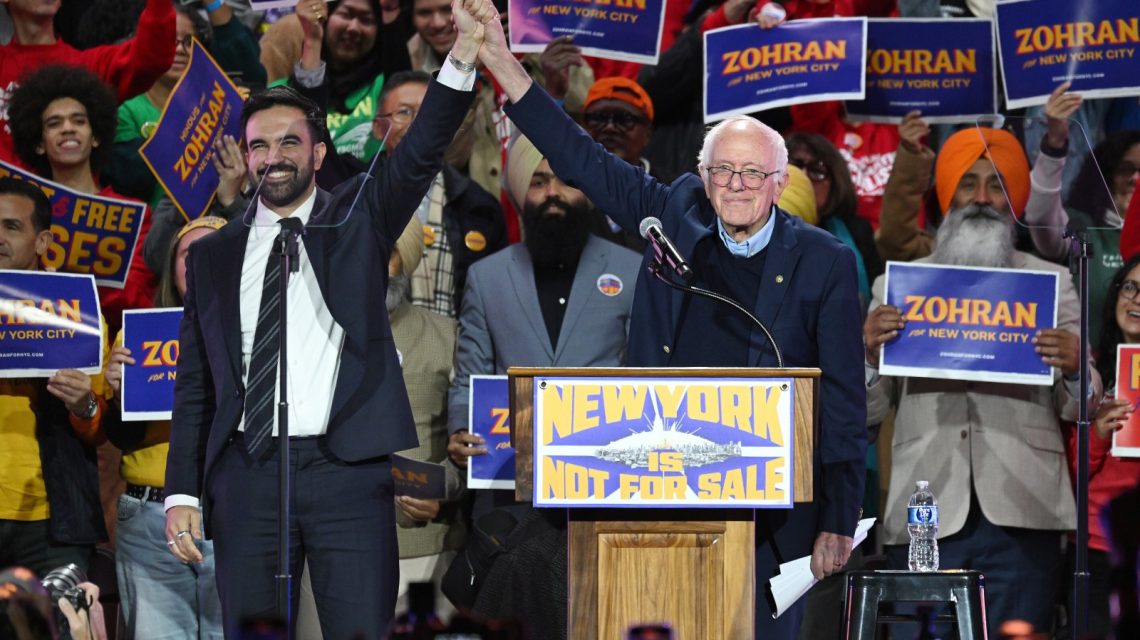
The next phase was political. Keith Ellison became Congress’s first Muslim member in 2006, followed by André Carson and then Ilhan Omar and Rashida Tlaib in 2019. These figures faced attacks related to religion and ethnicity but normalized Muslim political involvement. Zohran Mamdani advanced this change further, becoming New York City’s first Muslim mayor in 2025, prioritizing local issues over religious identity. El-Sayed mirrors this generation, focusing on progressive policies like Medicare for All. His identity factors into debates, particularly concerning Gaza and U.S. support for Israel, yet doesn’t define his candidacy.
El-Sayed’s primary win complicates the narrative of tolerance. Powered by progressive campaigns, his success reflects Democratic opposition to Israeli policy as much as shifting attitudes toward Muslims. Republicans argue his policies fall outside Michigan’s mainstream. Arab and Muslim candidates’ rise parallels the Democratic left’s growth, with mutual support shaping electoral language around discrimination and inequality.
Even so, increased representation hasn’t dissolved suspicion. Public views on Muslims remain polarized by party. El-Sayed faces an electorate that assesses him both as a progressive advocate and through past prejudices. A loss could signify various concerns, from socialism to foreign policy. Yet, American culture has undoubtedly shifted, allowing Arab and Muslim candidates like El-Sayed to become central political figures. In previous decades, a candidate like El-Sayed with an anti-Israel platform would have seemed unlikely. Now, Arabs once viewed as threats are neighbors, voters, and political forces shaping national discourse.
 The Trump Team’s Challenge to the Military Leadership
  Maryland First State to Restrict Electronic Pricing in Grocery Stores
  Activists Push for Nationwide Ban on Child Marriage in the U.S.
  Democratic Hopes and Historical Warnings in 2026 Senate Race
  Republicans Face Challenges Amidst Cost of Living Concerns
  A Different Kind of Fall for Congress This Year