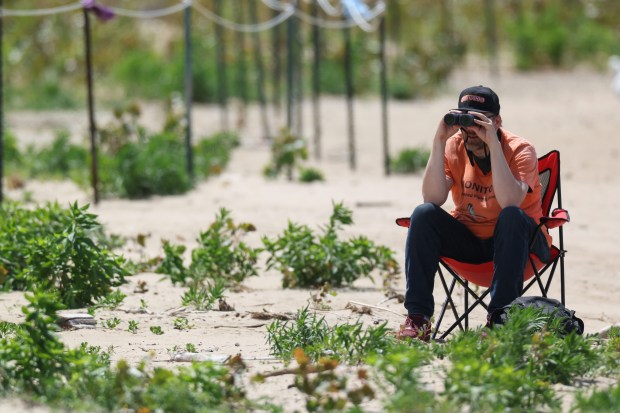
Last week at Montrose Beach, the weather was perfect for a summer day with temperatures at 80 degrees and clear skies. Families enjoyed playing in the sand and water, while others engaged in bird-watching at a nearby stone pier. Among the birds spotted were the American herring gull, mallards, and sanderlings. However, there was a particular interest in the piping plover, a small shorebird that conservationists are concerned might be impacted by recent alterations to the Endangered Species Act.
Piping Plover Concerns
The piping plover, along with other species like the whooping crane and certain dragonflies, is at risk due to changes made under President Donald Trump’s administration. The definition of “harm” no longer includes changes to the habitats of endangered species. Conservationists like Ben Greuel from the Sierra Club highlight that removing habitat is detrimental to these species.
Chicago Piping Plovers leader, Tamima Itani, noted that while local efforts have been strong, the changes pose a threat when plovers migrate. Kristen Boyles of Earthjustice pointed out that previous laws required developers to draft habitat conservation plans. This requirement will be relaxed, potentially reducing protection for these birds.
Whooping Crane’s Struggle
Whooping cranes, North America’s tallest birds, have benefited from the Endangered Species Act, helping increase their numbers. Rich Beilfuss from the International Crane Foundation stressed the law’s role in conservation, especially against projects like power lines. Despite challenges, efforts have maintained a population rebound from merely 15 in 1938 to over 500 now.
While some argue the Act raises costs, Beilfuss insists it balances human interests with environmental protection. He worries about losing the voice needed for sustainable development.
Hine’s Emerald Dragonfly
Species requiring specific environments, such as the Hine’s emerald dragonfly, face particular risks. Marla Garrison at McHenry County College mentions that these dragonflies need specific water and soil conditions. Habitat destruction could lead to local extinctions, given the already limited numbers in Illinois.
Andres Ortega from the Forest Preserve District highlights the challenges in recreating natural conditions. While some modifications come close, full restoration is unlikely.
Community and Conservation
Local bird-watcher Alex Terrana appreciates the role of city efforts in supporting species like the piping plovers. However, she expresses concerns about the broader impact of federal regulation changes on conservation efforts.
Despite strong local measures in Chicago, Terrana emphasizes that continuous alterations at the federal level could undermine these successes, affecting conservation beyond just the city.
 Atlantic Ends September Without a Hurricane for First Time Since 1994
  Bobcat Sightings and Conservation Efforts in Illinois
  2026 El Niño: A Historical Comparison and Future Projections
  U.S. Records Warmest September in History
  Swiss Glaciers Show Effects of Ice Loss Amid Global Warming
  Climate-Resistant Rock Glaciers: Hidden Water Resources