
The Perseid meteor shower, a highlight of the summer sky, is returning with optimal viewing conditions in the Northern Hemisphere. This year, the peak will occur from Wednesday night to Thursday morning, coinciding with a total solar eclipse in Spain, Iceland, and Greenland. Additionally, a six-planet formation graces the sky. However, the ideal moment to observe the meteors will be after the eclipse’s totality.
According to NASA, under perfect conditions, observers might see between 50 to 100 meteors per hour. The American Meteor Society suggests that viewers in rural areas could witness 30 to 50 meteors per hour. While meteors usually appear on any dark night, meteor showers offer brighter celestial displays as Earth traverses debris trails left by comets or asteroids. When these remnants hit Earth’s atmosphere at high speeds, they create striking trails known as shooting stars.
The Perseids originate from comet 109P/Swift-Tuttle, which circles the sun every 133 years. Its next visible approach is expected in 2125. This meteor shower has been observed for over 2,000 years. The Perseids are favored for their dazzling fireballs and the comfortable summer weather. “We don’t have to suffer through a cold winter night to get a good view of meteors,” stated Zach Vanderbosch, an astronomer at the McDonald Observatory in Texas.
The peak occurs during a new moon phase, enhancing viewing experiences. Aparna Venkatesan, an astronomer from the University of San Francisco, noted, “New moon means we don’t have moonlight flooding the sky, and you tend to see way more meteors as a result.”
For the best experience, head outside after dark, away from city lights. Venkatesan plans to visit the Sierra Nevada for a more secluded view. Key times for viewing are between midnight and dawn, as the constellation Perseus will be prominent in the northern sky. Meteors seem to emanate from this area. Allow your eyes around 30 minutes to adjust to the darkness. Vanderbosch advises focusing on a specific part of the sky, waiting for the fleeting bright streaks—even those caught in peripheral vision. Avoid looking at your phone to maintain night vision.
“There’s just something magical about it,” Vanderbosch added.
Note: The Associated Press Health and Science Department receives backing from the Howard Hughes Medical Institute’s Department of Science Education and the Robert Wood Johnson Foundation. The AP is solely responsible for its content.
 Climate-Resistant Rock Glaciers: Hidden Water Resources
  California Voters to Decide on $7.5 Billion State Research Fund
 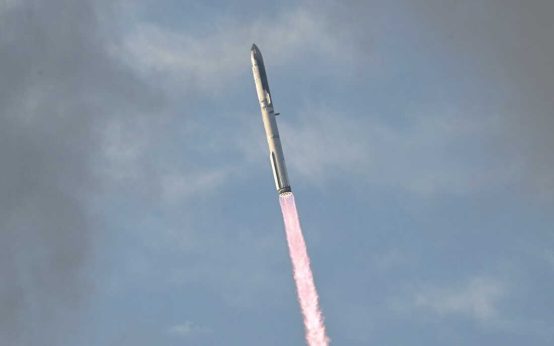 SpaceX Successfully Launches Starship Flight 14 into Orbit
  Ancient Pottery Unearthed During Roadworks in Tbilisi
  U.S. Space Academy Announcement
  The Need for New Strategies in Oregon’s Wildfire Management