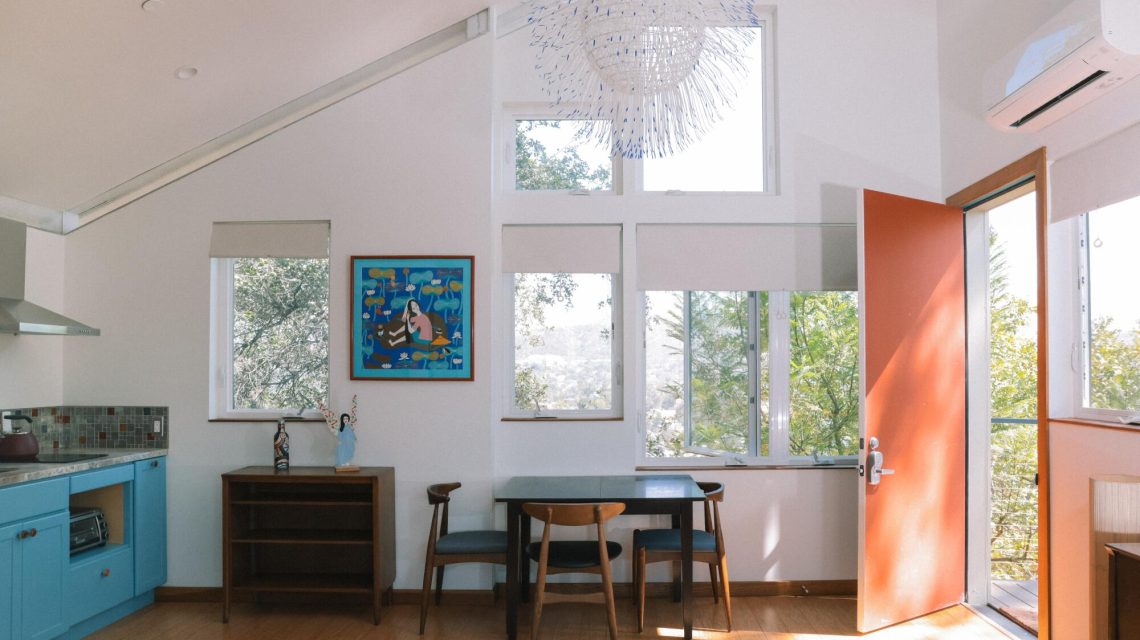
Joshua Leibner and Katherine Henninger cherish living efficiently. Henninger notes that Leibner crosses town to utilize a Groupon, except when it comes to art spending. So, building an accessory dwelling unit (ADU) next to their Northeast Los Angeles home surprised them with the costs.
Initially expecting a $300,000 cost, the final expense reached around $600,000. The couple reflected that had they known, they might have reconsidered. Their ADU boasts a 400-square-foot studio with vaulted ceilings and clerestory windows for a spacious feel.
Seven years after buying their Midcentury Modern home for $615,000, they pursued the ADU idea for flexibility, benefiting family or tenants. Their home’s dramatic ridgeline setting allowed only one construction spot, replacing a two-car garage.
Leibner and Henninger admired architects Brennan Buck and David Freeland’s work at the Smithsonian’s Renwick Gallery. This led them to commission a custom ADU design, enhancing their property’s unique semicircular layout. The architects offered a vertical studio with a pitched roof and terraced decks, maximizing space and views.
The compact studio comprises defined spaces like a kitchenette, sleeping loft, living room, and bathroom. The central area offers north and south views, supported by cross-breezes through strategically placed windows. A table and futon accommodate varied uses like dining or as a home office.
Inside, artwork by Missionary Mary L. Proctor, Robert Rauschenberg, and Frank Romero personalizes the studio. A distinctive pendant light made from zip ties, purchased in Cambodia years ago, adds flair. Henninger laughs, recalling they almost built the space to feature this light.
The house’s orientation maintains privacy between the main and ADU, despite close proximity. Freeland highlights a thin, translucent window band enhancing interior light diffusion and roof structure visibility at night.
Construction challenges arose during the COVID-19 pandemic. Supply chain issues drove up window and lumber costs. As prices increased, the couple opted for subcontracting and DIY tasks like tiling to manage expenses.
They cleverly disposed of their garage, offering materials for free online, benefiting projects like artist studios. Few parts needed dumping, creating a lasting community connection, noted by the architects.
Currently, the couple rents their home to tend to health concerns in Virginia but looks forward to returning. Henninger expresses pride in their investment and creation of a cherished living space. Leibner adds that the ADU generates income to help offset its development costs.
 Navigating Los Angeles Real Estate on a Budget
  Mortgage Rates Return Above 7% After Twenty Months
  Inland Empire Grapples with Growing Housing Affordability Concerns
  Challenges in Los Angeles’ Multifamily Housing Market
  Jevon Carter Sells Chicago Town Home
  Charming River Forest Home With Custom Features