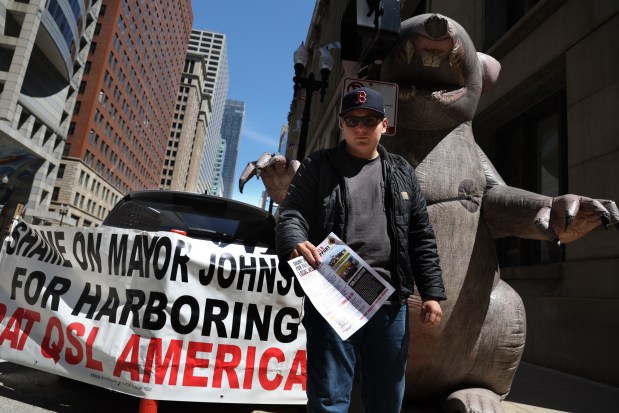
Located at the mouth of the Calumet River on Chicago’s Southeast Side, the city’s port is a hub for loading steel, sugar, and lumber onto ships. This vital maritime center is embroiled in labor conflicts, which have extended into political spheres, potentially affecting Mayor Brandon Johnson, a former labor organizer contemplating reelection.
Two unions are vying to represent the dockworkers employed by QSL America, a private entity at the publicly owned port. Workers affiliated with the International Union of Operating Engineers Local 150 have been striking for over a year. However, others remain active under a bargaining agreement with the International Longshoremen’s Association (ILA), recognized by QSL last year amid the strike.
This internal union dispute is under review by the National Labor Relations Board (NLRB). Mayor Johnson sparked controversy after meeting ILA-supporting workers, inciting claims of hypocrisy from Local 150, which perceives the ILA workers as strikebreakers. Political tensions exacerbate as Local 150’s president supports potential mayoral candidate Alexi Giannoulias, highlighting differences in labor movement strategies.
Local 150 accused Johnson of abandoning solidarity with striking workers in favor of the ILA. Contrarily, Johnson emphasized his dedication to supporting all workers’ rights through collective bargaining and unionization, underscoring communication efforts with Local 150 regarding the conflict.
QSL opted to recognize the ILA under claims by the latter that workers chose its representation. Critics argue this decision stemmed from a strategic move to dismiss Local 150, relying on majority worker support for the ILA. The union negotiated contracts providing significant wage increases and improved health and safety measures. Local 150 disputes the manner of representation selection, favoring transparency and fair labor practices.
Amid persistent picketing by striking dockworkers, safety emerges as a crucial issue with complaints of faulty equipment. Leo Lopez, a striking worker, noted deficient machinery conditions, citing interference with operations during rains when leaks occur in storage areas. OSHA previously fined NASCO for safety breaches, resolved through penalties and enhanced compliance measures.
Under the ILA’s contract, new safety protocols have been initiated, including semiannual audits. Loyalty and camaraderie are fostered among the ILA and QSL employees, who affirm the benefits of collaboration, improved wages, and health protections. Some workers argue Local 150’s organization efforts fell short of comprehensive worker engagement.
The tactical nuances of union representation in QSL reveal broader implications for Chicago’s labor landscape, with ongoing political influence exerted by powerful labor unions during mayoral campaigns. The dispute highlights the intricacies of worker representation, underscoring efforts to safeguard fair labor practices and uphold workers’ rights.
The Chicago Federation of Labor emphasizes the necessity for non-interference and the right of workers to organize freely, a sentiment echoed amid broader unionization challenges in the U.S., where private sector union membership remains low.
The port district stays neutral, focusing on dialogue while recognizing worker autonomy in selecting union representation. Despite the fractious environment, the future of dockworkers remains pivotal within the evolving labor movement and political spectrum, stressing the need for collective unity and rights advocacy.
 New Jersey Voter Fraud Prompts Renewed Push for SAVE Act
  Concerns Over Changes to Voter-Registration Form for Americans Abroad
  Trump’s 2024 Campaign Targets Young Men Through Cryptocurrency
  Trump’s White House Visitor Center Proposal Gains Bipartisan Support
  State Department Simplifies Passport Process with Online Applications
 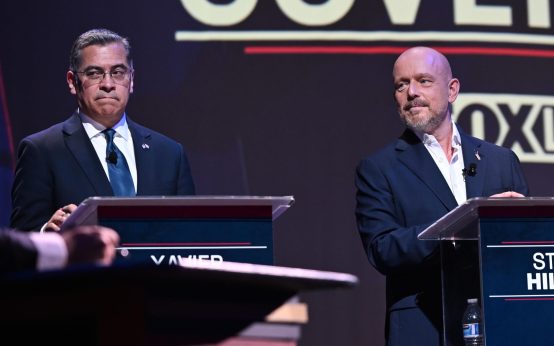 Becerra and Hilton Clash in California Gubernatorial Debate