
Democrats are currently opposing the Trump administration’s efforts to assist 146,000 homeless individuals who are battling serious mental illness. At the end of July, leading Democrats from the House and Senate began questioning the administration’s motives, suggesting a return to times of restricted civil rights for those with disabilities. However, the system they aim to protect is blamed for the large number of mentally ill people living in dire conditions across America’s streets.
For years, states faced limitations in aiding mentally ill homeless individuals due to broad interpretations of the 1999 Supreme Court Olmstead decision, which emphasized community-based care. However, many severely mentally ill individuals ended up in independent living situations where treatment was not mandatory and often declined. In June, the Department of Justice issued a legal opinion aimed at improving federal oversight, permitting more effective state-managed mental healthcare systems.
Addressing Mental Health Needs
The Trump administration proposes small-scale, affordable housing with supportive services, such as community-based group homes providing court-ordered treatment for homeless individuals with mental illness or addiction issues. Previously, establishing middle-ground housing options was challenging due to regulations prioritizing individual autonomy over safety and clinical needs.
This new approach doesn’t involve returning to large psychiatric hospitals, which are costly, at approximately $1,400 per patient per day, and offer limited federal reimbursement. These facilities are reserved for extreme cases only.
Despite this, some activist groups argue that the shift promotes states to revert to institutionalizing people, drawing on negative historical imagery. Critics overlook the risks and poor conditions prevalent in existing systems that often leave homeless individuals in hazardous outdoor environments.
Homeless individuals with severe mental disorders or substance use problems face dangers including crime, disease, and premature death. They frequently resist outreach due to cognitive impairments from their conditions.
Historical Context and System Failures
Since 1992, federal regulations and the Olmstead case have constrained states, forcing them to concentrate on voluntary mental care in communities, which is often unsuitable for severely mentally ill individuals requiring structured support.
Federal regulations left states with stark choices: comply and neglect severely ill patients, or risk litigation by providing necessary care. Most states opted for compliance due to litigation risks, resulting in the closing of numerous psychiatric hospital beds — a drastic reduction from 1950s numbers despite significant population growth.
During Olmstead proceedings, Justices raised concerns over inappropriate patient discharges leading to homelessness or incarceration, with Justice Kennedy highlighting that the ADA doesn’t support moving patients into unsuitable environments.
Despite claims of freeing individuals from institutions, existing policies have led to conditions comparable to the world’s poorest areas.
Early disability rights advocacy helped curtail institutional abuses but current systems need reassessment. Neglecting present evidence worsens conditions for mentally ill individuals on the streets.
The Trump administration’s review of federal regulations is overdue considering current circumstances. As observed by Elinore McCance-Katz, a former assistant secretary for Mental Health and Substance Abuse, the tragedy lies in the delayed implementation of these changes.
 Baltimore’s Approach to Reducing Violence
  Rethinking Marijuana Policies in the United States
 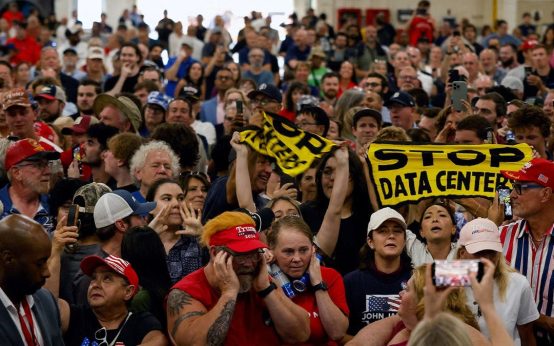 Gov Abbott Defends Data Center Pause Despite Criticism
  Key Political Developments and Major Events
  New Museum to Showcase ‘Reagan’ Film Sets and Props in Dixon, Illinois
  The Challenges of Securing Childcare