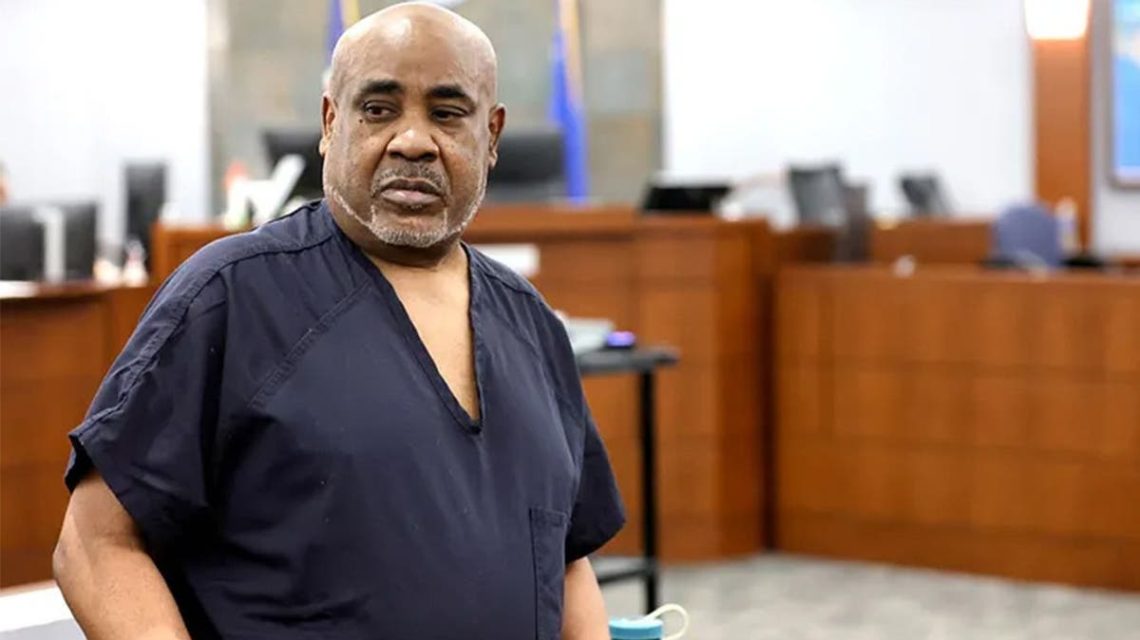
The murder trial of Tupac Shakur could hinge on the statements of the accused killer and insights from a ghostwriter involved in a related book. This case has resurfaced decades after the event, as explained by a former LAPD detective.
Defendant Duane “Keffe D” Davis reportedly discussed his involvement in several interviews. These interactions included exchanges with law enforcement, a television appearance, and details shared in his memoir. The defense suggests Davis’ ghostwriter, Yusef Jah, may have fictionalized elements and argues Davis was not involved in the crime. Nonetheless, Jah is on the prosecution’s witness list.
“The prosecution will likely question the writer about whether the book reflects Davis’ words,” said retired detective Moses Castillo. “If Jah confirms it, disputing that fact becomes difficult.”
Prosecutors face challenges as Shakur’s murder occurred nearly 30 years ago, with few witnesses coming forward then. Marion “Suge” Knight, who was in the car with Shakur and injured in the shooting, has expressed reluctance to testify. He, like Jah, appears on the witness list.
On the issue of gang-related reticence, Castillo remarked on the stigma around being labeled as a “snitch.” The saying “snitches get stitches” resonates, emphasizing the dangers for those involved in gang activities who cooperate with law enforcement.
Clark County Chief Deputy District Attorney Binu Palal stated during the opening of the trial that Davis cooperated by sharing his story in interviews given in 1998, 1999, 2008, and 2009. Davis also participated in a BET documentary and discussed the incident in his book. The prosecution presented portions of his 2008 interview in court, which included his claim of obtaining the weapon and saying his nephew, now deceased, fired the shots.
Defense attorney Michael Sanft highlighted the jury’s role in discerning fact from fiction. He argued that while the prosecution presents their narrative, the jury must weigh the credibility of the evidence.
Sanft also pointed out that investigators never verified details from Davis’ book, excluding questioning other alleged occupants in the suspect vehicle before their deaths.
The incident occurred when a gunman in a white Cadillac fired on a BMW transporting Shakur and Knight on September 7, 1996, in Las Vegas. Knight’s injuries were minor, but Shakur died six days later at age 25.