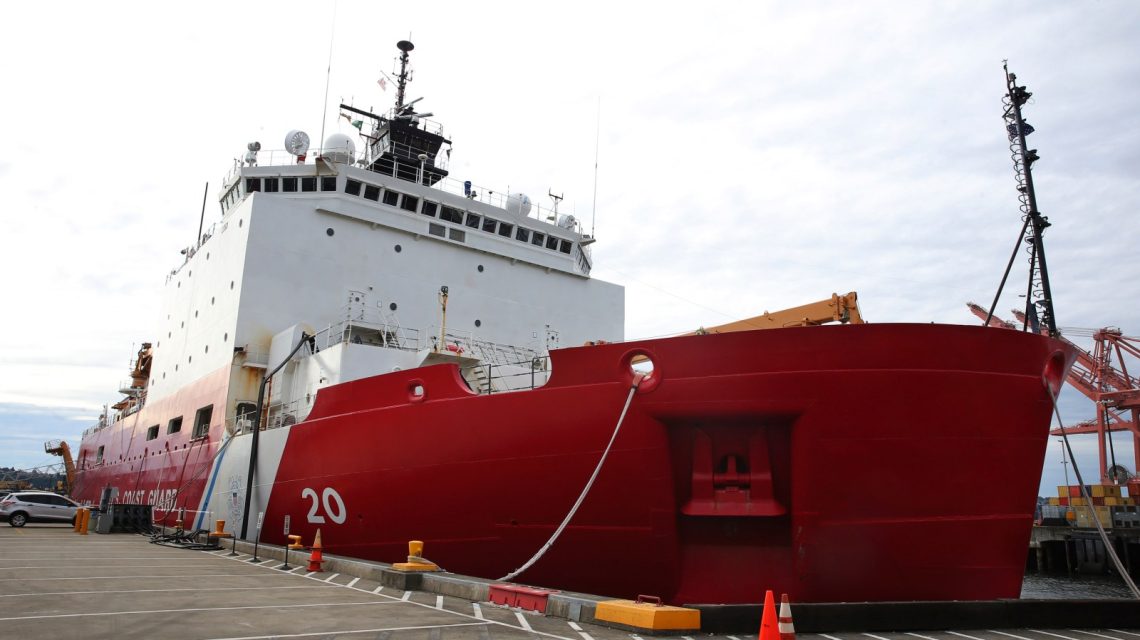
The U.S. is facing significant challenges in building icebreakers. Seven years after commissioning the first heavy icebreakers in half a century, none are ready. The Government Accountability Office (GAO) reports delays and cost overruns. The first of the three planned ships may not be ready until 2033. Canada announced a $11 billion program to build six icebreakers for its Coast Guard, with the first expected by 2032.
As the Arctic becomes increasingly important due to climate change, research, security, and economic reasons, the U.S. needs to maintain its presence there. Surprisingly, Finland is set to aid the U.S. in this endeavor. Finland has started work on four icebreakers for the U.S., expected by 2028. Finland’s expertise comes from necessity, as its ports freeze over each winter.
Robin Häggblom from Risk Intelligence acknowledges Finland’s critical role. Nearly 60% of global ice ships are built in Finland or based on its designs. With NATO membership in 2023, Finland collaborates with U.S. companies on icebreaker projects worth $6.8 billion. The transfer of Finnish technology and skills to the U.S. is crucial.
There is a bipartisan consensus in the U.S. on the need for Arctic Security Cutters. Häggblom highlights climate change and access to minerals as pressing factors. The melting Arctic also holds strategic security importance, being a transpolar route vital for air defense and nuclear scenarios.
Russia remains a dominant Arctic presence and has the most icebreakers. China’s non-Arctic interests in the region span climate, military research, and shipping. China’s Sea Legend tests commercial cargo service through the Arctic, highlighting the region’s geopolitical significance.
Despite these developments, U.S. Arctic capabilities are waning. Häggblom acknowledges the sensible nature of the Arctic Security Cutter program compared to others like the Golden Dome Arctic defense program. U.S. shipbuilder Bollinger Shipyards is building vessels with Finnish assistance, posing questions of schedule and budget adherence.
 Dutch Review Board’s Euthanasia Ruling and International Debate
  Israeli PM Commends Heroic Actions in Flight Emergency
  Rabbi and Jewish Leaders Criticize Adam Brody for ‘Genocide’ Comment
  Flydubai’s Emergency Landing Highlights Cockpit Security
  Former Israeli PM Naftali Bennett Commends Passengers and Crew for In-Flight Heroism
  Diplomatic Complexities Unfold at U.S. National Archives Visit