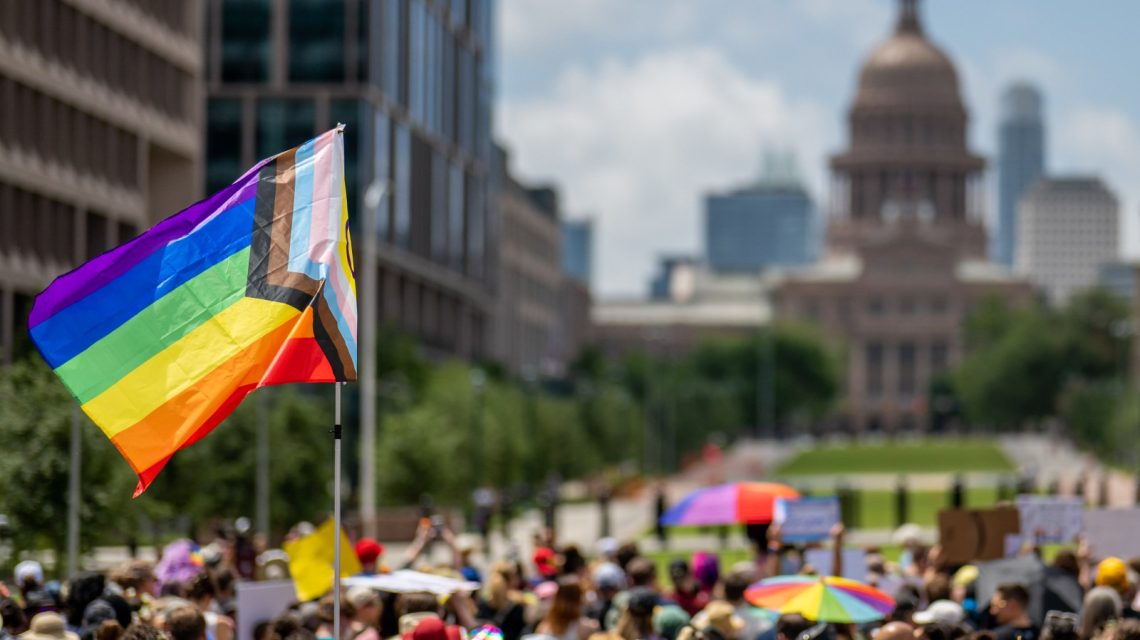
Texas Law on Drag Performances Overturned Again
A federal judge has once again nullified a Texas law aimed at restricting specific drag performances. This marks another legal defeat for states with Republican leadership trying to control drag shows and other forms of LGBTQ expression. On Tuesday, U.S. District Judge David Hittner declared Texas Senate Bill 12 unconstitutional. This reaffirms his original decision from 2023. The law was intended to limit what it termed “sexually oriented performances” and was chiefly aimed at drag shows. Judge Hittner noted that those offended by such activities could simply choose not to attend.
Texas Attorney General Ken Paxton plans to appeal the decision. Newsweek contacted his office for further remarks.
Nationwide Battle over Drag and LGBTQ Rights
This ruling enters the ongoing national debate concerning drag shows, transgender rights, and LGBTQ visibility. Several Republican-led states have introduced laws to curb drag shows. Conversely, states controlled by Democrats and civil rights organizations have moved to protect these shows under free expression rights. Logan Casey, director at the Movement Advancement Project, told Newsweek that attempts to limit drag are part of broader anti-LGBTQ strategies.
This ruling from Texas aligns with similar decisions in Montana, Florida, and Tennessee, where laws were also deemed unconstitutional limitations on free speech.
States with Restrictions on Drag Shows
Texas is not acting alone in these matters. According to the Movement Advancement Project, six states have laws that either directly limit drag performances or can be applied broadly to target them. Tennessee and Montana created laws explicitly aimed at drag performances, whereas Arkansas, Florida, North Dakota, and Texas have enacted laws targeting adult performances that could impact drag events. Many of these laws are currently entangled in legal disputes.
Proponents of the laws often claim they aim to shield children from sexually explicit materials in public areas. Critics argue these laws are written to target LGBTQ communities and suppress constitutionally protected artistic expression. Other courts worry that these laws risk covering broader types of protected speech.
Casey pointed out that unlike numerous other anti-LGBTQ policies, drag restriction laws have not spread extensively nationwide. The initial laws in Texas, Montana, Florida, and Tennessee appeared in 2023, with no new similar laws being created since then. Each state faced lawsuits, and courts blocked the laws shortly after their passage.
While some states’ Republican lawmakers pursue restrictions, Democrats have moved oppositely, expanding protections for LGBTQ individuals. Governors and attorneys general in Democratic states often frame drag performances as free expression issues rather than matters of public morality.
Shifting Support for LGBTQ Rights
These legal clashes occur amid changing public opinions. Gallup polling reveals that support for same-sex marriage stays strong at 65%, although this is down from the 71% peak in 2022 and 2023. It also showed that 62% of Americans consider gay and lesbian relationships morally acceptable, the lowest since 2016.
Opinions on transgender issues have turned more negative. Only 38% of Americans now find gender change morally acceptable, down from 46% in 2021. Gallup reports that much of this shift stems from Republicans, while Democrats’ views remain relatively stable. Support for same-sex marriage among Republicans has notably decreased, contrasting with Democrats, who overwhelmingly support it.
Increasing LGBTQ Population
Simultaneously, the American LGBTQ population is rising, with research from PRRI indicating that around one in ten Americans identify as LGBTQ. This is over double the percentage seen a decade ago. Among 18 to 29-year-olds, this figure is approximately 20%, showcasing younger generations’ significant influence on the country’s demographic makeup.
This trend leads to a political paradox. Even as the LGBTQ community grows and same-sex marriage finds widespread acceptance, conservative activism around transgender rights, school policies, and drag performances has become a major social debate. While support for LGBTQ protections remains robust, increased visibility and discussions have led to opposition among some voters.
For Republicans, drag show discussions have become part of broader debates on parental rights, education, and children’s exposure to sexual content. For Democrats and LGBTQ supporters, it is a matter of free speech and equal legal treatment.
Courtroom Battles
With ongoing legislation, courts are becoming critical in deciding these policies’ future. Legal challenges to drag-related restrictions often cite the First Amendment, arguing drag as a form of artistic expression, like theater or music.
In Texas, Judge Hittner again found Senate Bill 12 unconstitutional, aligning with legal challenges facing other state laws. The country now sees a varied legal landscape where some states enforce restrictions, courts block others, and some have no such laws. As the Texas case and others proceed, their outcomes will further clarify state control over drag performances without breaching free expression rights.
 Freddy’s American Adventure: From Soccer to College Football
  The Quest for the Knuckleball Dream
  Navigating Grief After a Sibling’s Overdose
  Tragedy and Immigration: The Impact on a Family
  The Journey of a Fox News Correspondent: From Infectious Diseases to On-Air Reporting and Beyond
  Midwest Underground Railroad Network Gains National Recognition