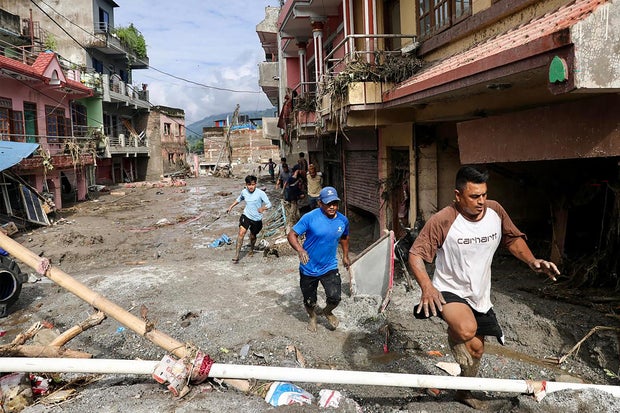
Rescue teams searched for hundreds missing along the Nepal-China border after floods and mud swept through communities. The disaster followed a glacial collapse, leading to catastrophic consequences.
Nepal and China Report Missing Persons
The National Disaster Risk Reduction and Management Authority in Nepal reported 826 people missing. The death toll rose to 165. Rescue efforts intensified in the districts of Nuwakot and Rasuwa.
Chinese state broadcaster CCTV reported 558 people missing in Tibet, including 260 foreigners. Two villagers were rescued, and three deaths were confirmed.
Impact on Local Communities
Flash floods demolished villages, affecting houses, roads, bridges, and power plants. Videos showed torrents destroying infrastructure. Drone footage revealed roads and buildings buried by water.
In Nuwakot district, the second floors of buildings were covered in mud. Debris and vehicles became mired. The floods halted travel, leaving little time to escape.
“When I reached Dhunge bazaar, the flood came quickly,” resident Shoyam Rajbhandari said. “We don’t know how many people are missing or dead.”
Rescue and Relief Efforts
Helicopters from the army and private sources swept flood-affected areas. Over 100 people were rescued by the Nepalese army. Foreign nationals were airlifted to Kathmandu for medical care.
In Tibet, mudslides created challenges near Gyirong Port. Mud reached over five feet deep, damaging roads and cutting communication. Chinese authorities deployed military transport to support rescue efforts.
Global Response
U.S. Secretary of State Marco Rubio offered support to Nepal. The U.S. Embassy expressed condolences and provided a $500,000 grant for relief efforts. The Dalai Lama shared prayers and condolences for those affected.
Cause of the Catastrophe
The U.S. Geological Survey updated their analysis to identify a magnitude 5.2 glacial collapse as the cause of the floods. Climate experts indicated an avalanche from a glacier likely triggered the incident, further escalating water levels significantly.
Climate Change Concerns
The rising threat of climate change haunts the region. The Lhende Khola river system experienced similar flooding twice in 14 months. Melting glaciers pose a risk to densely populated areas.
Researchers observed faster melting across the Hindu Kush Himalaya region. These changes impact weather patterns and water supplies, creating a global environmental concern.
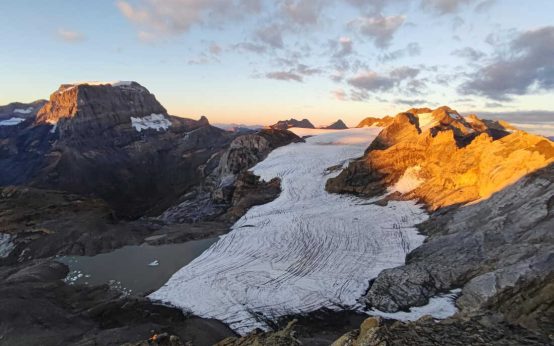 Swiss Glaciers Show Effects of Ice Loss Amid Global Warming
  Climate-Resistant Rock Glaciers: Hidden Water Resources
  Senators Reach Bipartisan Agreement on Permitting Reform
  Experts Warn of Critical Period for the Colorado River
  Future Cities: Ambitious Projects Aiming for Innovation and Sustainability
  Supreme Court Case Suncor vs. Boulder: Implications for Accountability in Climate Change