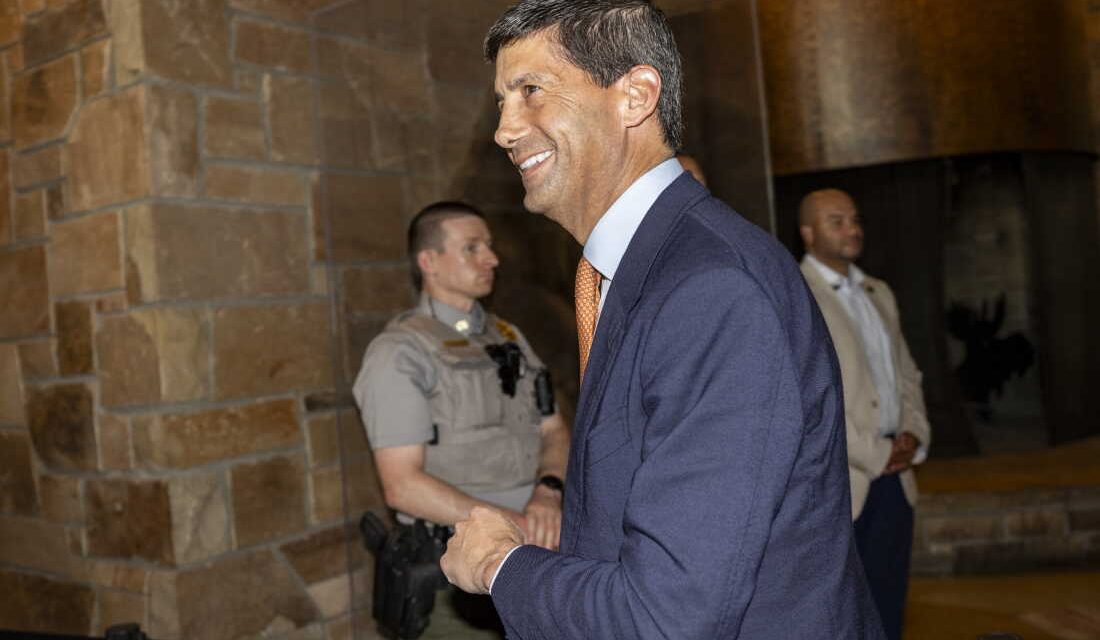
During a significant gathering at the Jackson Lake Lodge in Wyoming, Federal Reserve Chairman Kevin Warsh addressed an audience of economists and central bankers. Investors closely monitored his speech for hints on interest rate directions. Warsh remained cautious about specific rate predictions but discussed persistent inflationary pressures.
Warsh highlighted the current economic conditions, noting the stability of the labor market, strong investments, and resilient consumer spending. However, he pointed to an ongoing rise in prices, surpassing the central bank’s comfort level. According to data, the consumer price index showed a 3.4% increase over the twelve months ending in July, while the Fed’s preferred inflation measure was at 3.7% in the same period.
None of these measures are perfect. But they all tell a similar story: Inflation is running above our 2% target. So the Fed’s predominant focus right now should be on prices.
Warsh’s remarks indicated a possible interest rate hike, raising expectations among investors for an increase as soon as next month. Before his speech, the probability of a September rate hike stood at one in three, but it rose above 50% afterward.
Warsh Promises a ‘Quieter Fed’
Previously, some investors were dissatisfied when Warsh committed to restoring price stability without outlining clear steps. Warsh reiterated his stance on avoiding detailed short-term interest rate projections. He argued that extensive commentary could limit the central bank’s options and skew market insights about economic trends.
A quieter Fed, more purposeful in its communications, is better able to meet its objectives. And we can be held accountable for delivering on our remit—the only true test of our credibility. To borrow a line from General Chuck Yeager, ‘At the moment of truth, there are either reasons or results.’
Warsh on the Economic Impact of AI
Warsh also discussed the potential economic effects of artificial intelligence. He described the current advancements as a pivotal moment, anticipating that AI could enhance production and reduce costs. Nonetheless, he recognized uncertainties regarding benefits distribution and worker impacts. The current surge in AI investments, particularly in data centers, contributes to inflation by escalating construction and memory chip prices.
An AI-focused task force appointed by Warsh will guide the Fed, though he emphasized their findings will not influence short-term interest rate decisions. Warsh expressed confidence that this proactive approach would better equip for future policy challenges.