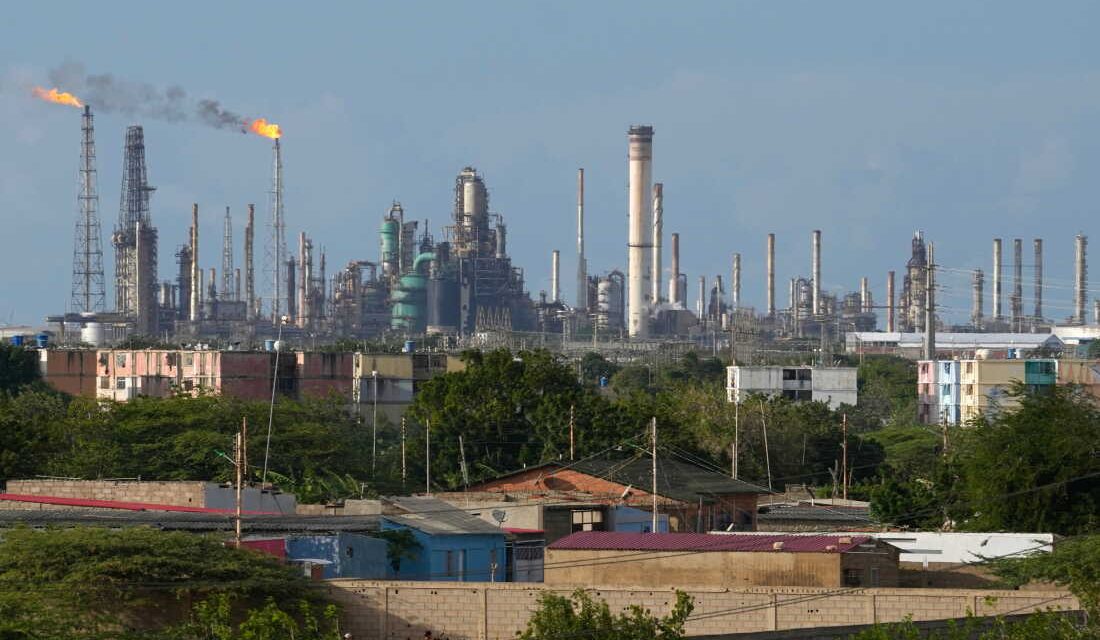
The White House announced a partnership with North American Blue Energy Partners (NABEP) to leverage Venezuela’s oil industry. This is part of President Donald Trump’s initiative focused on securing military interests in Venezuelan oil.
Despite being touted as the biggest oil deal in history, analysts have raised concerns about the feasibility of reviving Venezuela’s production quickly. Trump and his team, however, view this as an opportunity to develop a significant oil presence in the Western Hemisphere.
Details of the Agreement
Under the deal, the U.S. will collaborate with NABEP in a private joint venture. NABEP, a key player owned by Venezuelan businessman Alejandro Betancourt, ranks as the second largest operator in Venezuela, following Chevron. The agreement grants NABEP 100-year rights to 17 oil fields, which previously belonged to Russian or Chinese firms, with proven reserves totaling 65 billion barrels.
Betancourt expressed optimism, stating Venezuela’s resources and potential would greatly benefit both nations. His company, with over 5,000 employees and 10,000 contractors, is preparing to channel $100 billion into new oil infrastructure investments.
Implications for U.S. Oil Interests
The Pentagon’s Office of Strategic Capital acquires a 35% ownership stake in NABEP. Additionally, the U.S. retains purchase rights for 20% of production at cost, managed by the State Department. The agreement was formalized by Defense Secretary Pete Hegseth and Secretary of State Marco Rubio.
The White House indicated zero cost to the U.S., while maintaining influence over the company’s governance. Reputable U.S. auditors, lawyers, and advisers will work alongside NABEP, and the arrangements fall under U.S. jurisdiction.
Political and Economic Challenges
Former energy advisers highlight potential political risks, given possible challenges from future governments in both countries. Analysts suggest years might be required to rehabilitate Venezuela’s energy sector.
Trump admitted immediate changes in U.S. gas prices shouldn’t be expected, yet he believes the framework will eventually bolster America’s strategic oil reserves and supply asphalt and other goods.
Venezuela’s acting President Delcy Rodríguez praised the deal as a pathway to modernize and revitalize the country’s oil industry. In response to sovereignty concerns, Rodríguez assured protection of national interests.
Congressional Reactions
Congress members are requesting further clarification about the arrangement. Rep. Rick Crawford expressed interest, while Sen. Jack Reed criticized involving the military in a private venture. Reed called for a comprehensive examination of the legal framework supporting this deal.
Upcoming Engagements
President Trump plans to meet with oil refiners to discuss enhancing America’s oil refinery capabilities, essential due to rising prices driven by conflict in Iran. The meeting will also involve high-ranking officials like Interior Secretary Doug Burgum and Energy Secretary Chris Wright.
 Upcoming Congressional Elections: Key Districts to Watch
  President Trump’s Pre-Midterm Interview on Key Issues
  Trump’s 2024 Reelection and Evolving Voter Dynamics
  Defense Secretary Emerges as Key Player in the Trump Administration
  Hegseth’s Vision for the Military: Balancing Tradition and Innovation
  Significant Funding Boosts Ken Paxton’s Texas Senate Campaign Amid Tight Race