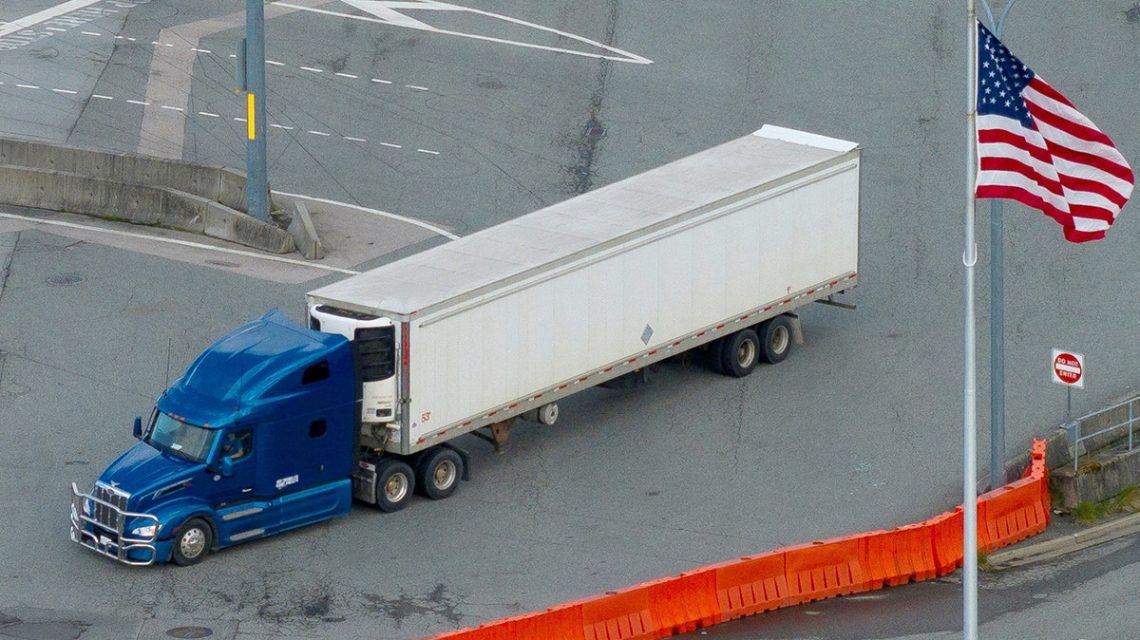
Listening to media coverage and statements from Canada’s prime minister, you might assume that the U.S. and Canada are locked in a trade war after recent tariffs were announced. In reality, numbers show it’s more of a minor conflict than a full-blown war.
On August 22, the U.S. implemented Section 338 tariffs at 50% on approximately $20 billion worth of Canadian goods, representing about 5% of Canada’s total exports to the U.S. In response, starting September 8, Canada will impose various tariffs on around $20 billion of American exports, or about 6% of its imports from the U.S.
While tariffs affecting $40 billion sound significant, it’s a small portion of the $900 billion in goods and services exchanged between these two countries annually. Around 95% of transactions remain unaffected since July.
The focus should shift to January when the U.S. plans to impose 50% tariffs on a greater variety of Canadian exports, including vehicles and parts. This action, coupled with potential Canadian retaliation, could impact over $100 billion in trade.
The escalation of tariffs could transform the situation into a trade war.
The introduction of these tariffs is different because they disregard the United States-Mexico-Canada Agreement (USMCA) compliance. Traditionally, products aligning with USMCA received tariff exemptions, a considerable advantage for businesses investing in North American supply chains. The Section 338 tariffs now affect products regardless of their USMCA status.
A significant share of imports from Canada and Mexico, using USMCA preferences, jumped from about 45% in late 2024 to 86% by February. Federal Reserve data valued the cost of compliance at $39 billion to $71 billion annually in manufacturing.
Ironically, firms that relocated operations to Ontario to align with USMCA can now face higher tariffs than those producing in Shenzhen, China. Tariffs intended to promote American manufacturing are imposing challenges instead.
If the U.S. and Canada cannot reach a trade agreement by January, conditions will worsen. An American automotive assembly plant could face a 50% tariff on Canadian components, while an imported finished Korean car incurs a lower tariff.
President Donald Trump has threatened to raise tariffs on auto parts to 50% and increase duties on trucks. If Canada responds as promised with retaliation, both countries could enter an intense trade war.
Yet, this scenario is preventable if both countries agree to reduce trade barriers, allowing consumer markets to open to each other. This could lower manufacturing costs and consumer prices by increasing competition.
The January tariff surge is pivotal, especially concerning Canadian exports like cars and trucks. Achieving a trade deal is challenging due to protectionist interests in both nations, and Canada’s relation with China complicates negotiations.
It’s critical to resolve these disputes to prevent a trade war. While no one benefits from trade conflicts, the impact is uneven. Canada may have more at stake, making it crucial to reach an agreement before exacerbating tensions.
Regardless of a potential deal, the U.S. needs to rationalize its tariff practices. American-made goods should not face stiffer tariffs than foreign-made ones.