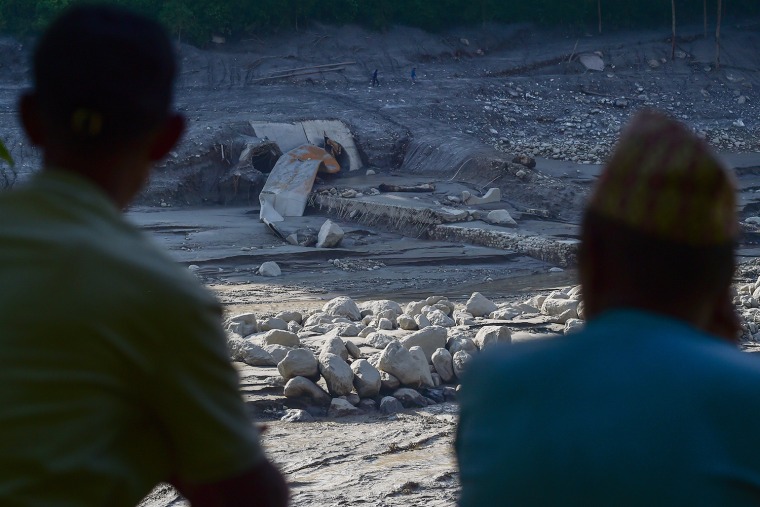
As of Wednesday, hopes for finding more survivors among the thousands still missing in Nepal are dwindling. Despite this, authorities remain optimistic that workers trapped in tunnels of hydropower projects might still be alive. These projects, affected by the catastrophic Himalayan glacier collapse, have led to the deaths of at least 1,114 individuals. Nearly 4,000 others remain unaccounted for.
Focus on Hydropower Infrastructure
Rescue teams are concentrating their efforts on the ruins of power plants. Experts believe stranded individuals could survive within the tunnels. Amhsu Kiran Shahi from the Nepal Electricity Authority remains hopeful, emphasizing that the powerhouses offer spaces equipped with food and water.
With 639 people, including tunnel-trapped individuals, still missing, there is a concerted effort to reach survivors. Shahi stated, “We are very confident they must be alive after one week.” However, outside these safety havens, the likelihood of finding more survivors is decreasing.
Ongoing Rescue Operations
Major rescue initiatives are underway, especially in four tunnel projects. Two of these, hosting nearly 100 individuals, exhibit strong potential for survival due to air presence within. Trishuli-3A, one of these projects, is equipped with dry space and airflow, aided by oxygen-pushing pipes.
“The hope of finding survivors is decreasing,” noted Phanindra Paudel from the Nepal’s National Emergency Operation Center. “We pray and are hopeful. Hope is hope!”
Specialized teams from India, China, and the United States are part of the rescue efforts.
Tibet’s Connection and Aid
Across the border in Tibet, China’s official toll documented 16 dead and 546 missing since Sunday. These numbers are likely to be updated as China reopens the roadway to the Gyirong border crossing, providing access to more rescue equipment.
Heavy machinery now reaches areas devastated by the disaster, where rescue operations continue with life-detection devices and search dogs.
Challenges of Rescue Efforts
Efforts are complicated by continuous rain and difficult terrain. Rescue teams must navigate a narrow gorge bordered by unstable cliffs and a swift river.
Impact on Locals
Residents of affected areas walk through remnants of what were once vibrant communities, searching for salvable belongings. Shanta Sunar, a shopkeeper, described her escape, noting the loss of all possessions but finding solace in personal safety.
Children in regions like Nuwakot are displaying psychological distress due to the trauma experienced. Save the Children reports increasing fear and anxiety among minors due to the catastrophic events, including the loss of friends and homes.
Restoration and Rebuilding Efforts
Nepali Prime Minister Balendra Shah spoke of governmental efforts to restore services, aided by international assistance. Key infrastructure like telecommunication and power are regaining functionality, with 95% of telecom services restored by Tuesday.
The floodwaters impaired 431 megawatts of electricity generation, posing significant challenges to rebuilding efforts.
Shah described it as “one of the major disasters experienced by human civilization,” recognizing the swift response of security personnel, some of whom remain missing.
 Dutch Review Board’s Euthanasia Ruling and International Debate
  Israeli PM Commends Heroic Actions in Flight Emergency
  Rabbi and Jewish Leaders Criticize Adam Brody for ‘Genocide’ Comment
  Flydubai’s Emergency Landing Highlights Cockpit Security
  Former Israeli PM Naftali Bennett Commends Passengers and Crew for In-Flight Heroism
  Diplomatic Complexities Unfold at U.S. National Archives Visit