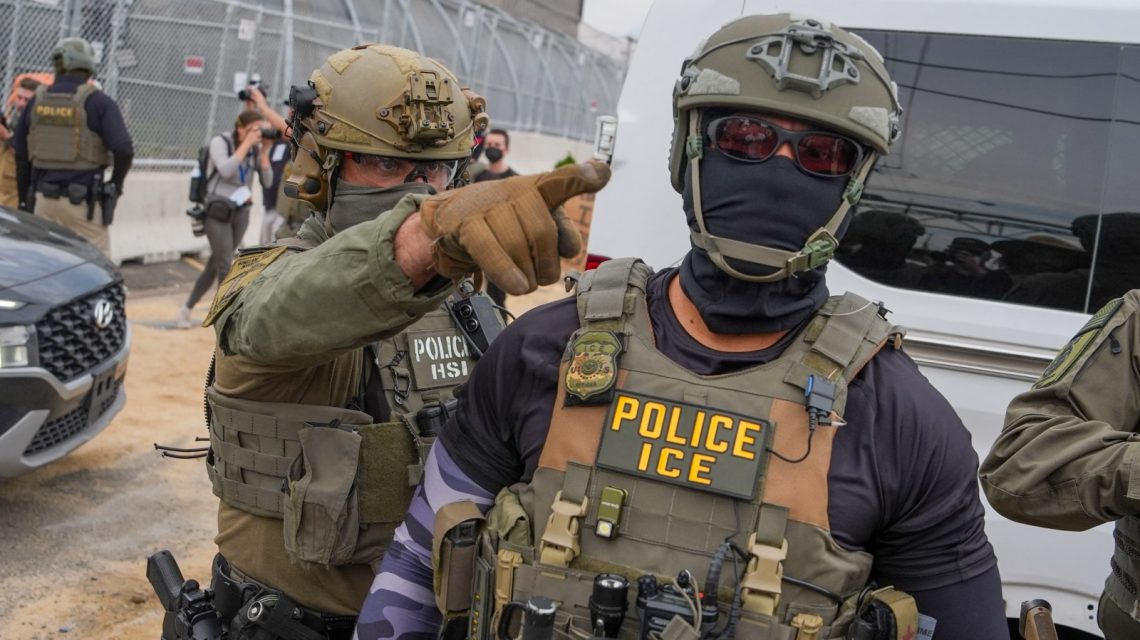
Recent records indicate ongoing concerns within Immigration and Customs Enforcement (ICE), with 148 “open allegations” of agent misconduct and potential criminal wrongdoing over the past three years. The allegations, detailed in internal records obtained by Newsweek, range from sexual assault and bribery to drug smuggling. Other claims include domestic violence, drunk driving, and misuse of government computers during fiscal years 2023, 2024, and 2025, spanning the administrations of Presidents Joe Biden and Donald Trump.
Data provided in response to Newsweek’s Freedom of Information Act request reveal that ICE logged incidents involving agency personnel under investigation for misconduct or criminal activity. These include 18 cases from 2023, 69 from 2024, and 61 from 2025. Notably, this period saw a rapid increase in ICE agent recruitment, with officers and agents doubling to approximately 22,000 within a year, according to the Department of Homeland Security (DHS).
Former Acting ICE Director John Sandweg expressed concern about the number of open investigations, questioning the timeliness of resolutions rather than an uptick in misconduct claims themselves. Investigations are primarily handled by ICE’s Office of Professional Responsibility, tasked with examining employee conduct and policy violations. DHS emphasized that the office applies rigorous personnel vetting and evaluation processes to maintain integrity.
“We take allegations regarding misconduct seriously and cherish the public’s trust. We work tirelessly to uphold the rule of law and hold ourselves accountable,” a DHS spokesperson stated to Newsweek.
Internal Records and Allegations
The records classify around 30 percent of entries, or 44 cases, as criminal matters, while the other 104 involve non-criminal misconduct or administrative issues. Noteworthy reports include 10 incidents of service weapon discharge, causing injuries in some cases. Additionally, allegations span DUIs, misuse of government vehicles, bribery, sexual assault, drug smuggling, domestic violence, and sexual harassment.
Misuse of government tech systems surfaces frequently in the data with 15 cases logged, followed by conflicts of interest and hostile work environments, each recording 12 cases. Sandweg noted that such issues were historically prevalent in large law enforcement bodies. He attributed a rapid agency expansion to potential increases in misconduct claims, emphasizing the challenges of prioritizing quality over quantity in recruitment.
The records, publicly disclosed following a lengthy FOIA request process, provide insight into ICE’s internal monitoring systems. However, unanswered questions remain regarding how many claims were confirmed, disciplinary measures undertaken, and influencing factors related to the increase in allegations.
Increased Scrutiny and Reaction from Lawmakers
ICE has faced intensified scrutiny, especially during President Trump’s enforcement strategies which elevated arrest numbers nationally. Allegations of excessive force and racial profiling have prompted calls for greater transparency and accountability. High-profile incidents, including the deaths of various individuals at the hands of immigration agents, have compounded demands for robust oversight of use-of-force practices.
Democratic lawmakers have voiced their concerns over ICE’s professionalism and accountability. U.S. Representative Bennie Thompson criticized the rise in allegations and the lack of sufficient oversight and disciplinary action by Congress and the administration. Representative Seth Magaziner highlighted issues of excessive force during Trump’s tenure, underscoring the absence of adequate disciplinary responses.
While Newsweek reached out for commentary from Republican committee leaders Andrew Garbarino and Rand Paul, responses were not included. The records encapsulate investigative activities under both Biden and Trump’s leaderships. Because of the categorization by fiscal years rather than specific incident timing, discerning detailed temporal data remains challenging.
 Defense Secretary Emerges as Key Player in the Trump Administration
  Hegseth’s Vision for the Military: Balancing Tradition and Innovation
  USCIS Raises Immigration Fees
  Trump Administration’s Approach to Illegal Alien Deportations
  Trump’s White House Visitor Center Proposal Gains Bipartisan Support
  Hegseth’s Ambitious Military Initiatives to Reshape Warfare