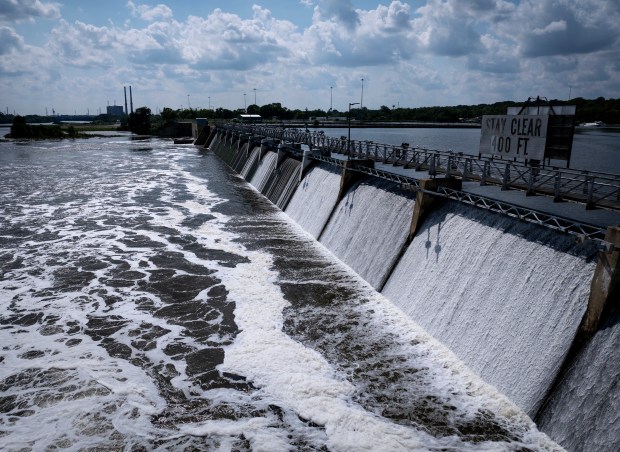
Construction on the Brandon Road Lock and Dam project near Joliet has resumed after a halt imposed by the U.S. Army Corps of Engineers. Valued at $1.15 billion, this project aims to prevent invasive carp from entering the Great Lakes. Initially paused for administrative review, work recommenced after concerns arose about the invasive species moving closer to Lake Michigan.
Stop-Work Order and Response
The Army Corps issued a stop-work order without warning on July 24. Shortly after, silver carp were found 80 miles from Lake Michigan, raising alarms among environmental groups. The Alliance for the Great Lakes noted the findings as a sign of potential population establishment, which increases invasion risks.
President Trump had previously directed federal agencies to expedite the project along the Des Plaines River. Despite widespread support, funding disagreements persist among federal and state officials.
Project Importance and Actions
The Brandon Road Interbasin Project began in 2025, following collaborative efforts to protect the Great Lakes’ ecosystems and economy from invasive carp. Current electrical barriers, deemed unreliable, remain the only defense against these fish.
Joel Brammeier from the Alliance for the Great Lakes emphasized the project’s necessity, warning of irreversible damage to the Great Lakes if invasive carp disrupt ecosystems. Local and regional support for the project remains strong.
Funding and Phases
Funding has become a contentious issue, with Illinois and Michigan providing significant contributions. In 2024, congressional leaders secured increased federal support for post-construction operations. Phase one involves preparation and technology installations to deter invasive carp.
Innovative methods such as bubble barriers and acoustic deterrents are included. Subsequent phases plan to implement electric barriers and flushing locks to prevent carp establishment.
Carp Threat Across the U.S.
Invasive carp include silver, bighead, grass, and black carp, introduced to manage aquatic plants without chemicals. These carp spread rapidly after escaping containment due to flooding, now inhabiting 31 states. Silver and bighead carp, lacking natural predators, pose significant threats to native species.
Efforts to manage these populations include electrofishing and monitoring. Recent surveys in Lake Calumet found no carp presence, while studies in the Illinois River continue to analyze carp origins and populations.
Monitoring and Management Efforts
Contract commercial fishing for adult carp has resumed in known populated areas like LaSalle County. Despite findings, biologists do not consider these carp populations fully established due to a lack of multiple life stages.
Ongoing measures include microchemistry research to track carp movements, and electrofishing to manage juvenile carp habitats. Coordinated efforts continue to monitor and address invasive carp impacts.
 Climate-Resistant Rock Glaciers: Hidden Water Resources
  Senators Reach Bipartisan Agreement on Permitting Reform
  Experts Warn of Critical Period for the Colorado River
  Future Cities: Ambitious Projects Aiming for Innovation and Sustainability
  Supreme Court Case Suncor vs. Boulder: Implications for Accountability in Climate Change
  Hawaii Faces Impact of Record El Niño Through Recent Hurricanes