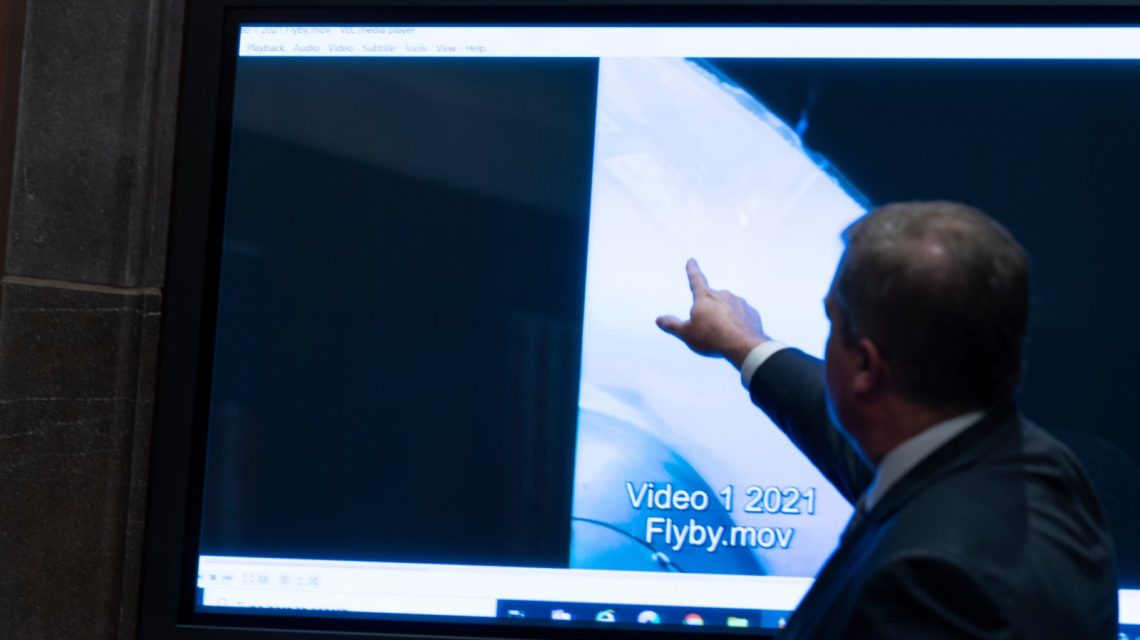
The Department of Defense announced a significant policy shift on Monday. It has issued a legal waiver allowing current and former military personnel, civilian employees, and contractors to share information about Unidentified Anomalous Phenomena (UAP), also known as UFOs. This waiver permits them to disclose this information to representatives of the Presidential Unsealing and Reporting System for UAP Encounters (PURSUE).
Interest in UAP investigations has surged recently due to congressional hearings, whistleblower allegations, and the release of previously classified government records. Many connected to classified UAP-related programs have hesitated to speak out due to fears of legal penalties, losing security clearances, or facing other administrative actions.
This waiver removes such legal barriers. It allows defense personnel to share UFO-related information with the PURSUE disclosure program, respecting secrecy agreements. This marks a noteworthy policy change in the government’s approach to UAP information.
Understanding PURSUE
The new process establishes a formal pathway for reviewing, evaluating, and possibly declassifying UAP-related data. Proponents of transparency have advocated legal protections to encourage witnesses and insiders to reveal information that could help lawmakers and the public understand unexplained aerial incidents better.
Dr. Julia Mossbridge, founder of the Mossbridge Institute, expressed support for the initiative, stating, “Anytime there can be more transparency, it’s great.” She acknowledged the steady release of information previously classified, crediting efforts of various organizations pushing for congressional hearings and transparency.
Previous Restrictions
Before this announcement, individuals with access to classified UAP-related information were bound by non-disclosure agreements and Special Access Program Indoctrination Agreements (SAPIAs). These agreements often deterred those with knowledge from sharing due to potential legal or administrative consequences.
Under the new directive, civil and administrative enforcement provisions linked to those agreements are waived for disclosures made to PURSUE representatives. The waiver establishes a controlled process for reviewing security concerns and considering potential declassification instead of offering unrestricted public disclosure.
Recent UAP Disclosures
Recently, the Department of Defense published its fifth release as part of PURSUE, detailing various UAP sightings, including civilian encounters. The release included accounts from two U.S. government special agents and thermal video footage capturing infrared anomalies.
Former intelligence officer David Grusch is a prominent figure in UAP disclosure. He alleged that secret government programs have recovered and studied unidentified craft. Grusch has called for stronger whistleblower protections and urged transparency regarding UAP-related activities.
Grusch stated, “It is my hope that the revelations we unearth through investigations… will act as a catalyst for a global reassessment of our priorities.” He emphasized potential technological progress in propulsion, material science, and energy due to insights from alleged alien technology.
His remarks emphasize the potential for these revelations to stimulate collective curiosity and global cooperation.
During congressional hearings, David Fravor, a former U.S. Navy commanding officer, shared his 2004 sighting of a flying object resembling a white Tic Tac, highlighting personal encounters with unexplained phenomena. The new waiver aims to address whether individuals with knowledge of UAP-related programs can share information safely, without facing legal consequences.
With the disclosure mechanism now in effect, attention will likely focus on whether further witnesses come forward and whether additional records are disclosed and declassified.