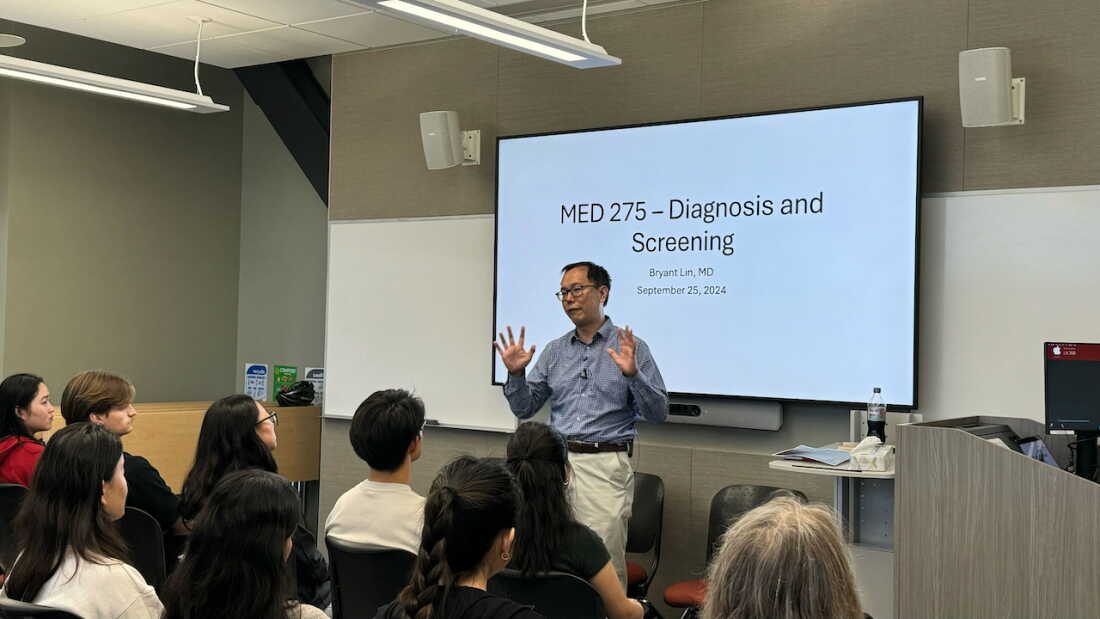
Dr. Bryant Lin’s Journey with Lung Cancer
Dr. Bryant Lin, a professor at Stanford, started teaching a lung cancer class in the fall of 2024. Though he was initially nervous about sharing his personal story, his experience has turned into a valuable resource for his students. Lin, who founded Stanford’s Center for Asian Health Research and Education, now finds himself a Stage IV lung cancer patient: a disease he has long fought against.
Remarkably, Lin is not a smoker, yet he remains optimistic. He tells students that the future of lung cancer treatment is promising due to the development of personalized therapeutics. His hope is to transform the disease from fatal to chronic.
The Evolution of Lung Cancer Treatment
The prognosis for lung cancer is changing due to recent advancements. While the overall five-year survival rate for all stages has doubled over three decades, it remains low at 30%. Early-stage localized cancer had a five-year survival rate of 67% between 2015 and 2021.
Jonathan Goldman, an oncologist and researcher at UCLA, explains that genetic diversity in lung cancers makes them challenging to treat. However, advancements in identifying specific mutations through genetic testing allow for targeted treatments. These treatments not only manage or shrink tumors but also minimize side effects due to their precision.
The Role of Genetic Testing
Genomic testing helps identify a patient’s specific cancer subtype, making targeted drugs more effective. Yet, access remains inconsistent in the U.S., with less than half of lung-cancer patients receiving this testing. Awareness among general oncologists is also crucial for effective implementation.
Tagrisso, a targeted drug Lin began taking in May 2024, exemplifies a treatment benefiting from such research. It received FDA approval in combination with chemotherapy, showing it extends survival rates.
Financial Challenges and Accessibility
While treatments show promise, their high costs pose challenges. Even experts like Lin face hurdles getting insurance coverage. The necessity for prior approvals often delays treatments, impacting the patient’s critical timelines.
Lin’s initial targeted therapy eventually stopped working, leading to a new combination treatment involving amivantamab and lazertinib. These advances allow Lin to lead a better quality of life, enabling him to continue teaching and advising on lung cancer research.
Future Prospects
Research into cross-application of treatments from other similar cancers provides hope. Developments in pancreatic cancer treatments, like the drug Rasonque, offer potential for lung cancer therapies. Personalized mRNA vaccines further show promise by employing the immune system in combating tumors.
In advocating for better screening, Lin aims to improve early detection rates. Technologies such as AI imaging and enhanced blood tests could predict disease formation sooner.
Balancing Life and Treatment
Lin’s experience exemplifies the challenges faced by many dealing with cancer. Balancing his roles as both doctor and patient, he maintains hope despite obstacles. He values spending time with his family, including outings to San Francisco Giants games.
Though his latest scans showed cancer progression, Lin focuses on new treatment options and potential trials. He also embraces life’s lighter moments, indulging in simple joys like typing on his Smith Corona typewriter and preparing for his book, Sunshine: An exploration of living when you are dying.
 Increased Funding Needed for Psychiatric Hospitals
  Trump Administration Distributes ACA Refund Checks
  Higher Consumption of Ultra-Processed Foods Linked to Increased Health Risks
  Understanding Inflammation: Myths and Facts
  Calm Parenting: Strategies to Manage Stress
  Trump’s Executive Order to Combat Mosquitoes and Ticks in D.C.