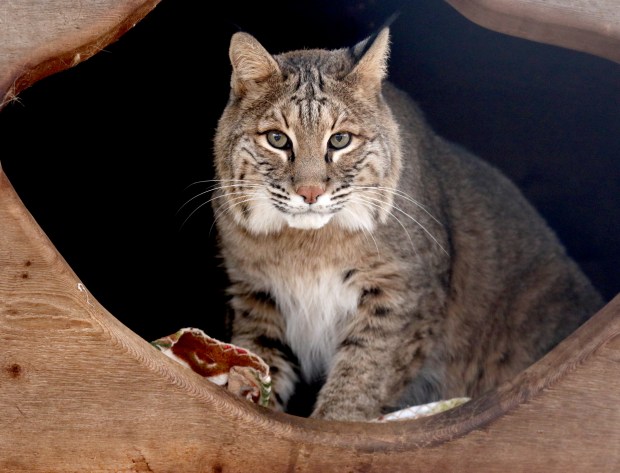
A trail camera by the Forest Preserve District of Will County recently captured images of two bobcats in the southern part of the county. One bobcat, which appeared to have a limp, was spotted on camera back in 2022. Wildlife ecologist Becky Blankenship explained that this indicates the animal is recovering and sustaining itself in the wild.
Bobcats, known scientifically as lynx rufus, are native to Illinois and have experienced a significant population increase in the last ten years. Although their numbers have grown, bobcats are more commonly seen in camera footage than in person. Blankenship noted that bobcat sightings occur fairly regularly in southern Will County, with many reported on trail cameras over the years. Though some residents mention seeing them, in-person encounters with these animals remain rare.
Bobcats can be found throughout the state, often living in environments with wooded bluffs, rolling hills, and bottomland forests. They primarily hunt small prey like cottontail rabbits and squirrels. Guillaume Bastille-Rousseau, an associate professor at Southern Illinois University, stated the bobcat population in Illinois has been recovering after declining since the 1970s when they were classified as a threatened species. The state halted bobcat hunting in 1977 due to their decreasing numbers.
In 2001, bobcats began to make a comeback, allowing them to recolonize across Illinois. The Illinois Bobcat Foundation confirmed they were removed from the state’s threatened species list in 1999. Bobcat hunting was reinstated in 2016 after a 44-year prohibition. The current hunting and trapping seasons run from November to mid-February. Hunters need permits and may harvest only one bobcat per season. About 2,000 permits are issued each season, and bobcat harvesting is restricted to southern and western Illinois. Will County does not allow bobcat hunting or trapping.
Blankenship emphasizes the importance of ethical practices in hunting and trapping. Hunters and trappers must complete education courses ensuring responsible and sustainable harvesting based on scientific data.
Bastille-Rousseau emphasized that bobcats are not dangerous to humans. Although slightly larger than domestic cats and weighing between 15 to 30 pounds, they tend to avoid people. Bobcats are primarily active at dawn and dusk, but daytime sightings can occur. If spotted, it’s best to observe from a distance without approaching or calling them closer.
 Atlantic Ends September Without a Hurricane for First Time Since 1994
  2026 El Niño: A Historical Comparison and Future Projections
  U.S. Records Warmest September in History
  Swiss Glaciers Show Effects of Ice Loss Amid Global Warming
  Climate-Resistant Rock Glaciers: Hidden Water Resources
  Senators Reach Bipartisan Agreement on Permitting Reform