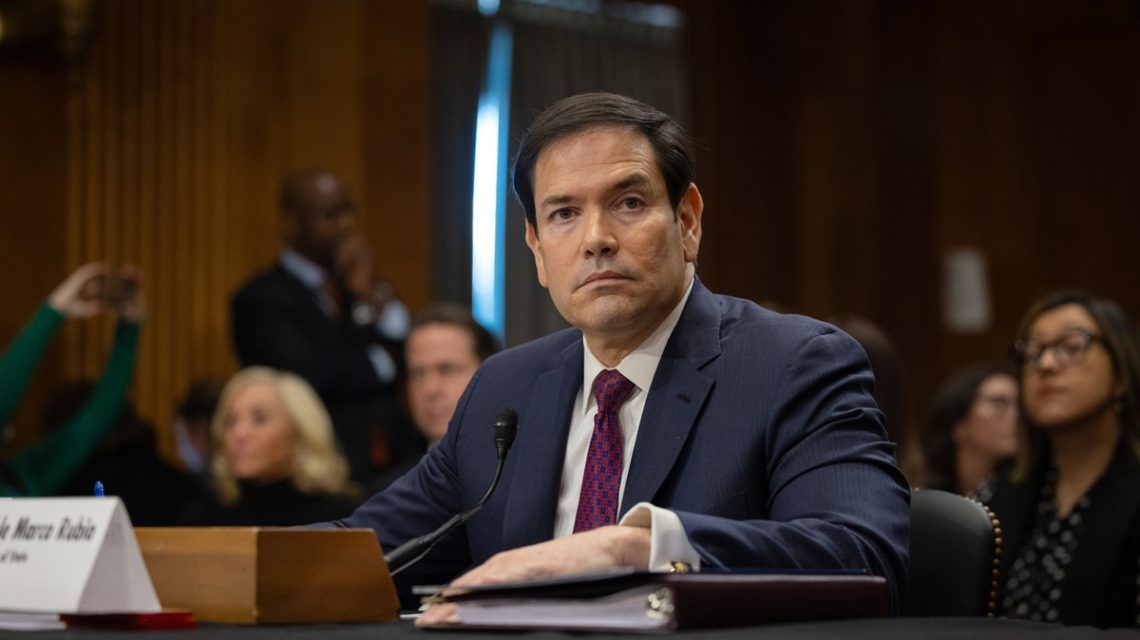
The State Department has accused Senate Democrats of engaging in performative ‘grandstanding’ relating to their demands for a briefing on a significant Venezuela oil deal, according to material reviewed by Fox News Digital. The Democrats requested the briefing, only to reschedule it, allowing the Senate to go on fall recess earlier.
Documents in Question
Four senior Senate Democrats sought documents they anticipated receiving. The agreement involves North American Blue Energy Partner (NABEP) and gives the Department of Defense a 35% stake in one of Venezuela’s largest oil producers. Administration officials intended to brief the Senate Foreign Relations Committee and provide necessary documents on October 1, 2026.
The State Department delivered copies of the strategic partnership agreement to the committee. A senior official stated: “Copies of the USG Strategic Partnership Agreement with NABEP for your Members are in the SFRC front office.” Each member received a folder containing their copy.
Cancellation and Disagreement
Assistant Secretary for Global Public Affairs Dylan Johnson suggested Democrats canceled the briefing to leave for vacation. He expressed frustration, noting, “This is pure grandstanding.” A congressional source refuted this by saying the intention behind the briefing was to provide a broader update, not solely focus on the oil deal.
Emails reveal the postponement request came from a Republican majority staffer, citing the Senate’s early departure as the reason. The staffer represented the full committee’s stance, according to a State Department official.
Pentagon’s Stake Under Scrutiny
The demand for the briefing stemmed from legal and prudential challenges regarding the Trump administration’s agreement with NABEP. The Pentagon’s Office of Strategic Capital would gain rights to a 35% stake using penny warrants, with the State Department securing preferential rights to purchase 20% of production at cost.
The unusual deal structure fit within broader efforts to restore Venezuelan oil production post-Nicolás Maduro’s fall. Democrats question the Pentagon’s legal authority to hold such a stake and have raised concerns about NABEP’s vetting.
The White House contends the deal benefits the U.S. by potentially providing hundreds of billions in equity and dividend returns without upfront taxpayer purchase requirements. The agreement is seen as a strategic move to revitalize Venezuelan oil production and reduce global fuel prices.
NABEP intends to increase daily production from 220,000 barrels to 500,000 by late 2028. Private investment aims to revive neglected and mismanaged fields.
Efforts to Rebuild Venezuela’s Economy
The agreement is part of efforts to rehabilitate Venezuela’s economy following Maduro’s removal. A U.S. military operation arrested Maduro and his wife earlier this year. Interim leader Delcy Rodríguez has cooperated with Washington amid ongoing political transitions.
The NABEP agreement is central to U.S. strategies involving stabilization, reconstruction, and transitioning toward democracy. By restoring oil production, the deal seeks to diminish the influence of rival nations in Venezuela’s energy sector.
Senators Jeanne Shaheen, Jack Reed, Martin Heinrich, and Elizabeth Warren challenged the legality of the agreement in a letter to Secretary of State Marco Rubio, War Secretary Pete Hegseth, and Energy Secretary Chris Wright.
The lawmakers queried the legality of the Pentagon’s equity acquisition and requested detailed information on various aspects, including NABEP’s vetting and financial arrangements.
The structure involving penny warrants gives the government nominal-price equity acquisition rights. Democratic senators insist this does not answer the legal concerns, stressing the role of the Pentagon’s Office of Strategic Capital in such ventures raises questions.
Concerns further extend to NABEP chairman Alejandro Betancourt, linked to past money-laundering investigations. While he faces no active U.S. investigation, his history adds to legislative scrutiny.
This dispute could lead to broader analysis of this unconventional U.S. economic intervention in Venezuela.
 Unexpected Senate Race Challenges in New Hampshire
  Debate Over Judicial Influence in Trump Administration Attorney Appointments
  Former U.S. Representative David Rivera Sentenced for Secret Lobbying
  U.S. Revises Global Health Aid with New Strategy
  Political Fragmentation and Rising Extremism Challenge Germany’s Political Center
  Democrats See South Carolina as Potential Senate Pickup