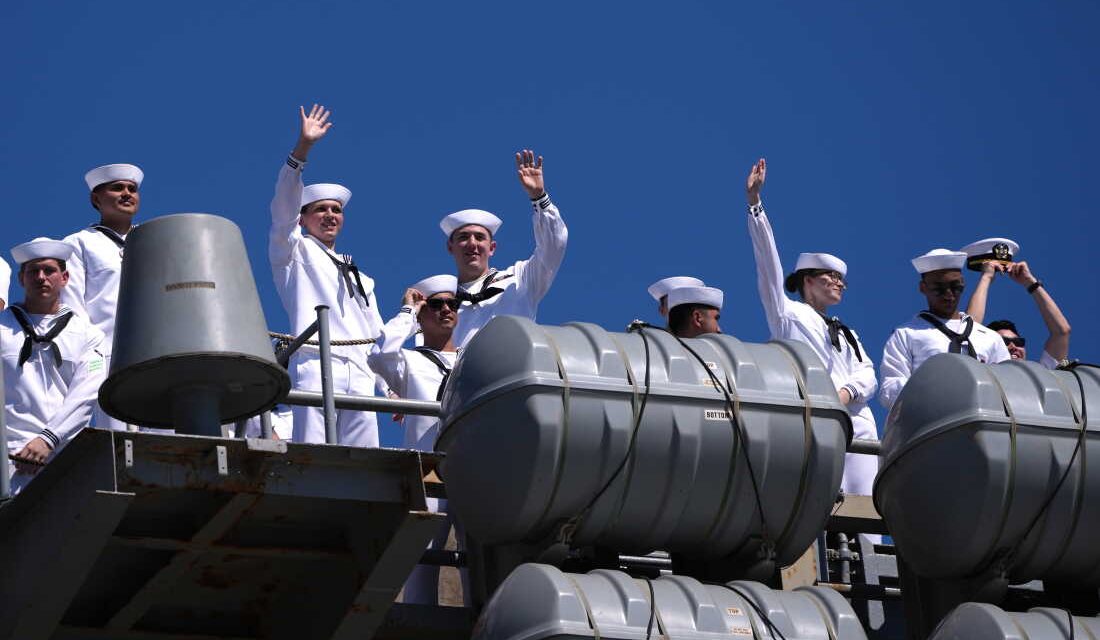
The USS Abraham Lincoln aircraft carrier returned to Naval Air Station North Island on Thursday, October 8, 2026, in Coronado, California, marking the end of a deployment exceeding 10 months. Thousands of sailors disembarking the ship received cheers, tears, and hugs from awaiting family members. Among them were new fathers meeting babies born during their time at sea. Families recounted the emotional challenges they faced, dealing with limited communication and reports of supply shortages and mental health issues among sailors. Some mentioned relying primarily on emails and sporadic WhatsApp calls for updates.
Returning Home
Abel Ramirez, a 20-year-old sailor, expressed relief as he left the carrier. “It feels amazing,” he stated, searching for his parents who had traveled from Texas. Fourteen-year-old Cassity Garduque excitedly waved at her mother, a sailor on board, expressing overwhelming joy at their reunion. She noted that her mother missed significant moments, such as most of her seventh-grade year and her birthday. Cassity was thrilled her mom would now have better meals and could celebrate with her.
Commander Capt. Daniel Keeler addressed the challenges faced on this first deployment for many sailors. He mentioned the typical logistical issues of operating “a floating city,” such as clogged toilets, but assured everyone had access to four meals daily.
Deployment Challenges
The Navy initially minimized the reported problems during the deployment. However, President Donald Trump commented in August that the extended duration was “not nearly long enough.” Defense Secretary Pete Hegseth, presenting the Presidential Unit Citation to the crew, praised their resilience. He refuted claims that the Lincoln symbolized dysfunction, emphasizing their successful mission completion.
The Presidential Unit Citation followed the Lincoln’s deployment, which lasted 322 days, narrowly falling short of USS Gerald R. Ford’s recent 326-day record. This recognition typically acknowledges significant combat achievement.
Reunions and Reflections
A large number of sailors experienced the joy of meeting their new children, with 64 fathers leaving the carrier for the first time. Kathy Monterrosa, waiting for her sailor husband, recalled her frequent worries during the pregnancy. Holding her 6-month-old daughter dressed in a sailor outfit, Monterrosa shared the relief and blessings of having her family back together.
Sailor Steven Rivas, seeing his 7-month-old daughter, expressed how surreal the return felt. Alma Solano Velez prepared foods her husband craved during the deployment including oxtail and shrimp empanadas. Her husband was eager to see their 4-year-old daughter after a challenging separation.
Operational Strains
The carrier’s deployment to the Middle East included participating in military action alongside U.S. and Israeli forces. Acting Navy Secretary Hung Cao stated that although food supplies remained adequate, options did decline due to combat-related supply limitations. After a long deployment, the crew enjoyed a brief stop in Thailand before their return.
Extended deployments like the Lincoln’s can impose significant mental and physical strain on personnel and equipment. The Navy reported eight suicide attempts during the mission, which experts noted as low for a strike group of over 6,000 sailors. The Lincoln and its group accomplished various combat achievements, including executing combat missions and engaging with Iranian forces. In August, the USS George Washington took over operations in the Middle East.
 Missouri Tigers Freshman Recovers After Heart Transplant
  Kevin Korchinski’s Position in the Chicago Blackhawks Roster
  Police and Media Response to Shooting at Richneck Elementary School
  Pete Hegseth Advocates for Public Execution of Fort Hood Shooter
  Activist Actions in Arizona Against Border Wall Construction
  American Sentiment on Economy Diverges from Employment Data