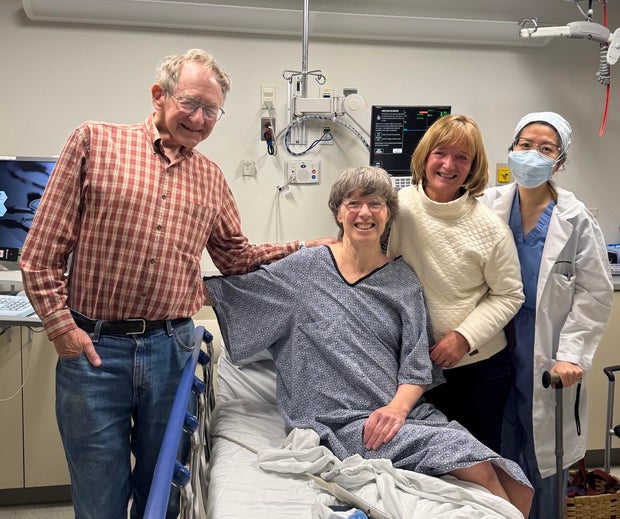
Vicky Titcomb, a 72-year-old bookstore owner from Cape Cod, faced a life-changing moment in March 2025. During a routine heart scan at Mass General Brigham, doctors discovered an abnormality on her pancreas. This discovery indicated that Titcomb likely had pancreatic cancer, one of the deadliest forms of the disease.
Pancreatic cancer often goes unnoticed until it spreads to other organs, making treatment challenging. The American Association for Cancer Research’s 2026 report highlights that while many cancer survival rates are improving, pancreatic cancer still has a low 5-year survival rate of 13%.
Titcomb, who had previously been treated for breast cancer in 2012, decided not to delve into research about pancreatic cancer. She chose to remain optimistic and focus on her treatment plan.
“I saw some terrible information about it,” Titcomb said. “I shut it out pretty much completely because it was too much to take in.”
Mass General Brigham’s specialists devised a strategy starting with chemotherapy and radiation to shrink her tumors. Despite the stigma surrounding pancreatic cancer treatments, Titcomb remained positive.
She visualized her pancreatic tumor shrinking from a grape to a raisin and hoped to be eligible for a Whipple procedure. This complex surgery involves removing parts of the pancreas and other organs necessary for digestion.
Thankfully, Titcomb’s early diagnosis allowed her to qualify for the Whipple procedure, a rare option for those with pancreatic cancer. Her treatment journey included chemotherapy beginning in June, followed by radiation.
Dr. Thomas Clancy, her surgical oncologist, noted Titcomb’s resilience, saying she tolerated treatments “very well.” After successfully shrinking the cancer, Dr. Clancy planned her breast cancer surgery on Nov. 4, followed by a robotic Whipple procedure later in the month.
“You don’t want somebody to do badly on World Pancreatic Cancer Day,” Titcomb humorously remarked, noting the coincidental scheduling of her surgery.
Titcomb’s surgery was a success, and she recovered quickly, walking the same night. After a brief hospital stay, she returned home where her healing continued.
Despite the aggressive nature of pancreatic cancer, Dr. Clancy advised additional chemotherapy. Titcomb continued to manage day-to-day challenges with strength and positivity.
In March 2026, Dr. Clancy declared Titcomb had no evidence of cancer. Although regular scans are necessary, his advice is to “spend as little time as possible thinking about this.”
Returning to her routine at the bookstore and spending time with family has been her focus. Titcomb has actively engaged with pancreatic cancer awareness efforts, speaking on behalf of organizations like the American Cancer Society.
“There are advances being made that people who’ve worked a lifetime on pancreatic cancer have never seen,” Titcomb stated. “I feel so lucky. The luck trumps all.”
 Coping with Congenital Cataracts: A Mother’s Journey
  Family Seeks Answers in Death of Man After Mental Health Crisis in Jail
  Understanding the Rise of Family Estrangement
  Addressing Alzheimer’s: An Urgent Necessity
  The Urgency of Treating Ectopic Pregnancies
  Concerns Arise Over ChatGPT for Teens