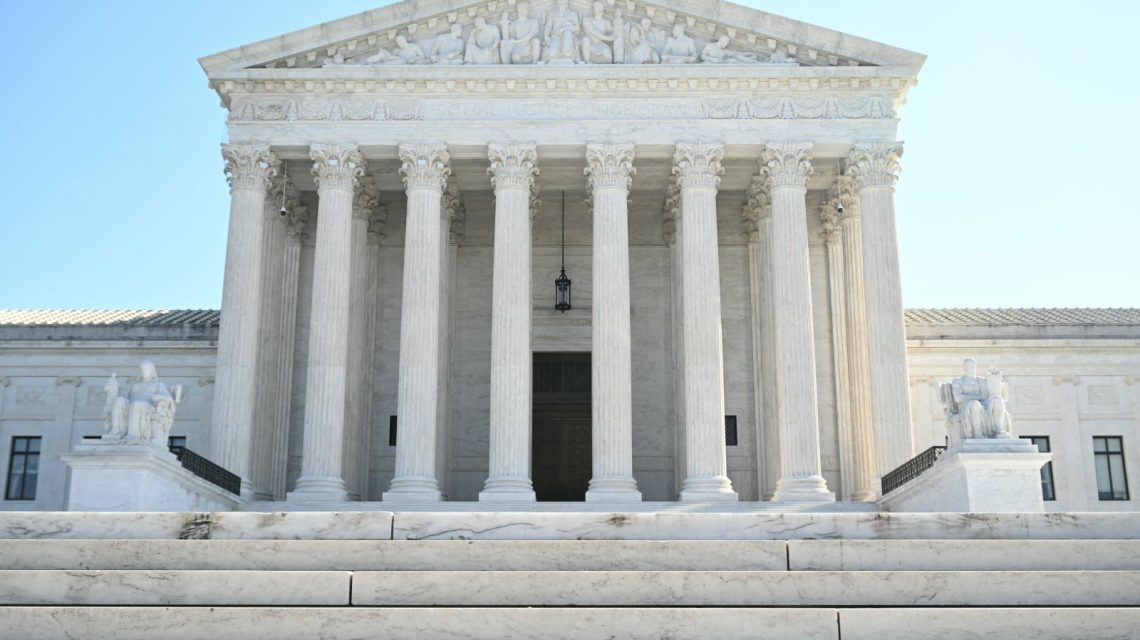
Supreme Court Decision
The Supreme Court has delivered a 7-2 decision favoring the Trump administration in a conflict over the pace of resolving a political advertising rates dispute. On Wednesday, the justices blocked a previous ruling by the Fourth Circuit. This ruling required the Federal Communications Commission (FCC) to decide on its political advertising policy challenge within 48 hours.
The FCC’s ‘lowest unit charge’ rules mandate that broadcasters provide discounted advertising rates during the weeks leading up to elections. Four Democratic candidates disputed the FCC’s guidance, which extends these discounts not only to candidates but also to political parties engaged in coordinated activities and some joint fundraising committees.
The Supreme Court deemed the Fourth Circuit’s demand for a rapid decision as overreaching. Federal law requires the FCC to address applications it receives but does not enforce a specific timeline for decision-making.
Background on the Case
Federal law allows political candidates to access the ‘lowest unit charge’ for broadcast advertising 45 days before primaries and 60 days before general elections. However, the FCC issued guidance in March suggesting that this discount could also apply to political parties and joint fundraising committees involved in coordinated activities.
The candidates, Brown, Ossoff, Cooper, and McDonald Rivet, opposed this interpretation. They claimed that Congress intended the discount to benefit candidates only. While challenging this with the FCC, they also sought intervention from the Fourth Circuit. This court temporarily sided with the candidates, ruling that the discounted rates should apply strictly to individual candidates, not parties or committees.
The Supreme Court intervened on September 4, pausing the Fourth Circuit’s decision. The Court determined that the Fourth Circuit possibly lacked jurisdiction, as the candidates had sought judicial review before the FCC completed its review.
Why the Supreme Court Intervened Again
This latest action marks the second intervention by the Supreme Court in the ongoing dispute. The first intervention occurred when the Court stayed a previous ruling from the Fourth Circuit, citing possible jurisdictional issues.
On October 7, the Fourth Circuit pressed the FCC to resolve the candidates’ application by October 9, demanding a final decision within 48 hours. The FCC appealed to the Supreme Court once more. The Supreme Court responded by stating that the appeals court improperly infringed on the agency’s deliberations.
The Court described a writ of mandamus as an extreme and rare measure. It emphasized that the Communications Act permits the FCC to determine its procedures and timelines for handling applications.
The majority opinion expressed that forcing the FCC to finalize its decision quickly would disrupt its deliberative process and overstep constitutional limits. Justices Sotomayor and Ketanji Brown Jackson expressed dissent, preferring to allow the Fourth Circuit’s order to stand; however, they did not provide a detailed written dissent.
The stay will continue while the Supreme Court considers whether to review the case. If they choose not to hear it, the stay will end automatically. However, if the justices decide to hear it, the stay will remain until their final judgment.
This decision does not settle whether political parties and joint fundraising committees are eligible for the lowest advertising rates. The immediate issue was whether the Fourth Circuit could compel the FCC to speed up its decision-making process.
Impact Ahead of the Midterms
As a consequence of this ruling, the FCC can maintain its current pace regarding the dispute without adhering to the Fourth Circuit’s accelerated timeline. This holds importance with the upcoming midterms on November 3. Political parties and qualified joint fundraising committees can continue benefiting from the discounted advertising rates, along with individual candidates.
The National Republican Congressional Committee and several Republican groups support the FCC’s approach. Conversely, the Campaign Legal Center advocates for the Democratic candidates. The center argues that extending candidate discounts to joint fundraising committees might allow super PAC money to gain an advantage meant for candidates.
The Supreme Court has not ruled on the correctness of the FCC’s interpretation of political advertising law. The focus remains on whether the Fourth Circuit had the authority to mandate an expedited review. This means that the question of who qualifies for the lowest political advertising rate remains to be settled.
For further details, contact Newsweek editors Matthew Cannon and James Debens.
 Sally Rooney’s Books Halted in U.K. Due to Palestine Support
  The States Project’s Fundraising Success in 2026
  Deported Mexican National Challenges Removal in U.S. Court
  Mississippi Senate Race: Democrat Challenges GOP Incumbent
  Hong Kong’s Economic Outlook Amid Political Changes
  U.S. Military Expansion Targets Drug Trafficking Networks in Latin America