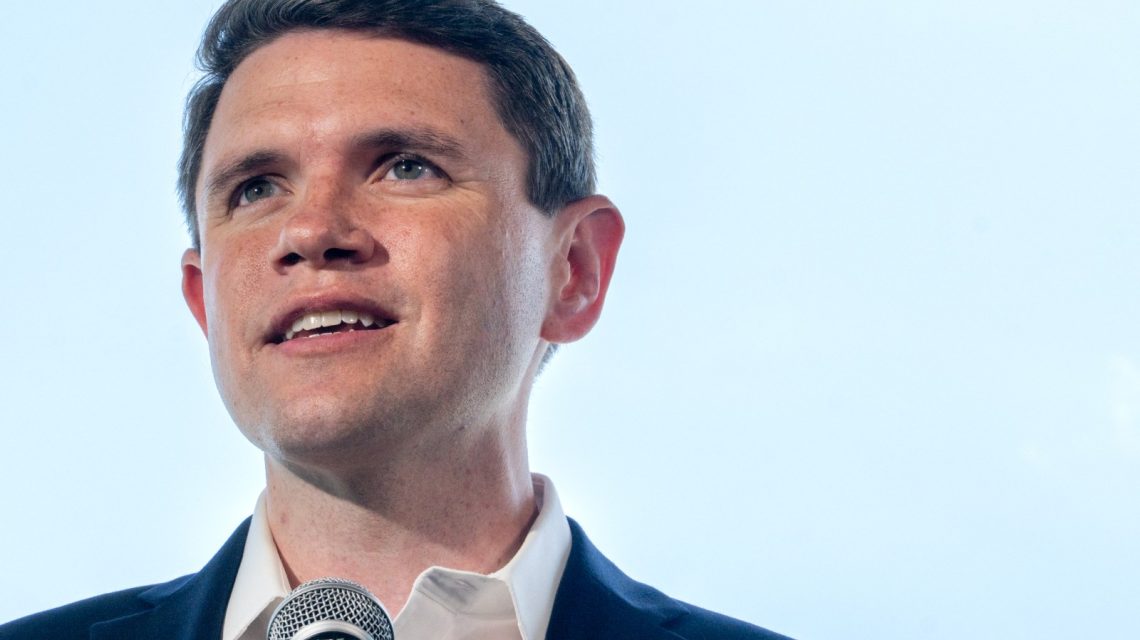
Democratic candidate James Talarico used a CNN town hall to criticize the data center industry in Texas. He argued companies should bear costs linked to these projects rather than communities. This theme is central to his campaign to become the first Democrat elected to the Senate from Texas since 1988. Polls indicate a competitive race in a traditionally Republican state.
Talarico frequently links his Republican opponent, Texas Attorney General Ken Paxton, to data center development. He claims Texans may face increased electricity and water costs while developers benefit. Texas and Virginia lead data center development with nearly 700 facilities planned and operating in Texas, as tracked by Cleanview.
Talarico stated, “I was actually up in Abilene meeting with residents, Democrats and Republicans alike, because they are building three giant data centers.” An undecided voter raised concerns about the rapid data center development during the town hall. Talarico elaborated, “I’ve rolled out a plan to crack down on these giant data center companies. I’ve said that we got to force them to pay for their own energy instead of jacking up our utility bills. We must ensure they recycle their water to prevent exacerbating the water crisis in Texas and require community consent before construction.”
Paxton supports ongoing data center development in Texas despite rising opposition. He claims that safeguards are necessary to protect water supplies and manage electricity costs. Both campaigns have been contacted for comment.
Data Centers in Election Spotlight
Data centers become a critical issue in the upcoming midterm elections, influencing the Texas Senate race which might impact chamber control. Communities in Texas and other states criticize the projects for electrical and water consumption, environmental effects, and proximity to residential areas.
James Talarico’s Stance
In July, Talarico proposed stricter data center regulations in Texas. In a news conference, he revealed proposals such as setting minimum federal standards for new centers, repealing Texas’ sales tax exemption for data centers, and requiring large energy consumers to finance their infrastructure.
We need to ensure AI works for working people by ending sweetheart tax deals to data centers, empowering local residents to weigh in on data center construction in their communities, holding data centers accountable for polluting our water, and making AI companies pay for their own electric and water infrastructure so that those costs aren’t passed onto consumers,
he stated in July.
Recently, Talarico launched a new TV ad targeting Paxton’s connections to the data center industry. Talarico claims Paxton has provided billions in tax breaks to these centers in return for campaign contributions.
Ken Paxton’s Perspective
Paxton, embracing data center development, notes “plenty of open space in Texas” for centers built away from residential areas. In a U.S. Hispanic Business Council interview, he highlighted potential economic benefits, job creation, and competition with China. Yet, he supports measures preventing centers from grid access or raising customer rates. Paxton insists centers must recycle water to avoid exacerbating local issues.
In August, Paxton revealed a four-point plan addressing data center concerns, aiming to prevent using Chinese technology and ensuring protection of community resources and infrastructure. The plan supports Governor Greg Abbott’s proposal, prohibiting data centers in rural neighborhoods and repealing sales tax exemptions.
He stated, “My plan will ensure that happens while putting Texas first, protecting our culture and land, and safeguarding our families and communities,” expressing confidence in U.S. victory in the AI race while prioritizing Texas.
Impact on Texas Senate Race
Brandon Rottinghaus from the University of Houston suggested Talarico might appeal to Republican-leaning voters, particularly in rural and suburban areas concerned about water and electricity.
Rural conservatives worried about water resources, suburban homeowners concerned about electricity bills, and Democrats skeptical of corporate influence can all find common ground on this issue,
he said.
Talarico does not need these voters to switch parties—he requires some Republican-leaning voters to reconsider supporting Paxton. Shifts among independents and leaning Republicans might affect election outcomes.
Cal Jillson from Southern Methodist University noted similarities between Talarico and Paxton positions on related issues, though Talarico appears more impassioned. Both candidates emphasize preventing increased rates, noise, and proximity issues.
Despite differences, Jillson remarked on Texas’ natural suitability for data centers. He anticipates post-election policies to encourage center development under reasonable regulations, satisfying few but facilitating growth.
Previous opposition has sparked shifts in candidates’ stances. Some Republican strategists pointed out strategy alterations due to local resistance, influencing Abbott’s position.
Latest Polling Data
Recent polls indicate a closely contested Texas Senate race, with Talarico slightly leading in several surveys. RealClearPolitics polling average from September 18 to October 11 shows Talarico with a 2.6-point lead.
A Marist poll released recently reported Talarico leading Paxton 47% to 45% among likely voters, with a slightly larger margin among registered voters. It polled 1,196 registered voters during October 8 to 11, with a margin of error of approximately 4.9 percentage points among likely voters.
ReconMR/Siena Research Institute’s polling showed Talarico leading with 48% over Paxton’s 44%. Trafalgar Group, a Republican-leaning pollster, had similar findings with Talarico at 47% against Paxton’s 44%.
The article’s editors are Matthew Robinson and Shakeema Edwards.
 Impact of Mass Shooting Fears on Policy Views
  El-Sayed Refutes Allegations of Links to Muslim Brotherhood
  Evanston Faces Budget Challenges Amid Proposed Tax Increases
  Jared Kushner’s Diplomatic Role Under Scrutiny Amid Lawsuit
  Americans’ Confidence in Food Safety Hits Record Low Amid Outbreaks
  Examining Susan Collins’ Reelection Bid Amid Controversy