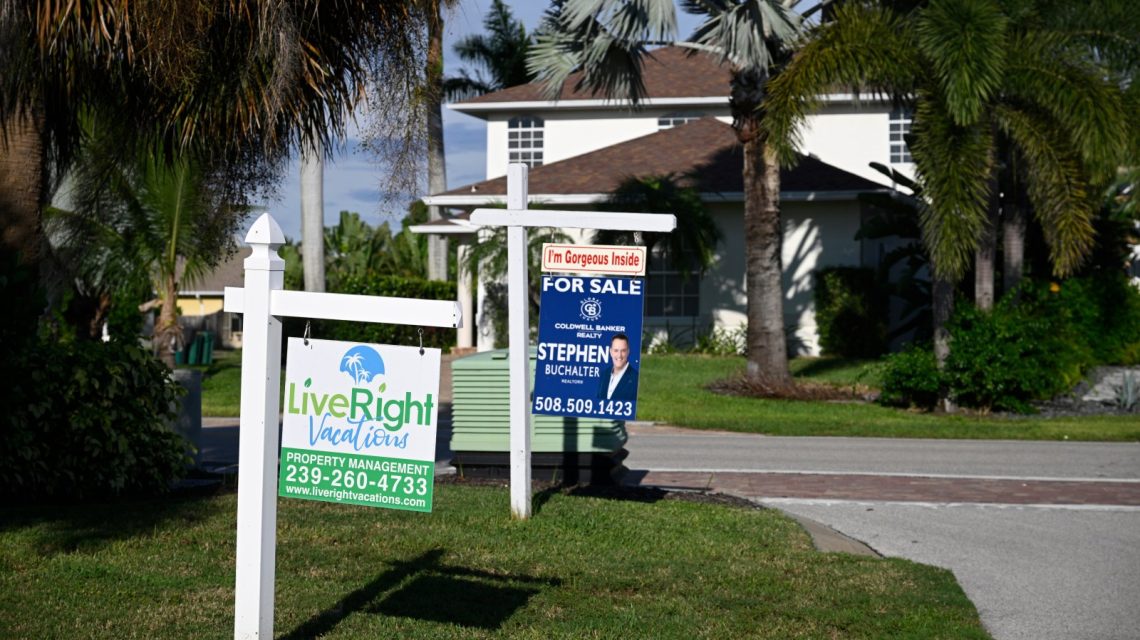
The housing market in the U.S. is experiencing a notable shift. Data from real estate brokerage Redfin indicates that sellers now outnumber buyers by 63 percent. This represents the largest gap since Redfin began collecting data in 2013.
Sellers vs. Buyers
In September, the number of potential homebuyers dropped to its lowest level since data tracking began, decreasing by 2.4 percent from the previous month to 928,892. Meanwhile, the seller count rose by 1.2 percent month-over-month, reaching over 1.5 million nationwide.
This gap highlights the challenges homebuyers face in the current market, especially in light of the pandemic. Despite these challenges, Americans are generally in a stronger position than during the 2008 housing crash.
Factors Influencing the Market
The increase in sellers is not solely due to the pandemic’s effects. Rising mortgage rates and inflation, influenced by climbing gas and diesel prices, have added to the upsurge. In August, the seller-buyer gap was 56.9 percent, growing significantly by nearly 6 percent in one month.
Why Are Buyers Backing Off?
At the end of the previous year, experts anticipated that lower mortgage rates might enhance housing affordability until 2026. Although rates began to decrease early this year, they reversed after the U.S. and Israel conducted joint military strikes in Iran.
The Federal Reserve’s decision to raise interest rates, for the first time in three years, also contributed to this upward trend. By early October, the average 30-year fixed-rate mortgage reached 7.4 percent, up from 6.3 percent a year before.
Opportunities for Current Buyers
For those able to enter the market, the current conditions present unique opportunities. Redfin identifies 41 out of 50 major metropolitan areas as “buyer’s markets,” where buyers outnumber sellers. Typically, a buyer’s market has at least 10 percent more sellers than buyers.
Asad Khan, a senior economist at Redfin, noted that buyers today possess significant negotiating power since many are priced out due to economic uncertainties. They have the flexibility to negotiate and walk away from unfavorable deals. Conditions are favorable, but only a fraction of potential buyers can capitalize on them due to high costs.
Where Buyers Have the Edge
In Miami, buyers surpassed sellers by 158.9 percent, the largest gap nationally. A significant portion—26.9 percent—of homes dropped their prices, while the median selling price was $649,691, up 4.8 percent yearly.
Nashville and Houston followed, with gaps of 152.3 percent and 134.6 percent respectively. In these cities, a substantial number of properties saw price reductions, with median prices in Nashville at $464,779, a 1.1 percent decline, and in Houston at $341,837, a drop of 2.3 percent.
These cities, mostly located in the Sun Belt, share a common post-pandemic expansion. An increase in new housing construction coincided with slowed migration trends, leading to surplus inventory.
Seller Markets Still Exist
In contrast, some markets remain seller-friendly. Cities like Boston, Chicago, and New Brunswick, along with Providence, maintain balance.
Seller’s markets include Nassau County, Montgomery County, Newark, Milwaukee, and San Francisco. These areas faced limited housing developments, maintaining a tight inventory despite ongoing demand. San Francisco’s housing boom, partly driven by the AI sector, is a unique case.
 Choosing the Best Manual Lawn Edger for Your Yard
  Oak Brook Home Boasts Modern Design and Luxury Features
  Historic UK Landmark Transforms into Luxury Development
  Understanding Current Mortgage Rate Trends
  Owning a Piece of New York History: The Woolworth Building Conversion
  Coby White Sells Lincoln Park Mansion for $5 Million