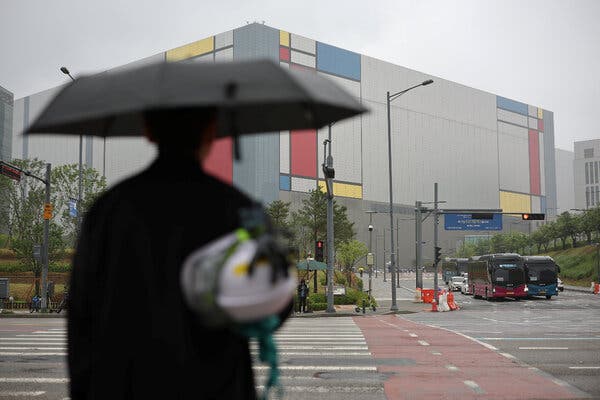
Samsung Electronics, a global leader in memory chips, has reaped significant benefits from the artificial intelligence surge. However, this success has led to a debate over profit sharing.
For several months, employees at Samsung’s semiconductor division have felt sidelined by the rapid growth in artificial intelligence, which has increased the demand for memory chips. Samsung and its South Korean rival, SK Hynix, have dominated this market.
In 2025, SK Hynix introduced new benefits for its employees. The company allocated 10 percent of its operating profits to employee bonuses and removed existing bonus caps.
Recently, Samsung’s largest labor union sought a similar arrangement. They requested that 15 percent of the semiconductor division’s operating profits be allocated to performance bonuses and called for the removal of individual bonus caps.
Tensions escalated between the union and company management, inching towards a strike. Government mediators intervened, and on Wednesday night, a provisional agreement was reached. Samsung agreed to abolish the bonus cap and allocate 10.5 percent of profits to bonuses. This follows a first-quarter profit surge to $39 billion this year. The union plans to vote on the proposed deal by next Wednesday.
While this agreement has temporarily resolved tensions, it highlights an important issue in South Korea’s AI-driven success: the fair distribution of profits.