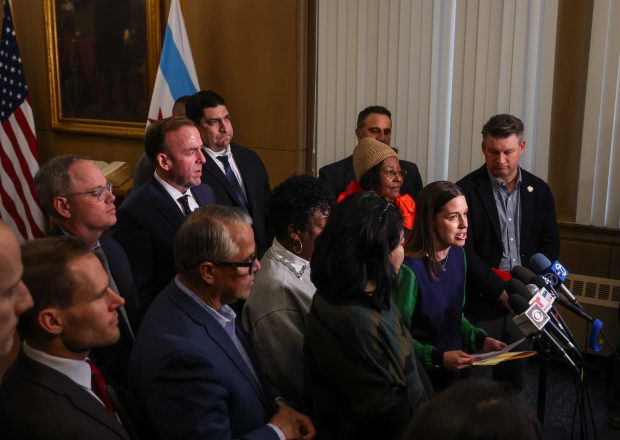
Mayor Brandon Johnson of Chicago plans to revive his strategy of imposing taxes on large corporations. His proposal includes an employee head tax targeting businesses with more than 125 full-time workers. This tax, rejected by aldermen in 2026, involves a $25 monthly fee per employee. Unlike previous attempts, the current plan offers a rebate for companies located in socioeconomically disadvantaged areas, primarily on Chicago’s South, Southwest, and West sides. This amendment aims to attract businesses to these districts. Predicted revenue from this tax is approximately $102 million.
In his budget announcement on Wednesday, Johnson also intends to propose borrowing $480 million. This sum addresses settlements related to police misconduct suits, including a significant $261 million agreement involving ex-detective Reynaldo Guevara. Johnson’s budget intends not to burden Chicago residents directly with new taxes, opting instead to focus on large corporations and avoid property tax increases and layoffs. Last week, Johnson stated, “They want to see billionaires and millionaires pay their fair share.”
Johnson’s idea to increase personal property lease transaction taxes from 15% to 20% impacts large companies chiefly and could generate an estimated $234 million. The mayor’s insistence on taxing big businesses lies at the core of his budget strategy, seeking to fulfill his commitment to taxing the wealthy.
Aldermen must analyze Johnson’s plan critically as he suggests raising taxes on sportsbook betting and expanding the Smart Streets program. Additional sources of revenue include increased taxes on liquor bought for off-site consumption and a new $0.15 tax on packages.
Johnson has faced setbacks, as his earlier budget proposal led to a historic defeat by the City Council. His resurgence in promoting the head tax shows his commitment to holding the wealthiest accountable, as he campaigns for reelection. His fiscal proposal, labeled the “Fair Share budget,” invokes the approach of Mayor Harold Washington in 1986, facing similar resistance from the council.
Chicago anticipates an $882.4 million budget gap for 2027, primarily due to long-term pension liabilities and the cost of city settlements. Johnson promises to maintain the $364 million pension payment as part of his financial responsibilities. The city’s overall debt liabilities are expected to increase, emphasizing the importance of strategic fiscal decisions at City Hall to avoid further credit downgrades.
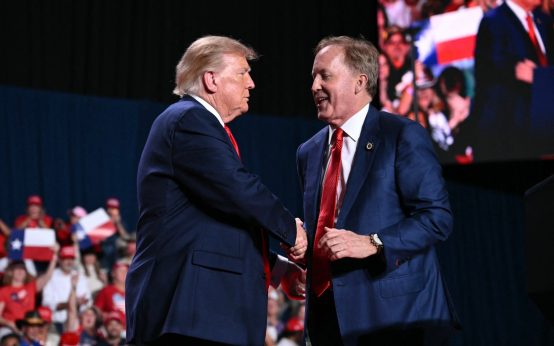 Trump’s Campaign Tour and Its Effects on Texas Senate Race
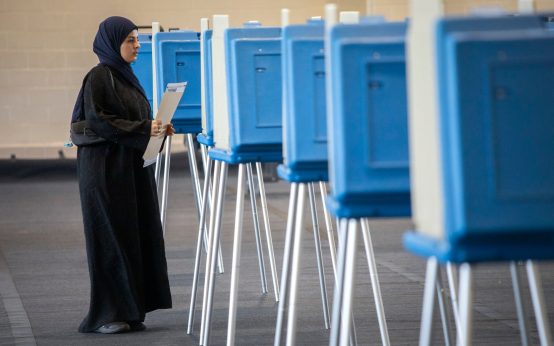 Debate Over U.S.-Israel Relationship and Its Impact on Michigan Senate Race
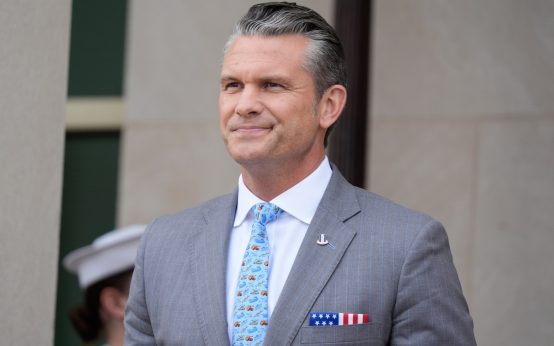 Execution of Fort Hood Shooter and Controversy Over Livestreaming
 Trump’s Rally in North Carolina Amid Political Tensions
 Efforts to Release American Teacher Held by Russia
 Republican Senate Candidate Supported by Trump