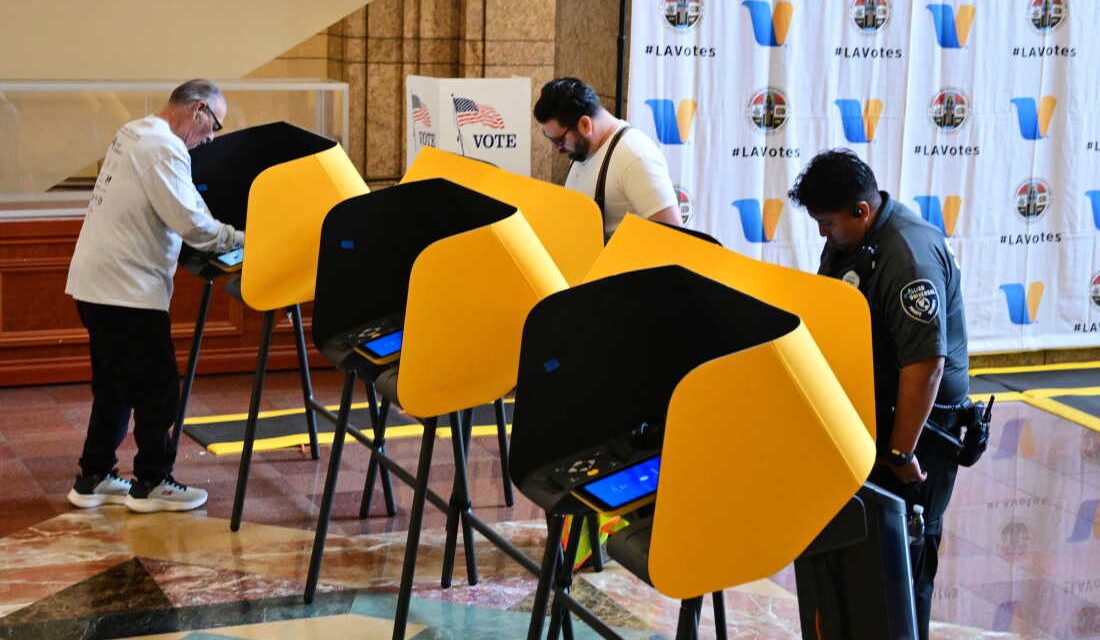
People cast their votes during California’s state primary election at the Metro Headquarters Building in Los Angeles on June 2, 2026. The Department of Justice (DOJ) has called for California to separate ballots from an estimated 20,000 individuals it claims are ‘likely’ noncitizens.
Local officials have expressed concerns about the reliability of the DOJ’s list, noting that some individuals had documented U.S. birth records, suggesting they might be citizens. Court documents from California and local authorities have been filed in response to a federal lawsuit aimed at forcing the state to scrutinize these voters before counting their votes.
The state contends that adhering to the DOJ’s demands could violate both federal and state election laws, considering the proximity to the election date. California’s filing described the lawsuit as a ‘reckless political stunt’ that could strip thousands of Californians of their voting rights.
At best, this litigation is a reckless political stunt. At worst, it threatens to disenfranchise thousands of Californians this election.
The controversy began when the DOJ provided the Los Angeles County with a thumb drive listing around 20,000 individuals, identified by the Department of Homeland Security as ‘likely noncitizens’ registered to vote in California. Initially wary of security risks, county officials refused to access the drive. The DOJ later sent the list via email.
Ifrom the 20,000 names, only 7,035 were connected to addresses within Los Angeles County, with several being duplicates. According to Los Angeles County Registrar Dean Logan, a preliminary review of a sample group indicated the list’s unreliability. Monica Flores, Assistant Registrar-Recorder, reported that about 38.9% of the sampled voters had indications of U.S. birth, suggesting citizenship.
Details on the total number or specific records with birthplace data remain unclear. The Los Angeles County clerk’s office has not clarified these statistics.
When registering to vote online, California’s Secretary of State requires the ‘place of birth,’ although it’s optional. U.S. birth frequently grants citizenship, with rare exceptions. Among the reviewed 200 records, 112 involved individuals with inactive or canceled registrations, and nearly 70% had no voting history.
The Trump administration has supported its method of identifying noncitizen voters but hasn’t entirely disclosed its approach. Past federal figures on noncitizen voting, including those from President Trump, have sometimes proven inaccurate.
Acting Deputy Attorney General Trent McCotter acknowledged potential errors in the 20,000-name list, asking for California’s cooperation. McCotter stated, There may be some names on there who it turns out ultimately are citizens, we’re not perfect. And that’s why we’ve asked California to cooperate with us.
In counter to L.A. County’s analysis, DOJ Deputy Press Secretary Kiersten Pels emphasized California’s responsibility to comply with federal law, demanding verification of noncitizen ballots.
On Monday, the DOJ charged 28 individuals on the provided list, all legal permanent residents. Some appeared to have registered due to misunderstandings about their voting eligibility, not malicious intent. Kamlesh Shah, one of those charged, cited confusion tied to possessing a Real ID.
I’m feeling very depressed, very full of anxiety. I’m disabled. I’ve got so much problems in my heart, my condition, so it’s going to give me more stress. I’m very upset. I’m trying to get an attorney, hopefully I can have the charges dismissed.
Research suggests that when noncitizens vote, it often involves green-card holders misinterpreting the rules rather than intentional deceit.
 Vivek Ramaswamy’s Campaign Faces Backlash After Video Controversy
 Execution Practices and Legal Challenges in Florida
 American Expats in Europe Express Regret Over Move
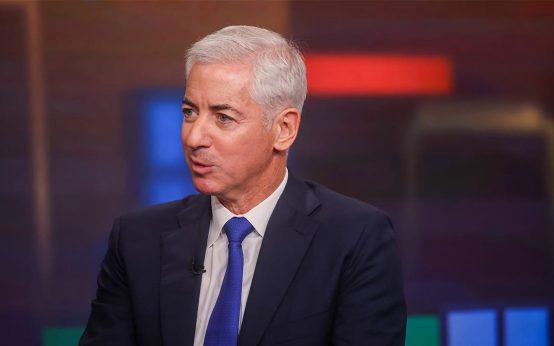 Bill Ackman Criticizes Democratic Party’s Direction
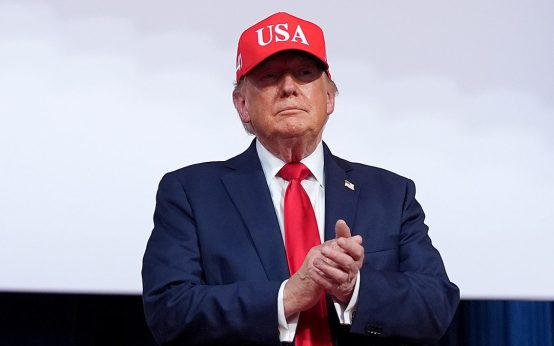 Ana Navarro’s Stance on Meeting Trump
 The Impact of Trump’s Proposed Farm Bailout on Agriculture Policies