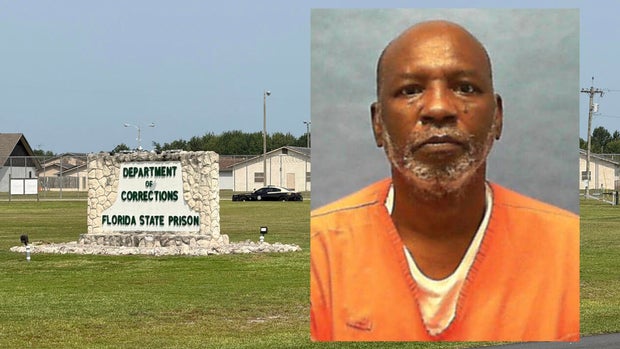
Florida executed its 18th inmate of the year on a Tuesday evening, marking another execution under Republican Governor Ron DeSantis’ administration. The execution took place at Florida State Prison near Starke, where William Reaves, aged 77, was executed by a three-drug injection. The procedure concluded with Reaves being pronounced dead at 6:12 p.m.
Reaves was found guilty of first-degree murder for the 1986 killing of Indian River County Deputy Richard Raczkowski. The execution began swiftly, with Reaves taking several deep breaths before ceasing movement. A few moments later, as per protocol, the warden attempted to rouse Reaves verbally and physically, without any response. A medic entered shortly after to verify the absence of life signs, confirming his death soon after.
This incident highlights the increasing age of death row inmates. Reaves was the eighth inmate over 70 executed in Florida this year. The state continues to lead the nation in executions, having set a record with 19 executions last year. Another execution is slated for November, which could match this record.
Governor’s Justification for Executions
Governor DeSantis has stated his focus on delivering justice to the families of victims, many of whom have awaited execution sentences for decades. In Reaves’ case, court records reveal that he was involved in a struggle with Deputy Raczkowski in 1986 after the deputy responded to a 911 call made by Reaves. During the confrontation, Reaves gained control of a firearm and fatally shot Raczkowski.
Reaves faced trial, conviction, and was sentenced to death shortly after the incident. However, due to a prosecutorial conflict of interest, his conviction was overturned, leading to another trial and death sentence in 1992. His appeals over the years were unsuccessful until his final appeal was rejected by the Florida Supreme Court the previous week.
Challenges to Florida’s Execution Methods
Reaves’ legal team raised concerns about Florida’s execution method, which uses a three-drug protocol involving a sedative, a paralytic, and a heart-stopping drug. This method has been challenged before but upheld by the court. Other states, like Tennessee, use different methods such as a single-drug protocol.
Defense attorneys also argued that the jury was not informed of Reaves’ full disability status, stemming from PTSD related to his Vietnam War service. Over 100 veterans urged Governor DeSantis to halt the execution with a letter sent the day before. Reaves’ final appeals were pending with the U.S. Supreme Court.
Upcoming Executions
Florida’s execution rate outpaces the rest of the U.S., with over half of the country’s total 31 executions this year occurring there. In July, Florida became the first state in nearly ten years to execute two inmates in one day.
Next, Jesse Guardado, 64, faces execution on November 5 for a 2004 crime involving robbery and murder to purchase drugs.